Our Uganda trip ran from January 1 to March 2, 2026. We found the people here competent and very friendly.
We accidentally discovered the ultimate travel hack. Have a sibling who lives there. My sister hosted us, helped plan, guided us, and generally prevented us from making spectacularly bad decisions. Her husband works for the State Department, and I’m convinced that job filters out anyone remotely grumpy or antisocial. These friendly people live in-country, talk to each other, and know everything, the best lodges, guides, drivers… all the good stuff. So my top recommendation is simple, acquire a diplomat sibling.
We spent our first two weeks in Kampala acclimating and relaxing with family. Let’s talk about driving there. Don’t. Just don’t. The main issue is boda bodas, motorcycles that appear to operate under a “suggestions, not rules” system. They run lights, ignore lanes, pass on both sides, and squeeze through gaps that seem theoretical at best. We saw them transporting: a family of six, chickens, a full-size couch, a queen mattress, goats, a cow, 20-foot long steel angle iron, sheets of plywood, a coffin, and four full size mannequins tied together like some kind of retail hostage situation.
We chose peace over chaos and hired a driver, Fred. Excellent decision. He was skilled, calm, and worth every penny.
Let me introduce the crew. Fred our awesome driver, Asher our equally awesome nephew, LeAnne my beautiful bride, and myself the grump. An honorary mention to the Nissan SUV we borrowed from previously mentioned awesome sister.
Our first big trip was a loop through western Uganda: Lake Mburo, Bwindi, Queen Elizabeth (QENP), and Kibale. We stopped at the Uganda Wildlife Authority office in Kampala to sort permits. You get separate permits for everything: the car, the driver, each person’s park entry, plus extras like chimp treks, walking safaris and lion tracking experience. The staff were great. The bureaucracy… less so. It took several hours, which I believe qualifies as “efficient” by any government standards.
Lake Mburo
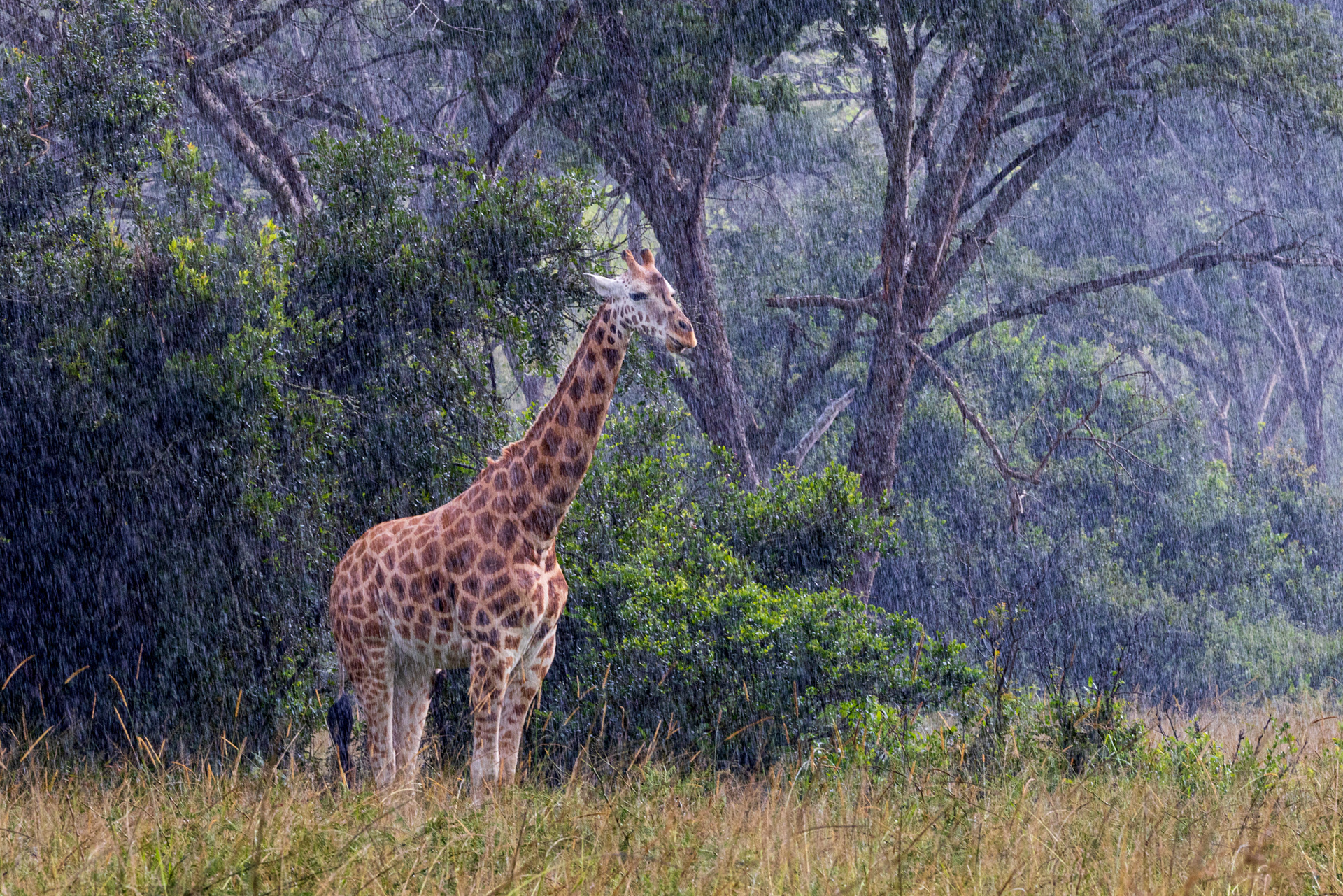
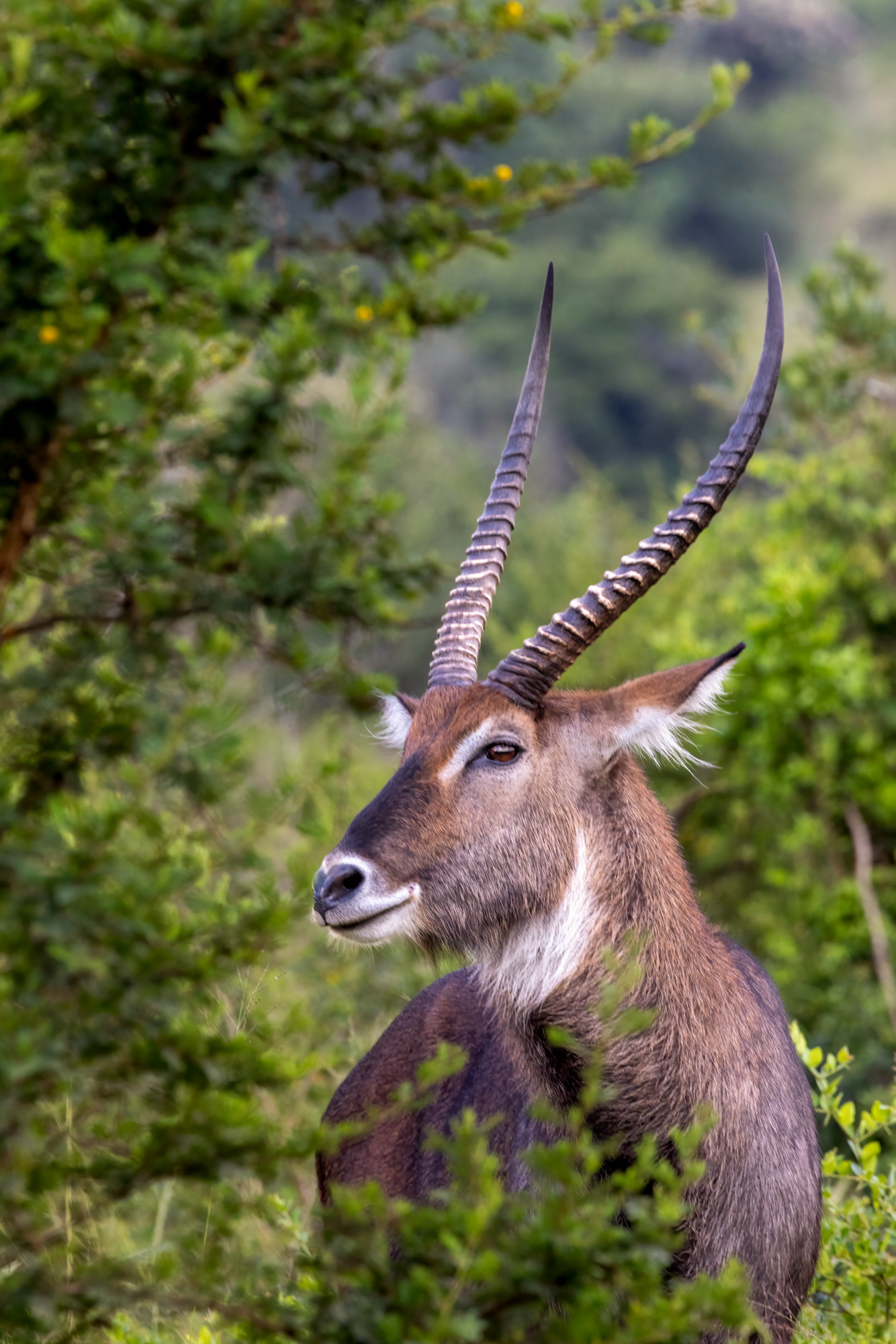
Lake Mburo was supposed to be a quick overnight stop. It ended up being one of my favorites. We did walking safaris evening and morning. Cost were reasonable, $40 for a 24 hour park entry, $10 for the walking safari (plus car, plus driver). You’re paired with a ranger, and ours was fantastic (I wish I could remember her name, old age!). She kept us safe but gave us room to roam. Once the rain cleared, we set off and immediately found ourselves surrounded by giraffes. We also saw zebra, eland, impala, waterbuck, hippos, and gave the cape buffalo a respectful amount of space by changing our route.
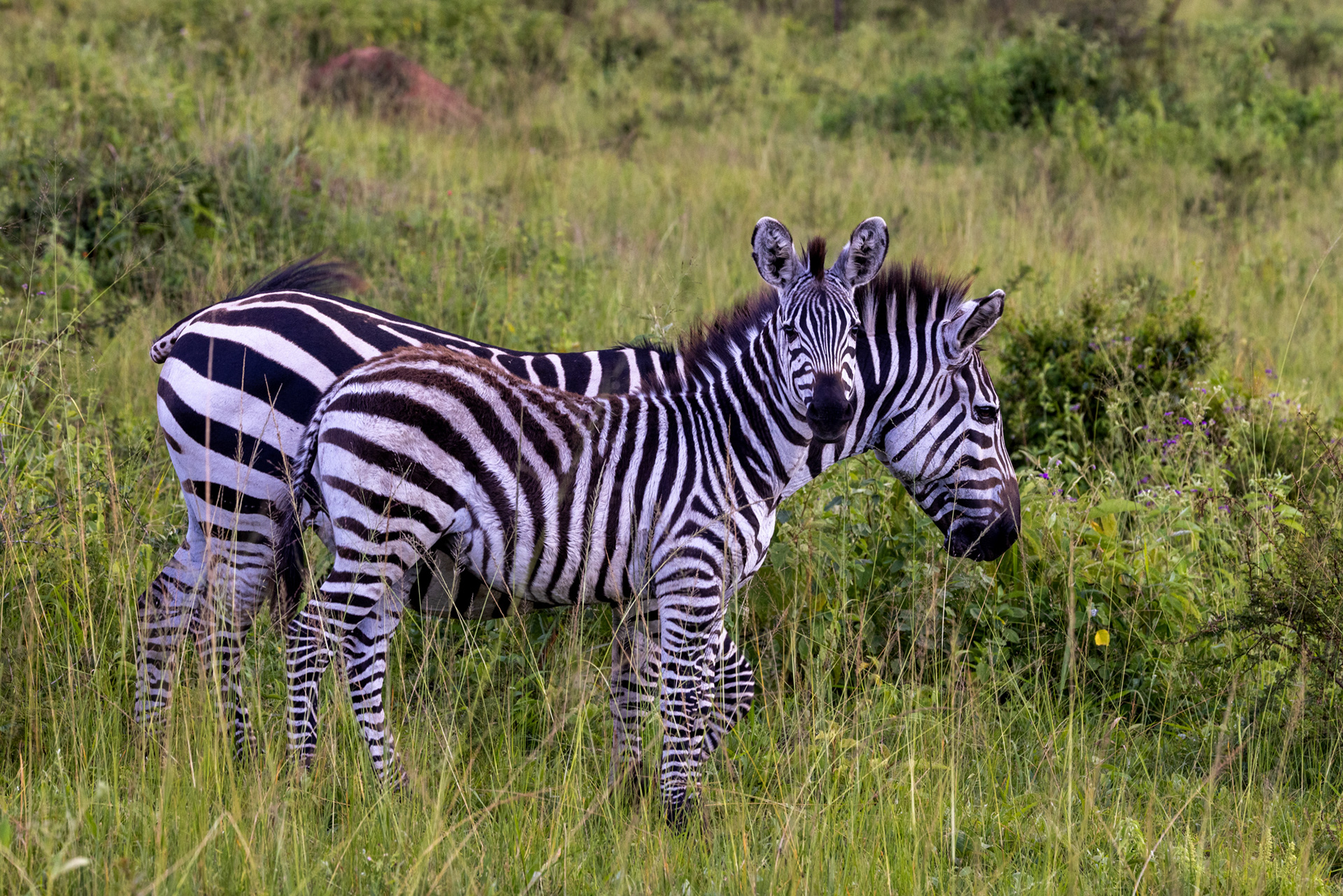
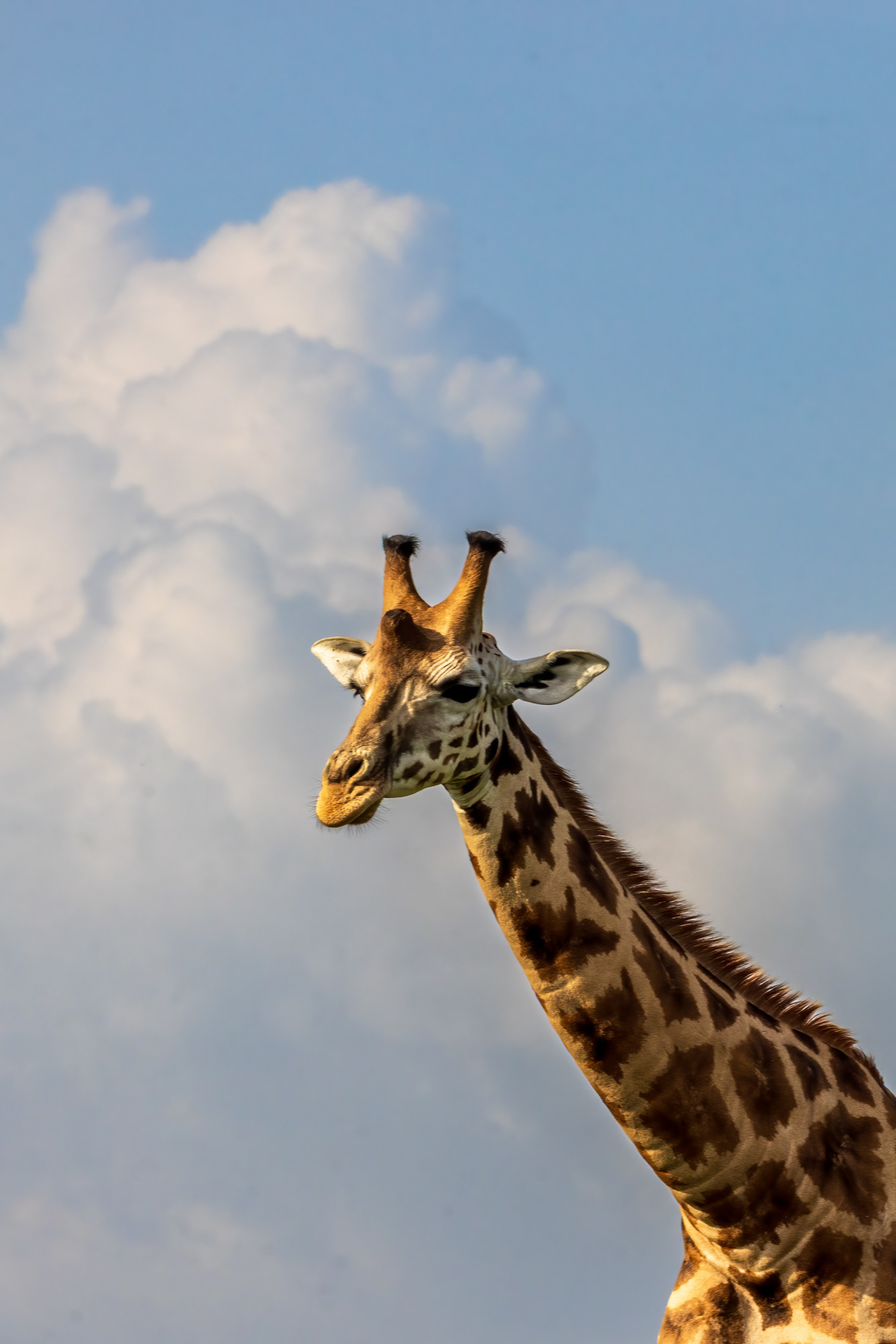
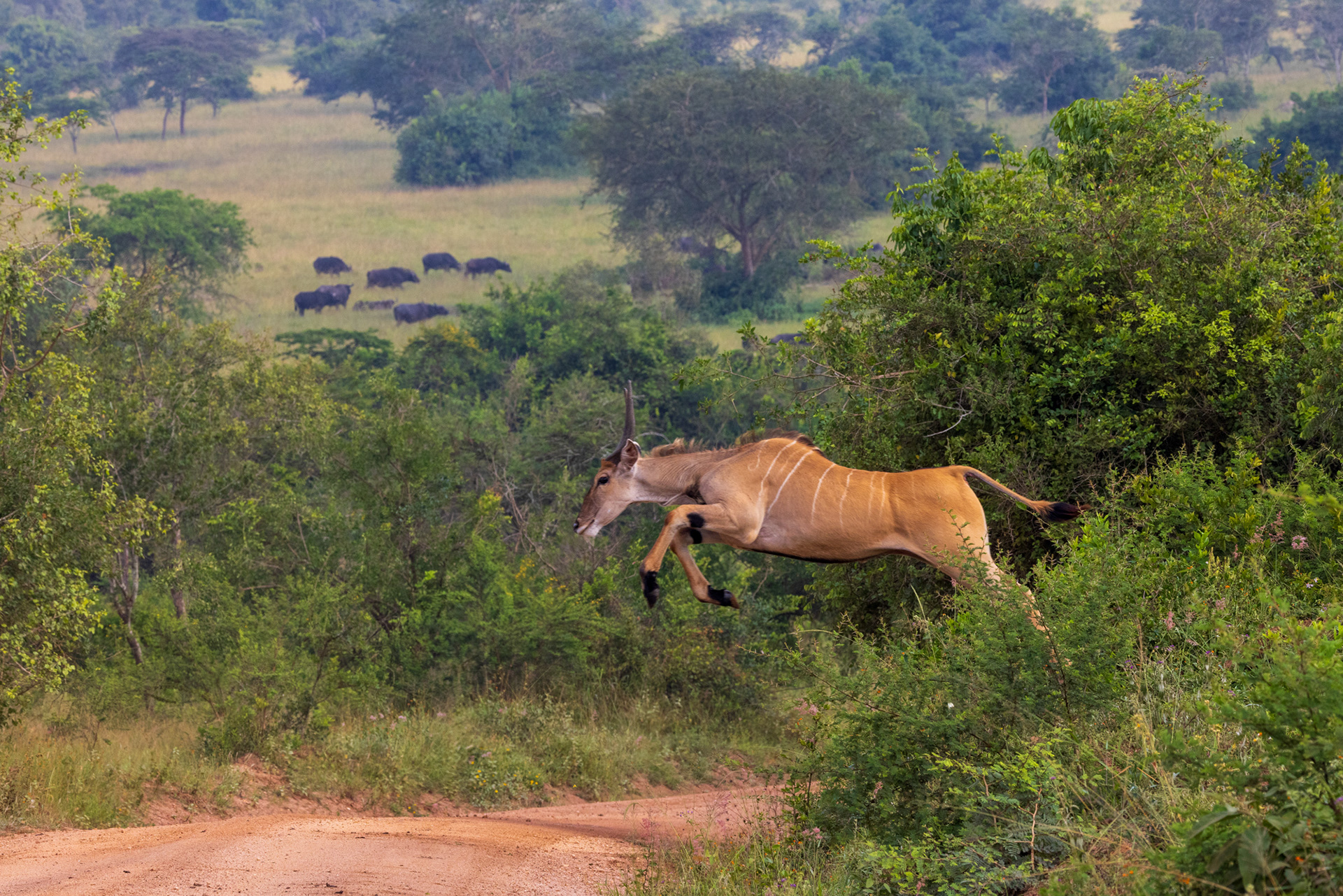
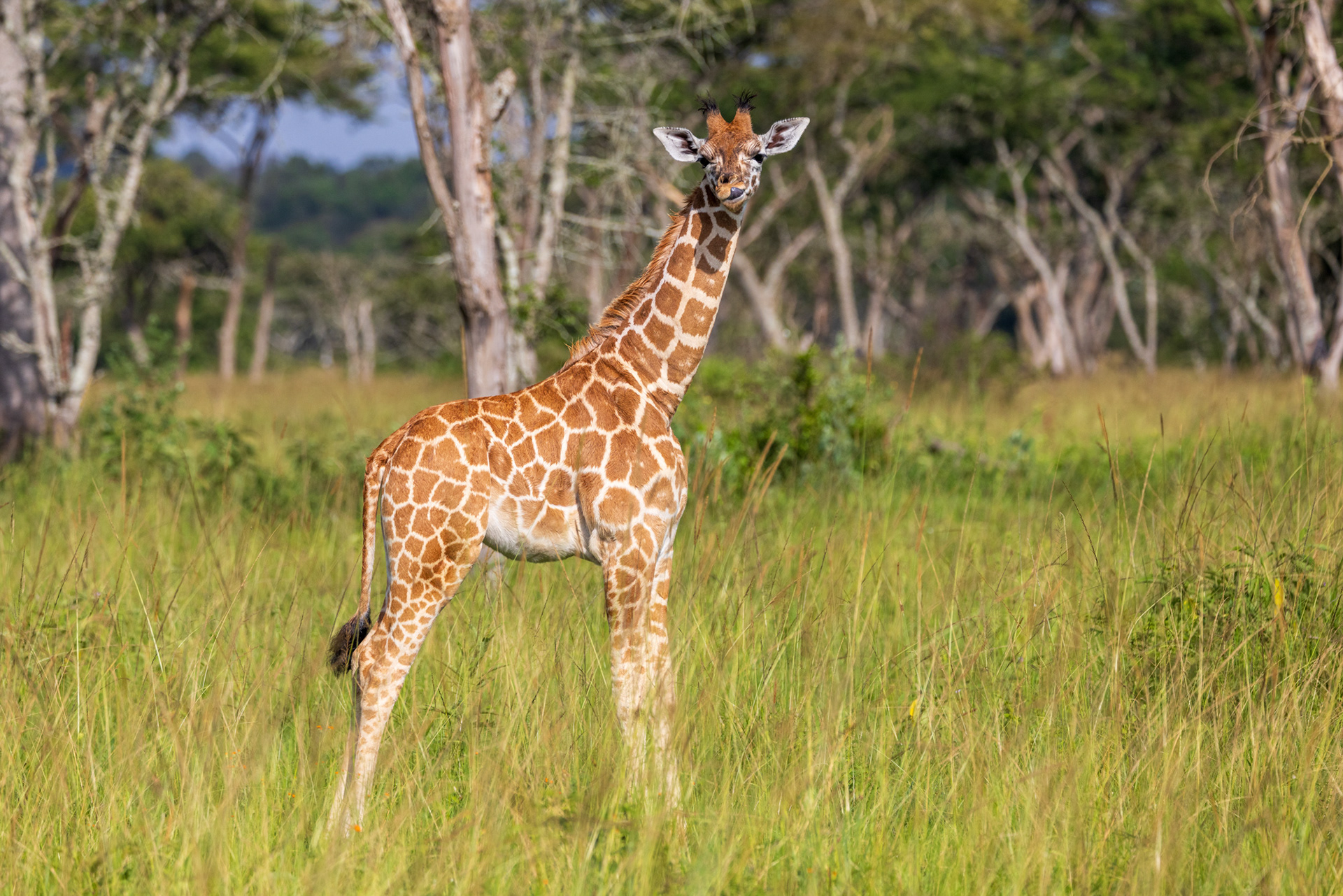
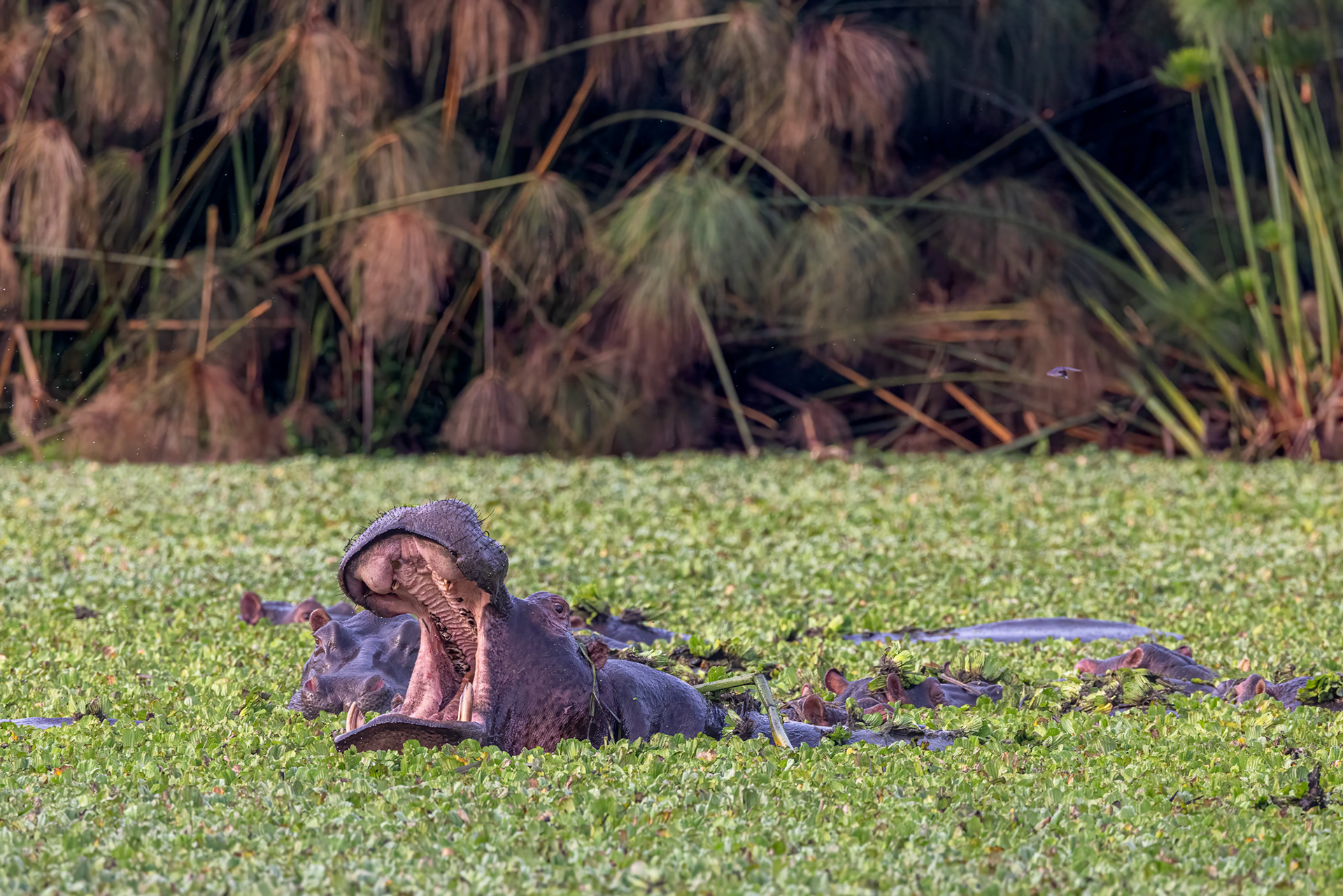
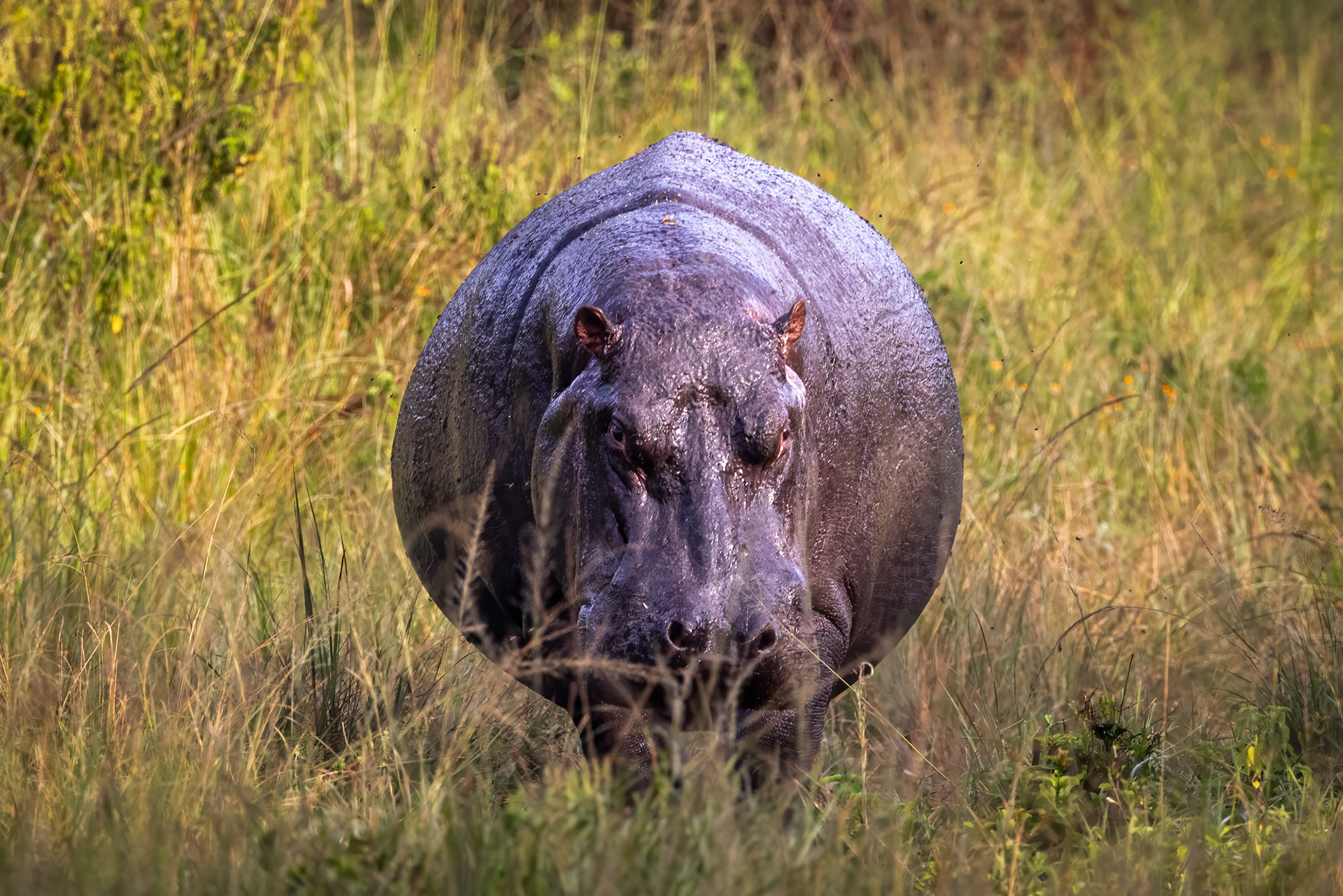
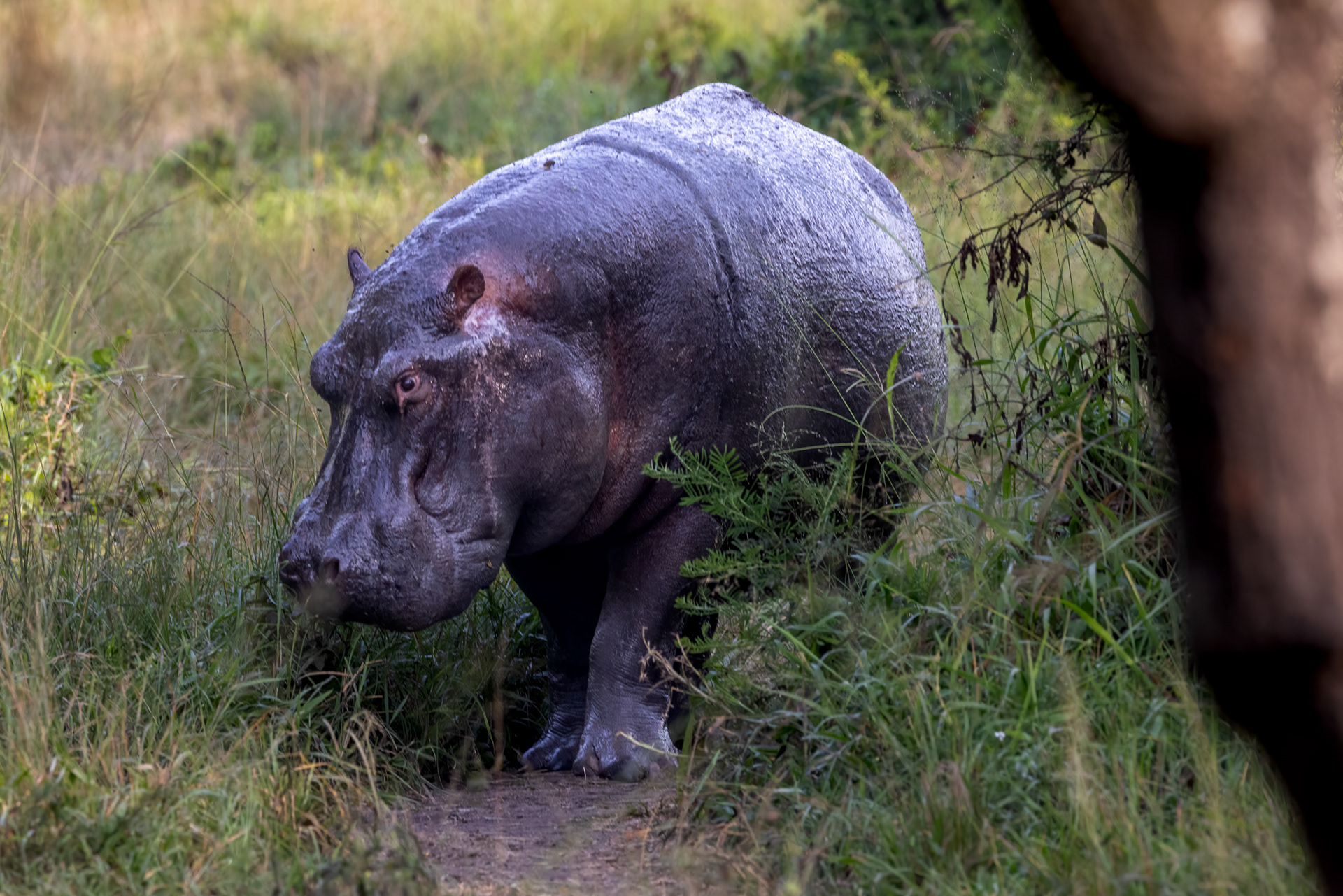
The next morning, our ranger offered to look for shoebills. We heard them but didn’t spot any. However, we did spend quality time with hippos, both in the water and casually blocking our path. Since those are one of our favorites, we considered it a win. We stayed at Rwakobo Rock Lodge, comfortable, good food, no complaints. If there is a next time, fingers and toes crossed, we will be back for several days.
Bwindi
Next stop, Bwindi and Rushaga Gorilla Lodge. The drive was fine until the last hour, which turned into a steep, increasingly questionable dirt road that suggested we’d made a wrong turn. We hadn’t. The lodge was excellent, and the manager, Elizabeth, was incredibly helpful.
Now, context. LeAnne had knee surgery recently. We were on week three of being able to put weight on the leg. Naturally, we decided this was the perfect time for gorilla trekking in the Bwindi Impenetrable Forest. We requested an “easy” hike. The rangers said that they would do their best, but politely explained that gorillas often do not honor such requests.
There is, however, another option called the “African helicopter”, a sedan chair carried by eight porters for $300. Tempting, but we opted instead for one porter to carry our camera gear and assist LeAnne. He was fantastic, guiding her over mud, logs, and general jungle chaos while I contributed by taking pictures and staying out of the way.
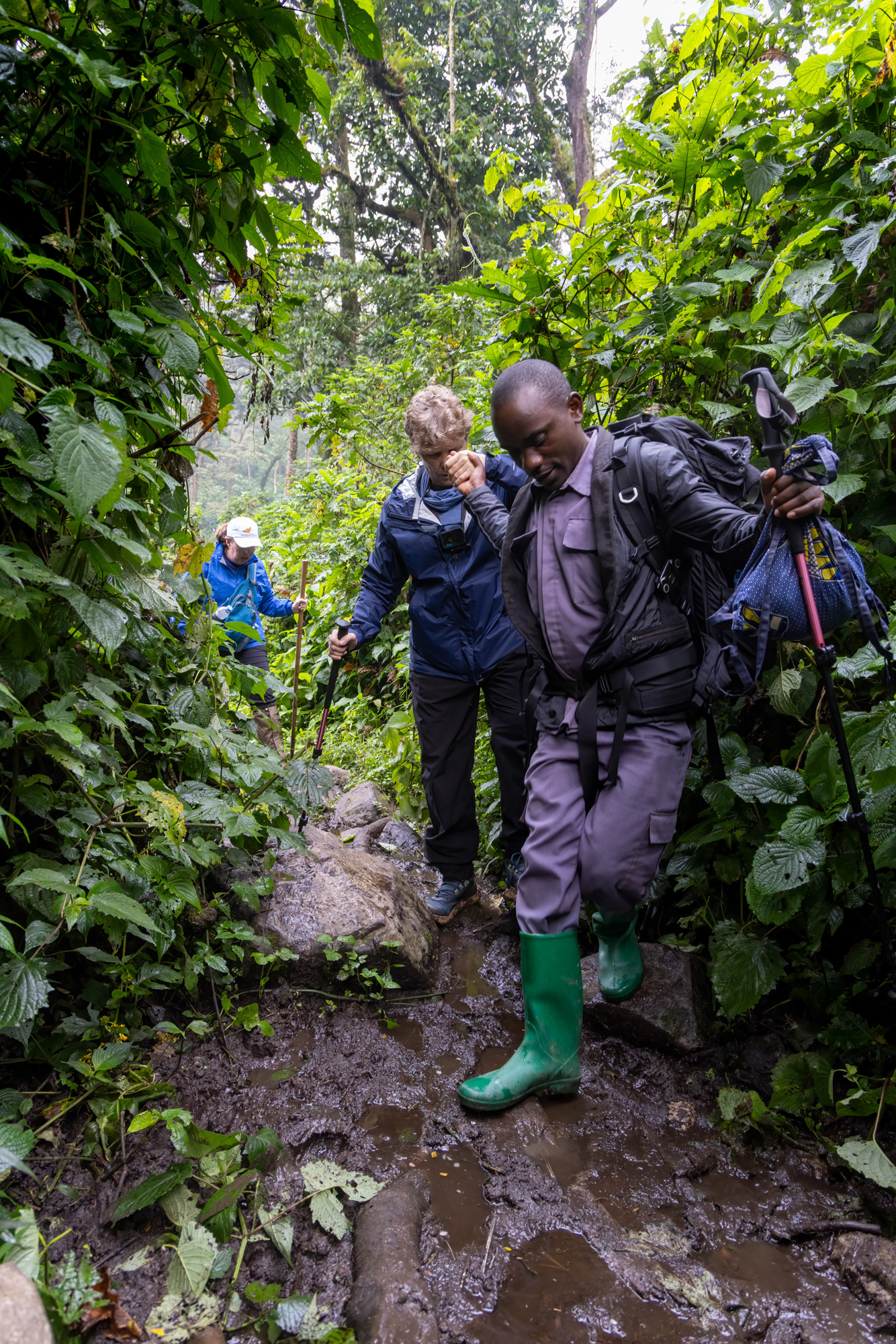
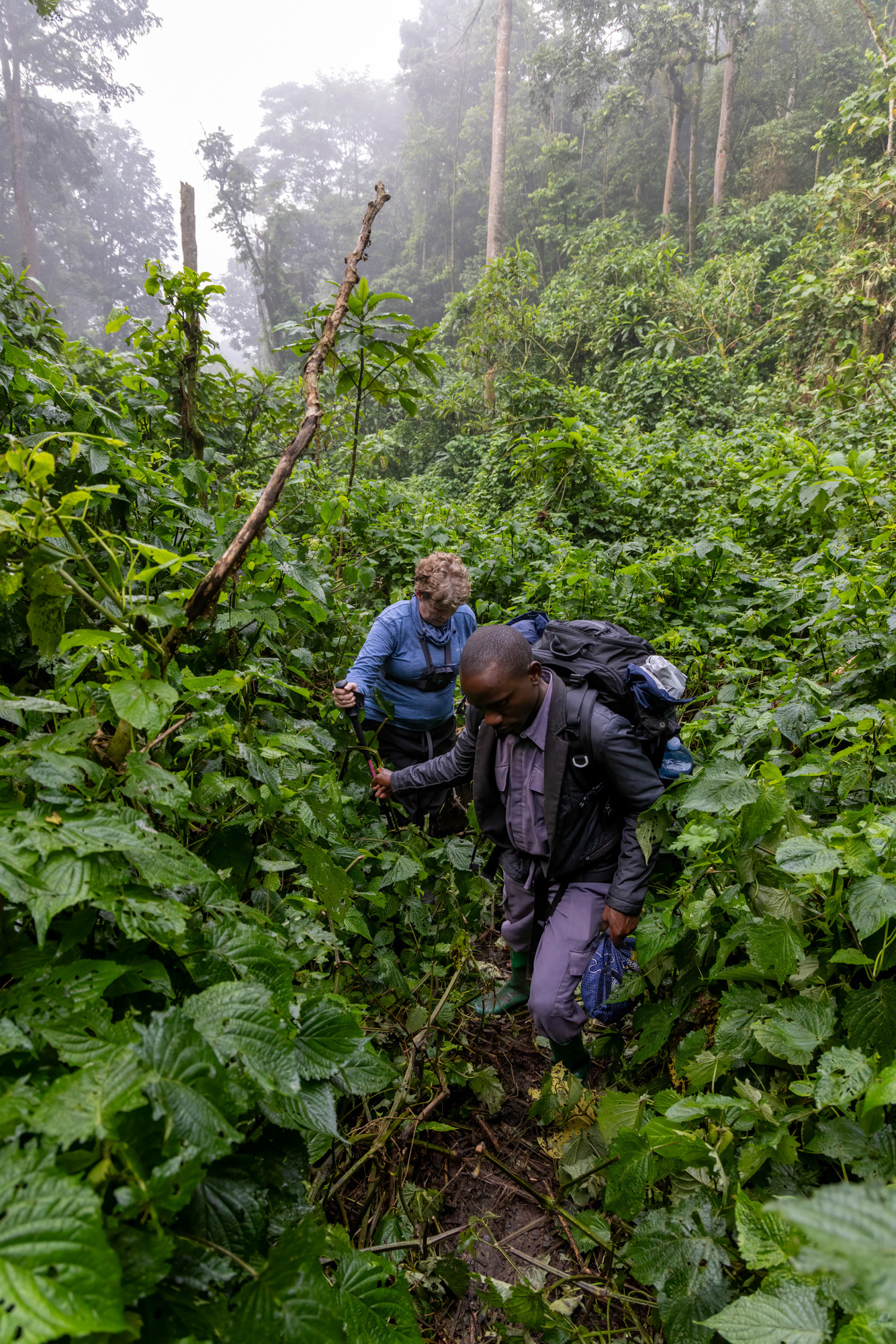
The hike ended up being about two miles, with the final stretch resembling a cliff that hadn’t quite committed yet. Fortunately, “impenetrable forest” means there’s always something to grab, just check for thorns first. We followed a very obvious gorilla-made path (they are not subtle), and suddenly we were with them.
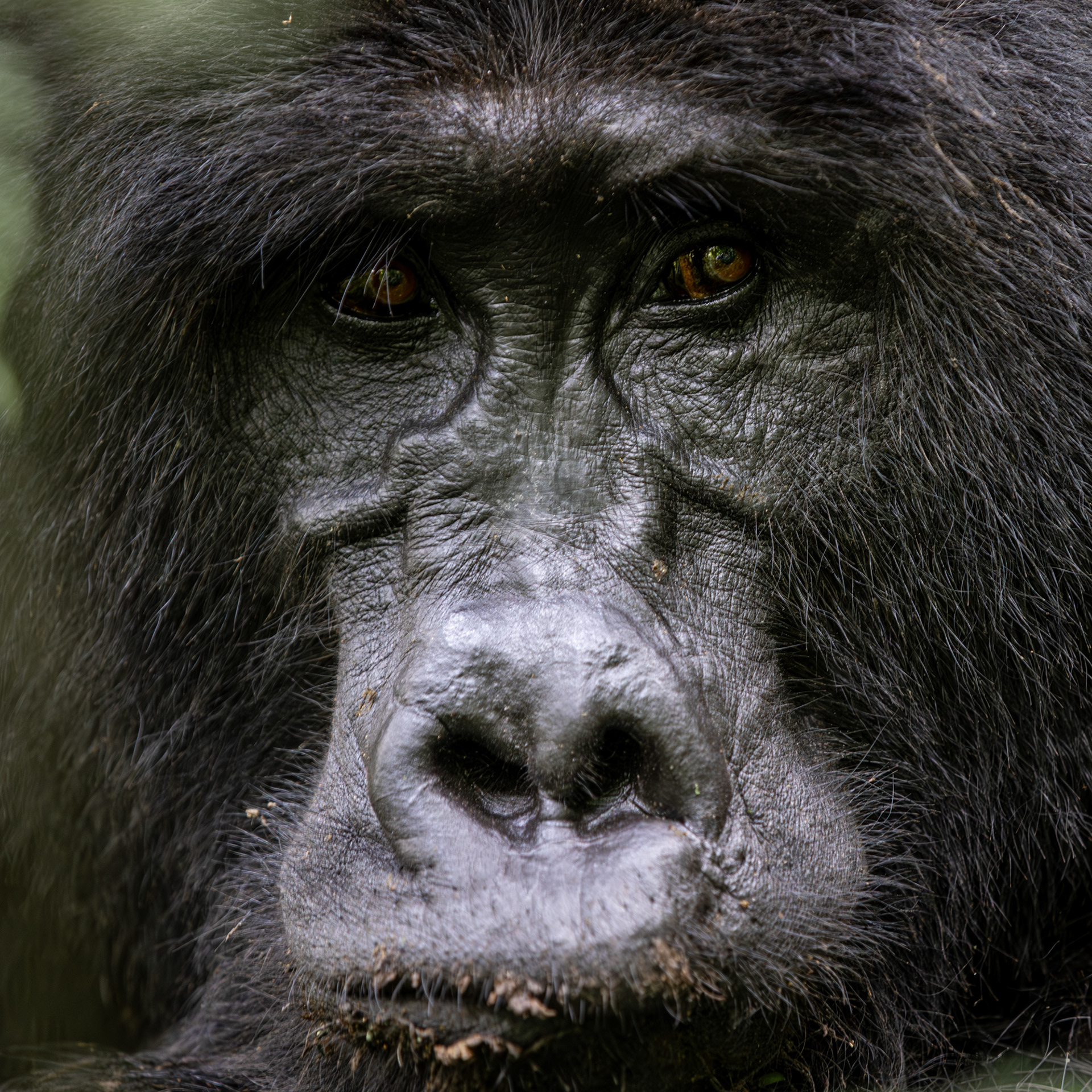
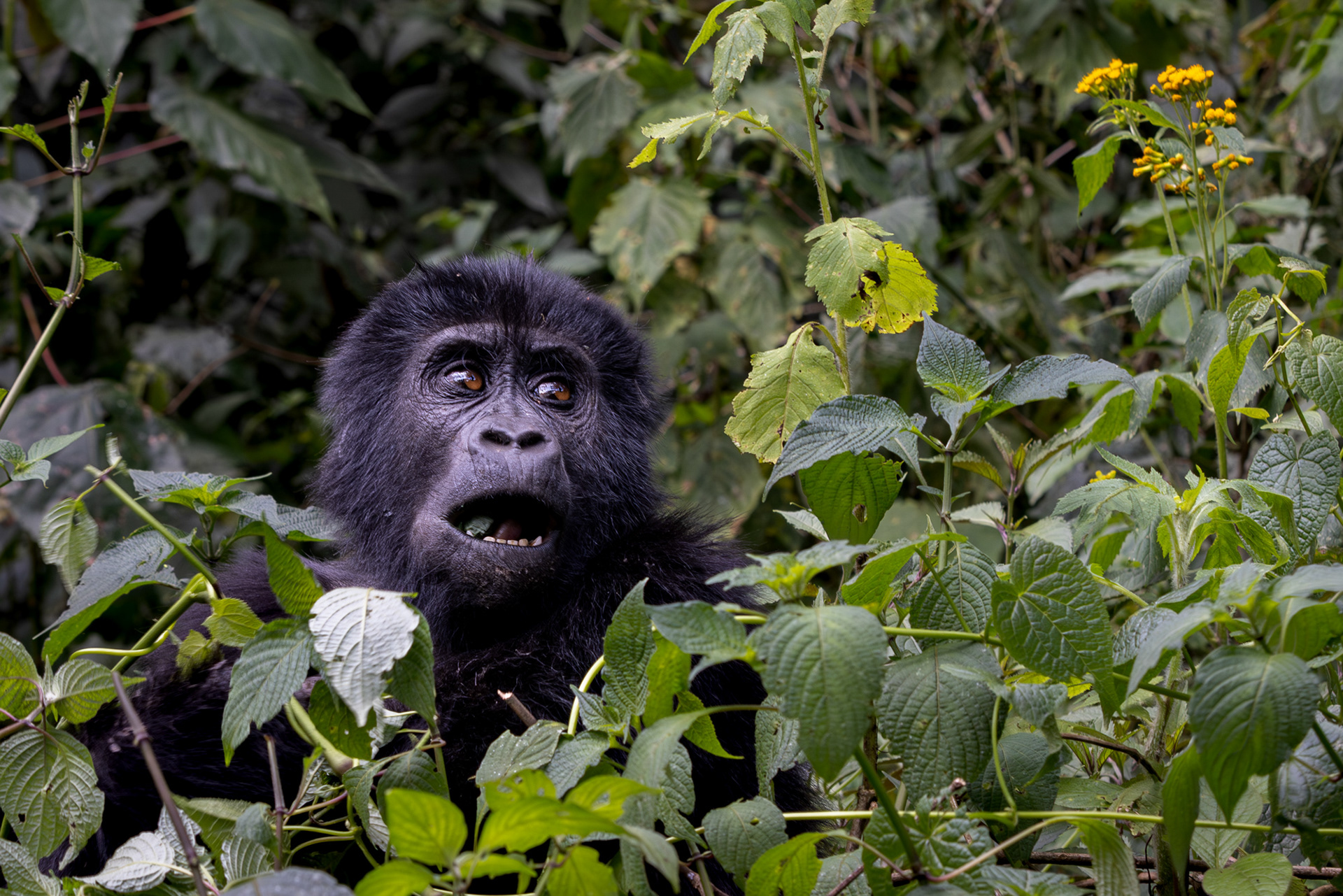
Photography was tough. Low light, dense canopy, overcast skies. I was shooting at f/2.8, 1/30 sec, ISO 3200, and sacrificed many photos to motion blur. Didn’t matter. The experience was incredible. Two young gorillas spent the entire hour play-fighting. At one point jumping onto a sleeping silverback, who moved the fight with one lazy, sweeping BIG arm. Another event cracked me up. One of the moms woke up, glanced around, and spotted her baby snoozing nearby. She picked it up, tucked it in beside her then used it as a pillow. There was always a branch in the way, and any clear viewing angle was immediately filled with photographers. Still, impossible to be annoyed. As we left, the sun came out and the gorillas casually followed us down the hill like polite hosts seeing us off.
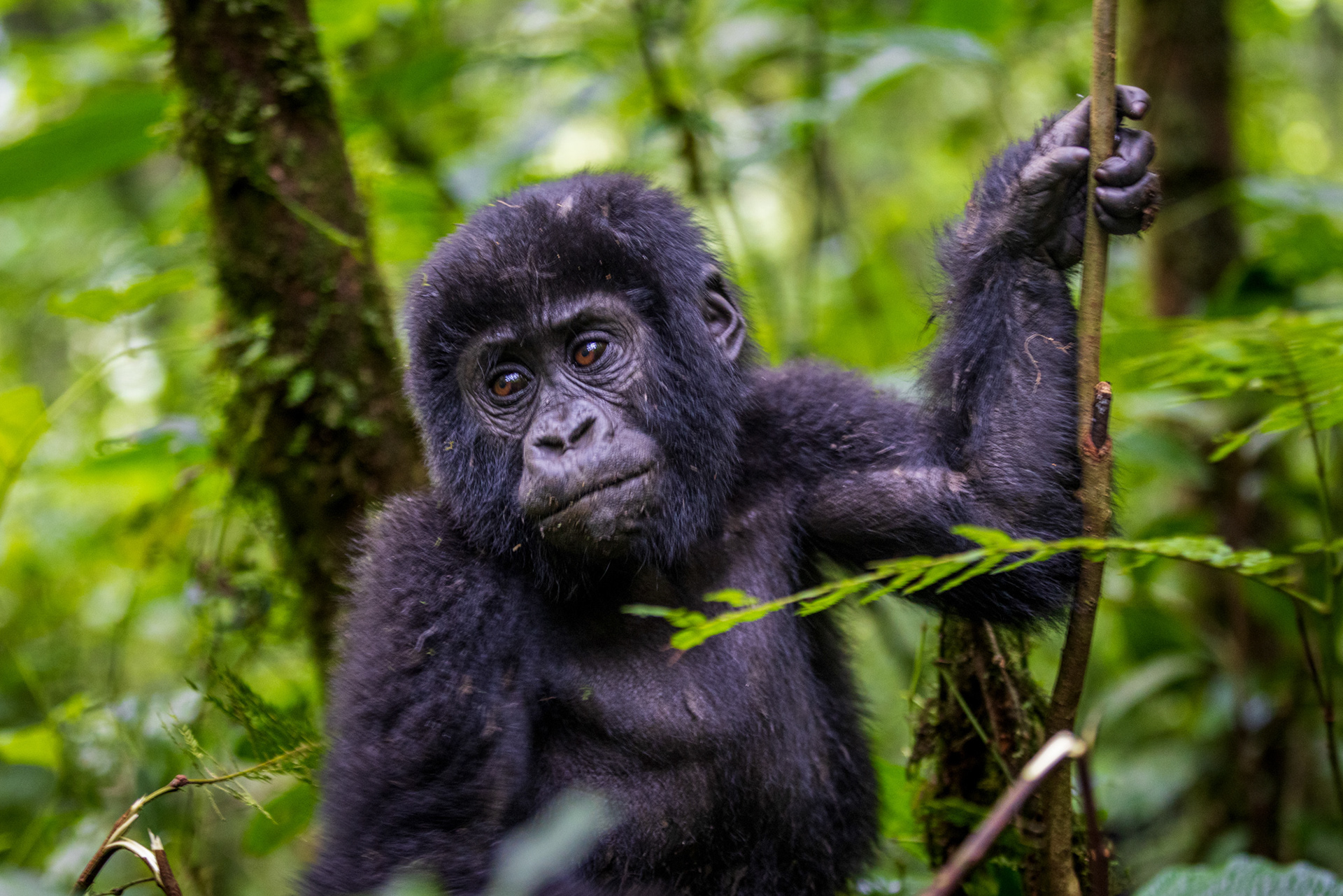
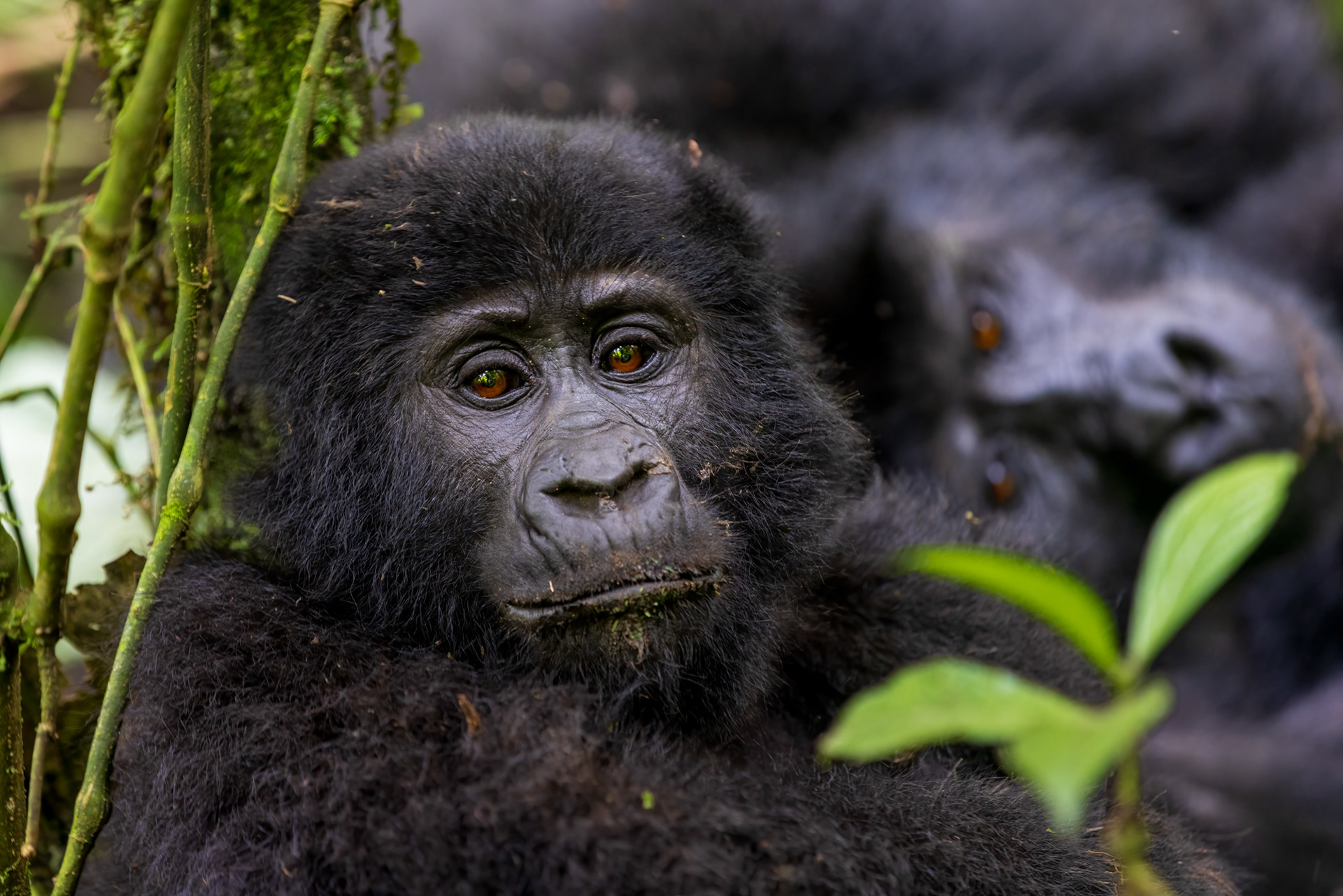
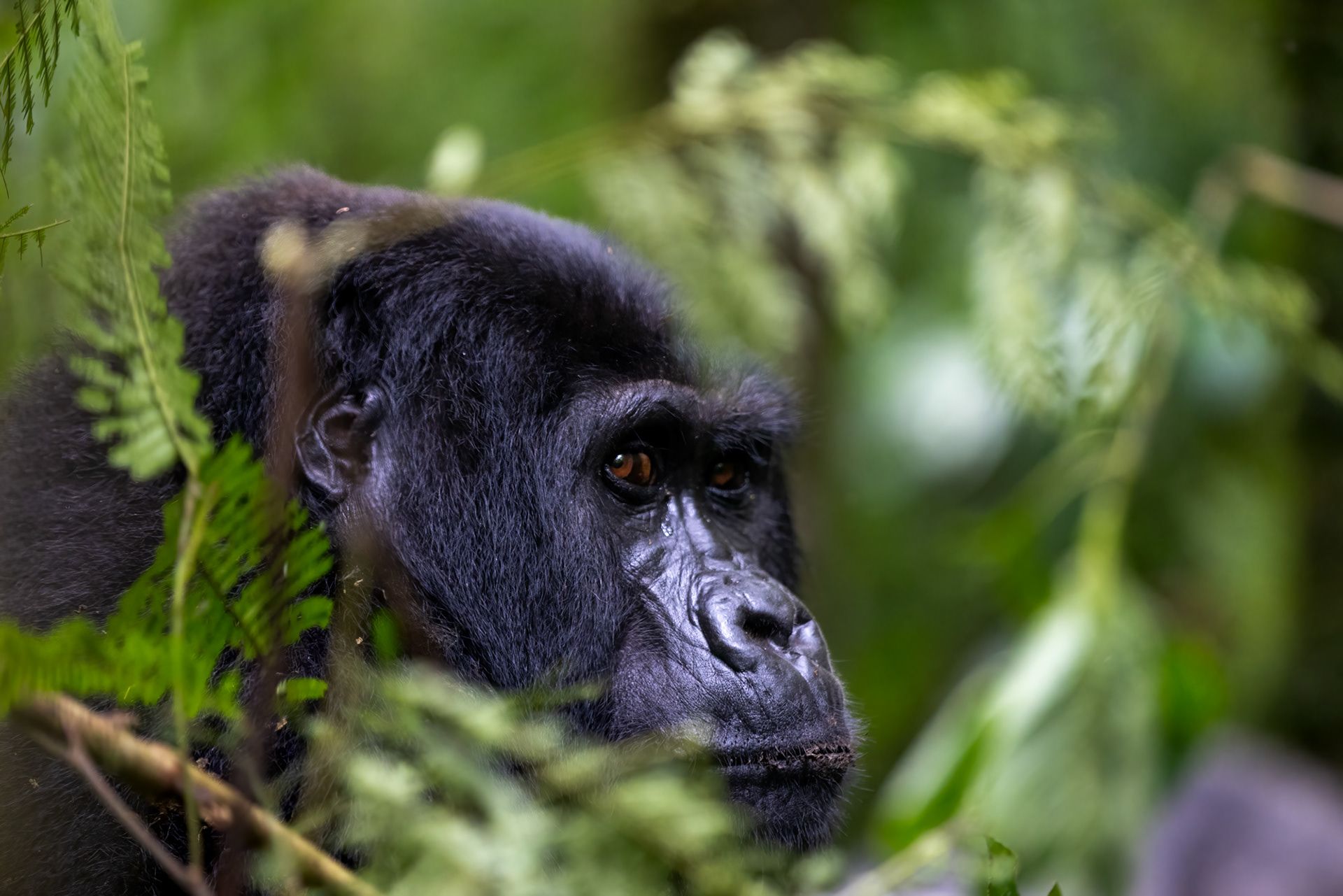
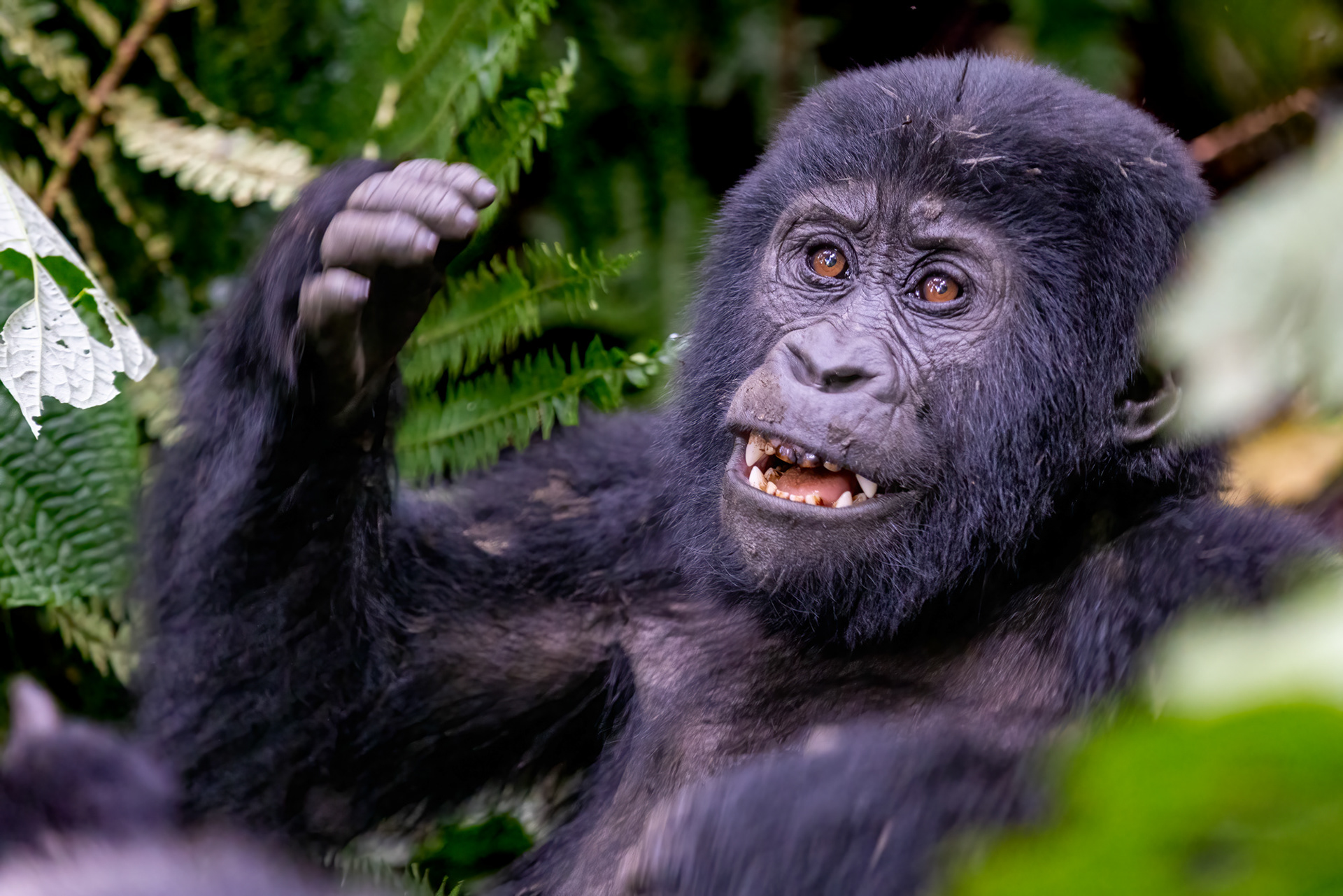
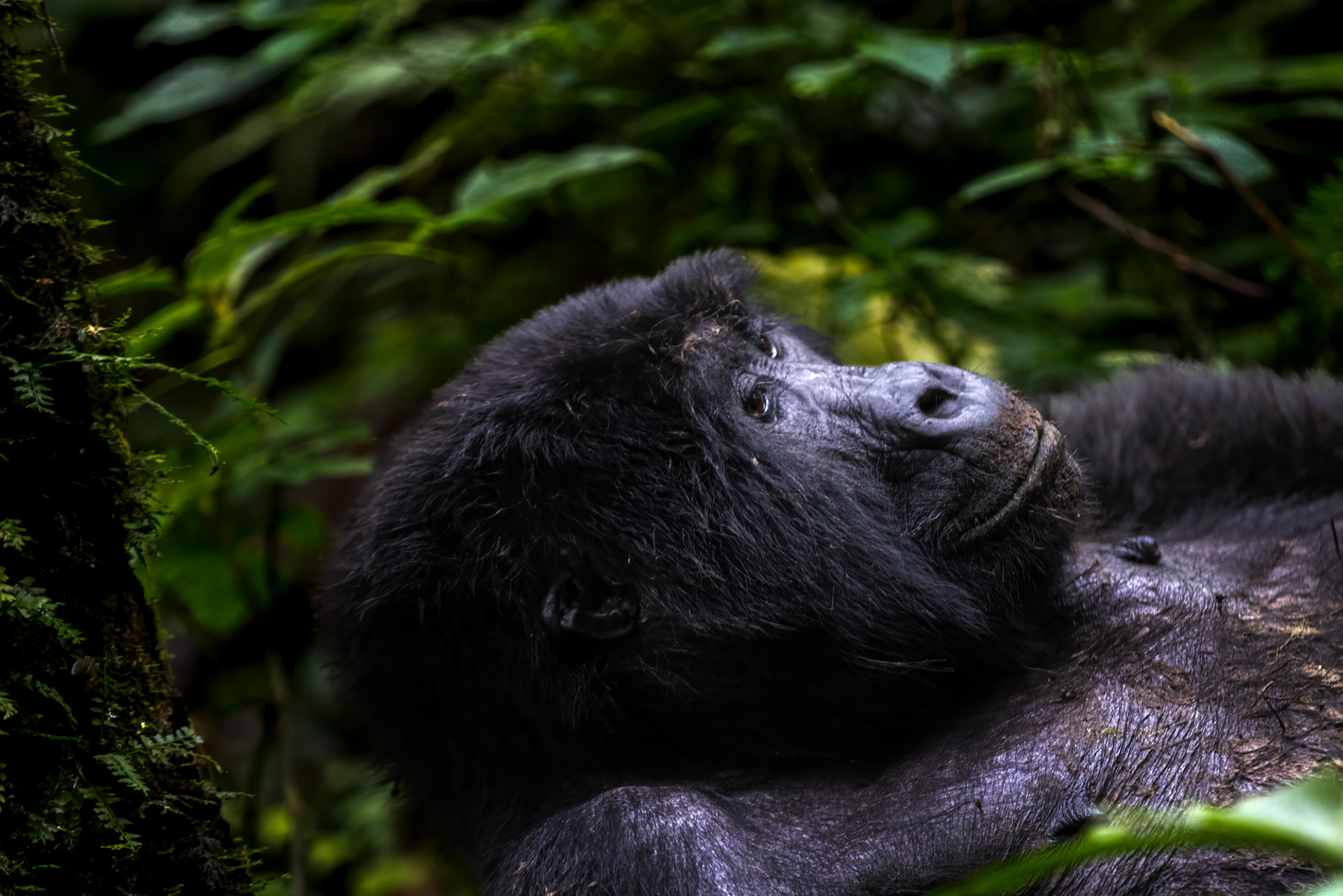
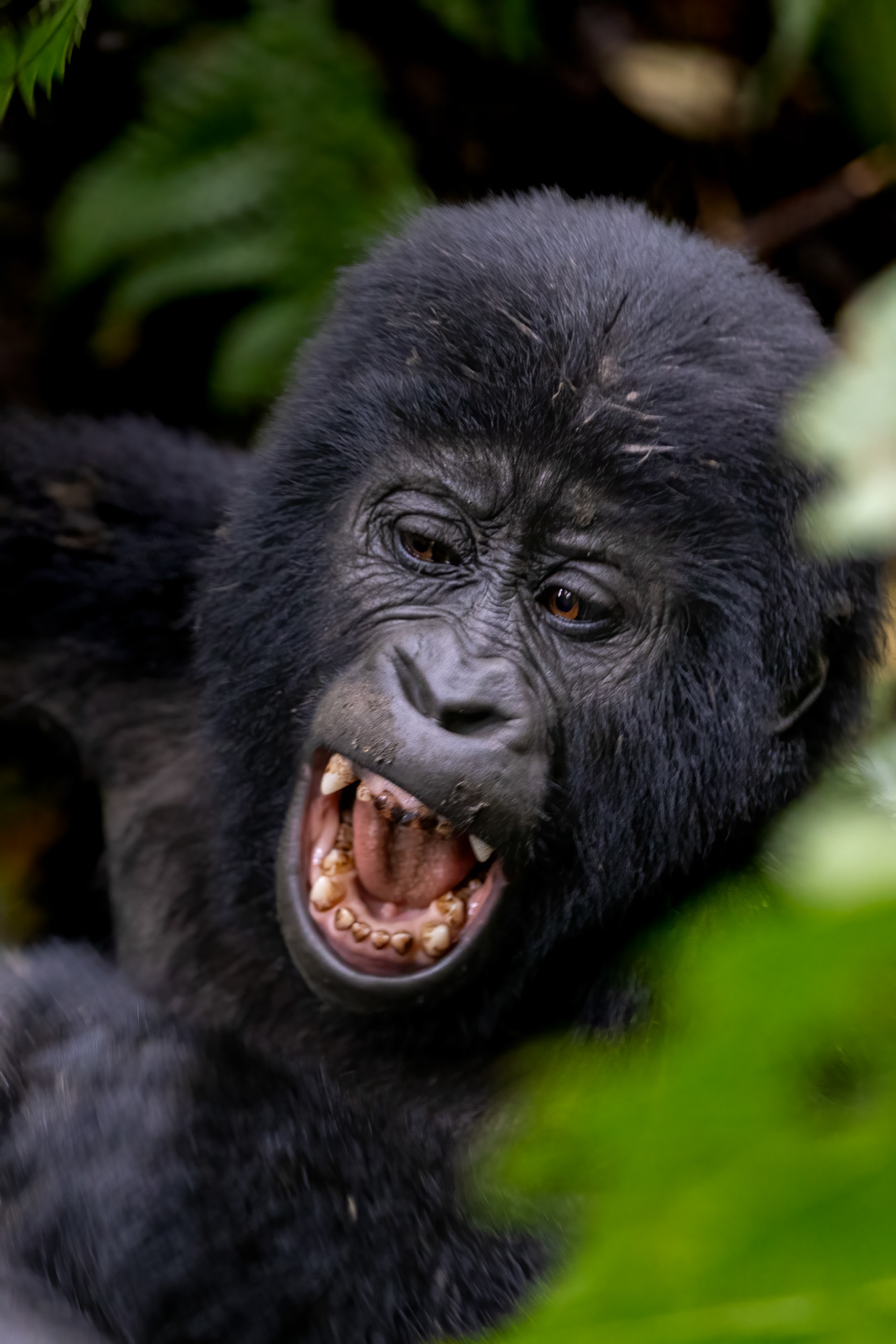
The next day, Asher and I went back out for round two. Same excellent porter, same heavy camera bag. We hiked a few miles, then waited while trackers located the gorillas. This was a good time to chat with fellow trekkers. About an hour later, we moved on and found them lounging in a clearing.
The highlight, a mother and baby under a fig tree, while other gorillas above casually dropped figs down like room service. Asher, accompanied by a guide, managed to get charged by a blackback. Impressive commitment to the experience. Photography was easier this time, open sky, no canopy, but now we had harsh light and a cloud of small flies. Trade-offs.
The family was spread out, so I spent most of my time with the mom and her baby. As usual, the hour disappeared almost instantly, followed by a long trip back to the lodge.
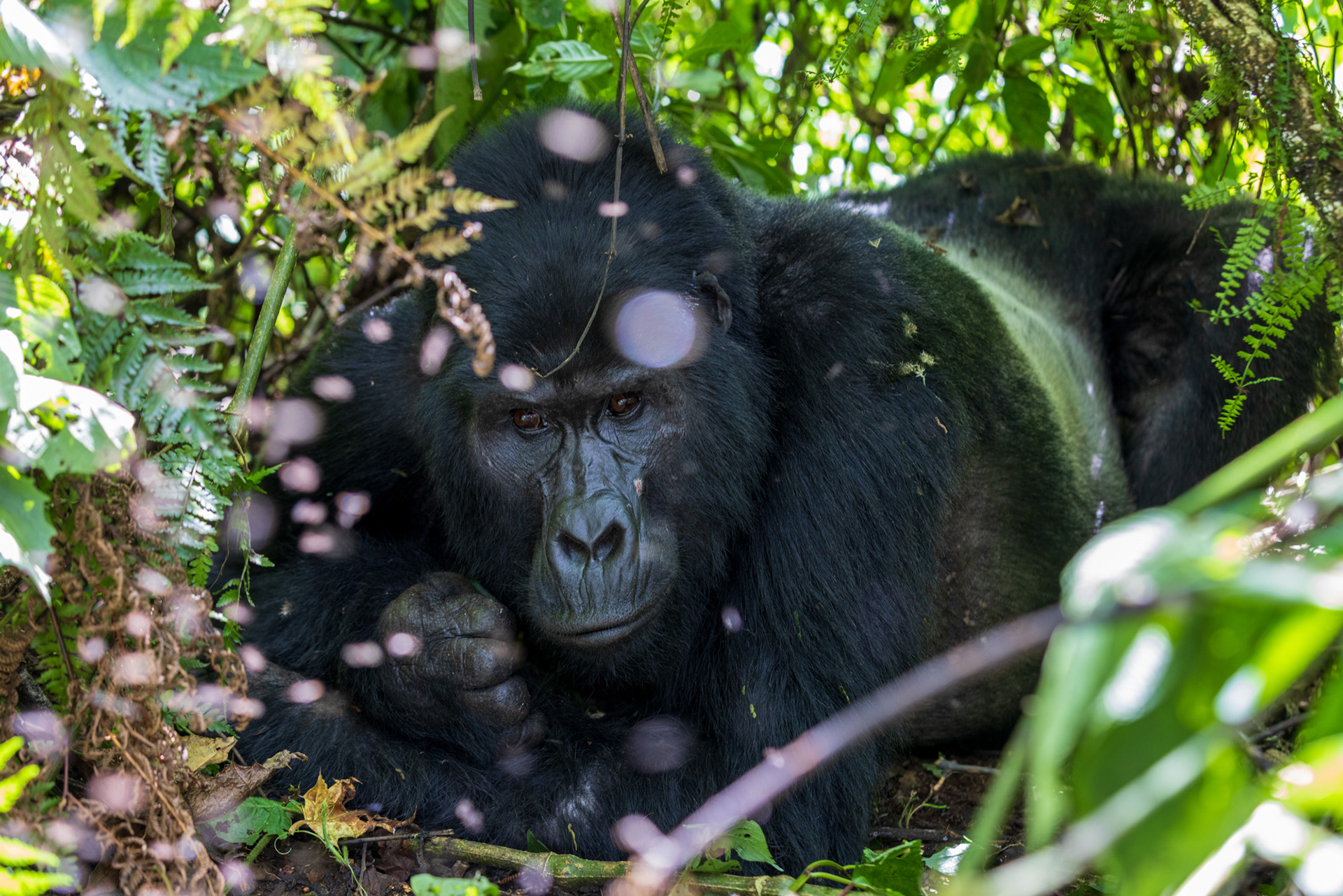
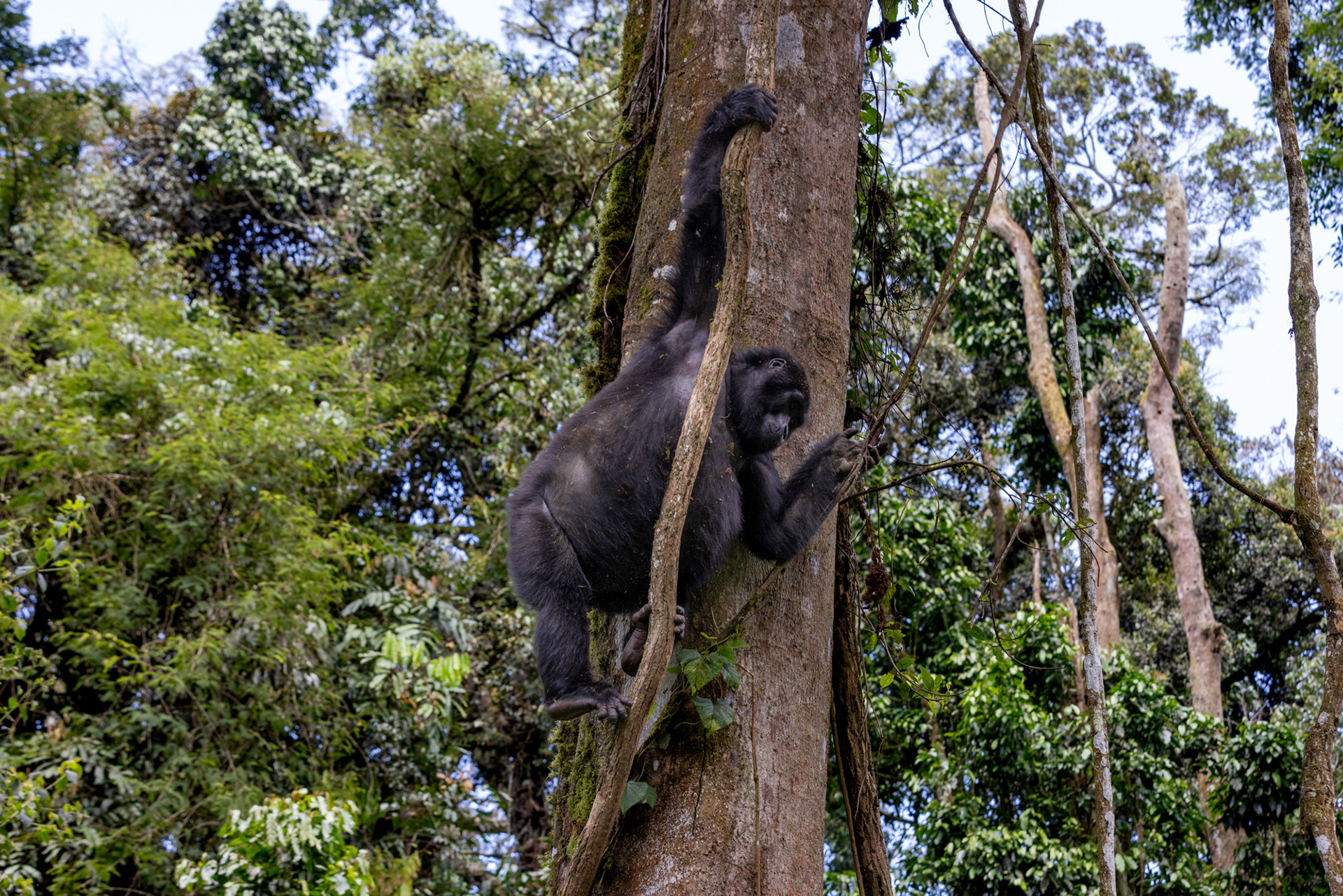
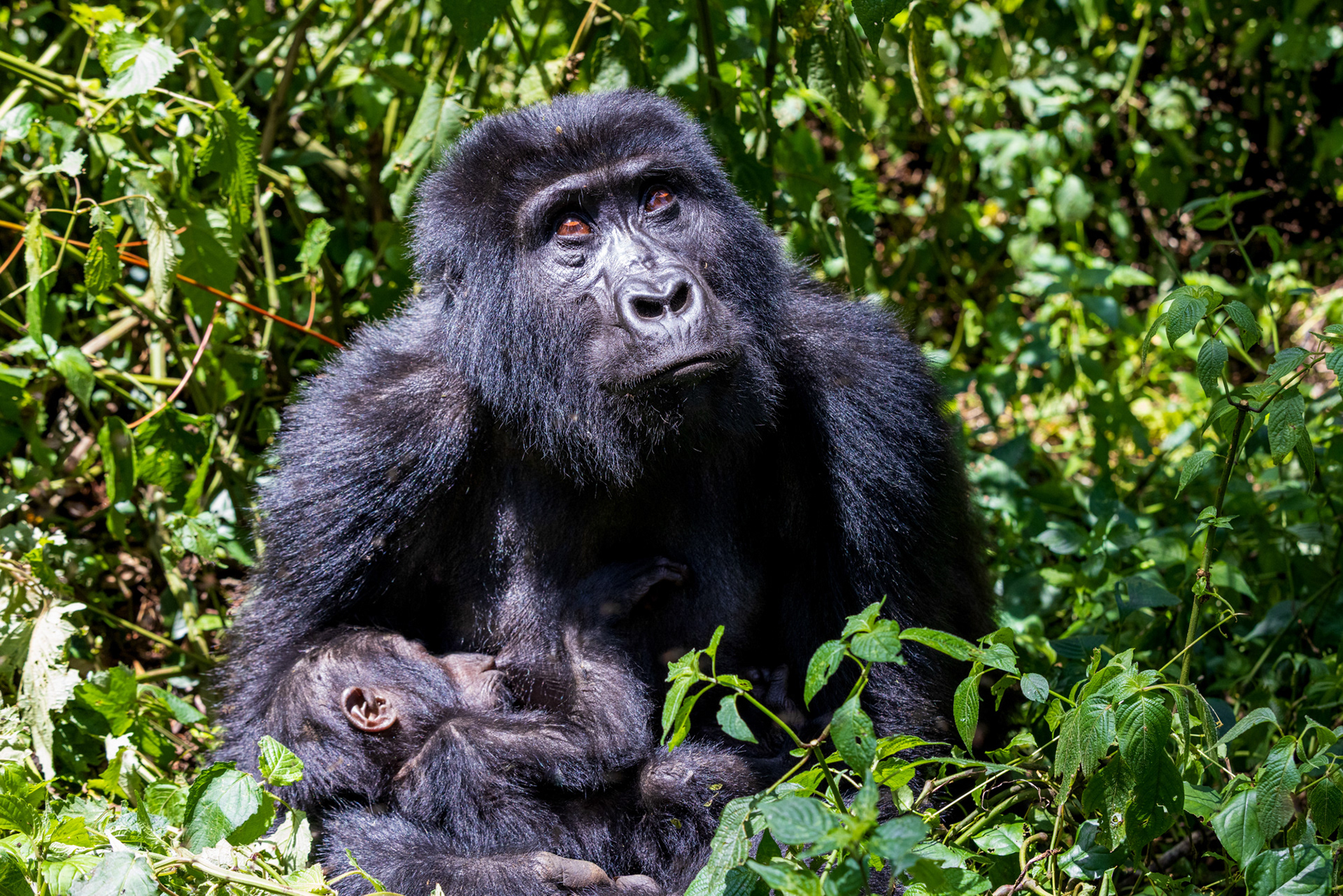
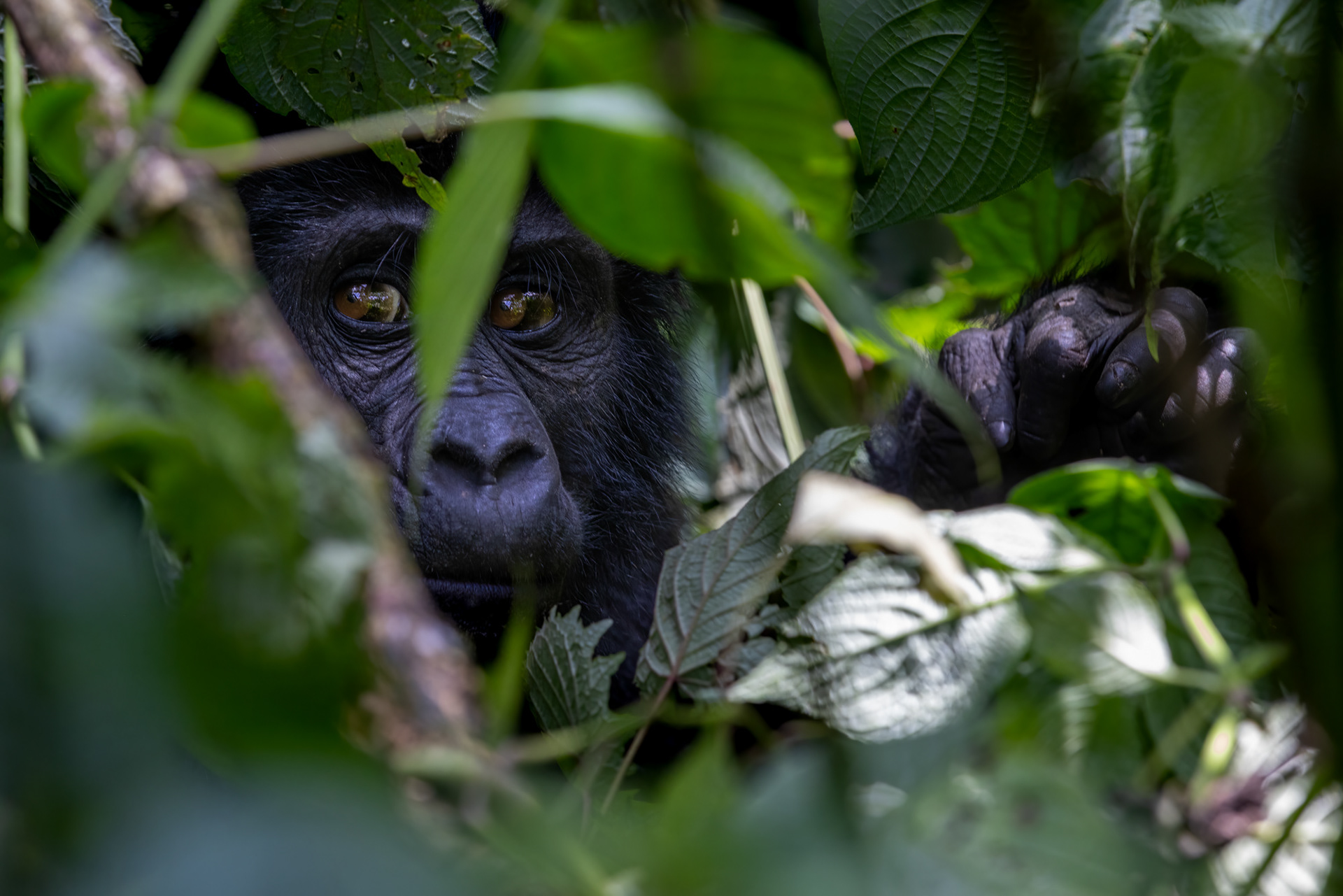
At the lodge, I discovered one of the great innovations of entrepreneurial spirit. For less than a dollar, staff would wash your shoes and return them to your room. I paid three and requested an aggressive soap strategy.
The afternoon was blissfully uneventful, photo editing and eating. The lodge itself was excellent: comfortable rooms, great staff, fantastic food. The only downside appeared our last night there. A group of seven motorcyclists who treated dinner as a warm-up for competitive drinking. They were enthusiastic, but not talented, singers.
Travel tip, always bring earplugs. I had a white noise app. It helped, but there are limits.
Queen Elizabeth National Park
After a solid night’s sleep, we headed to Queen Elizabeth National Park on election day. The internet had been shut down nationwide, no Google Maps, so once again, Fred proved invaluable. Along the way we passed polling stations with long lines of well-dressed voters and frequent police presence. Another memorable cultural moment.
We arrived at Irungu Forest Safari Lodge in time for lunch and stayed three days. It was very good, though not my favorite; lower, warmer, and drier. The provided fan was a hero. Also, if you like a firm mattress, congratulations, you’ve found your place.
There are 11 villages inside the park, so most big cats are collared. It’s practical, rangers can track and intervene if lions or leopards wander toward towns. But, a bit of a buzzkill photographically. The silver lining, rangers almost always know where the cats are. We hired one for most drives; $25 well spent.
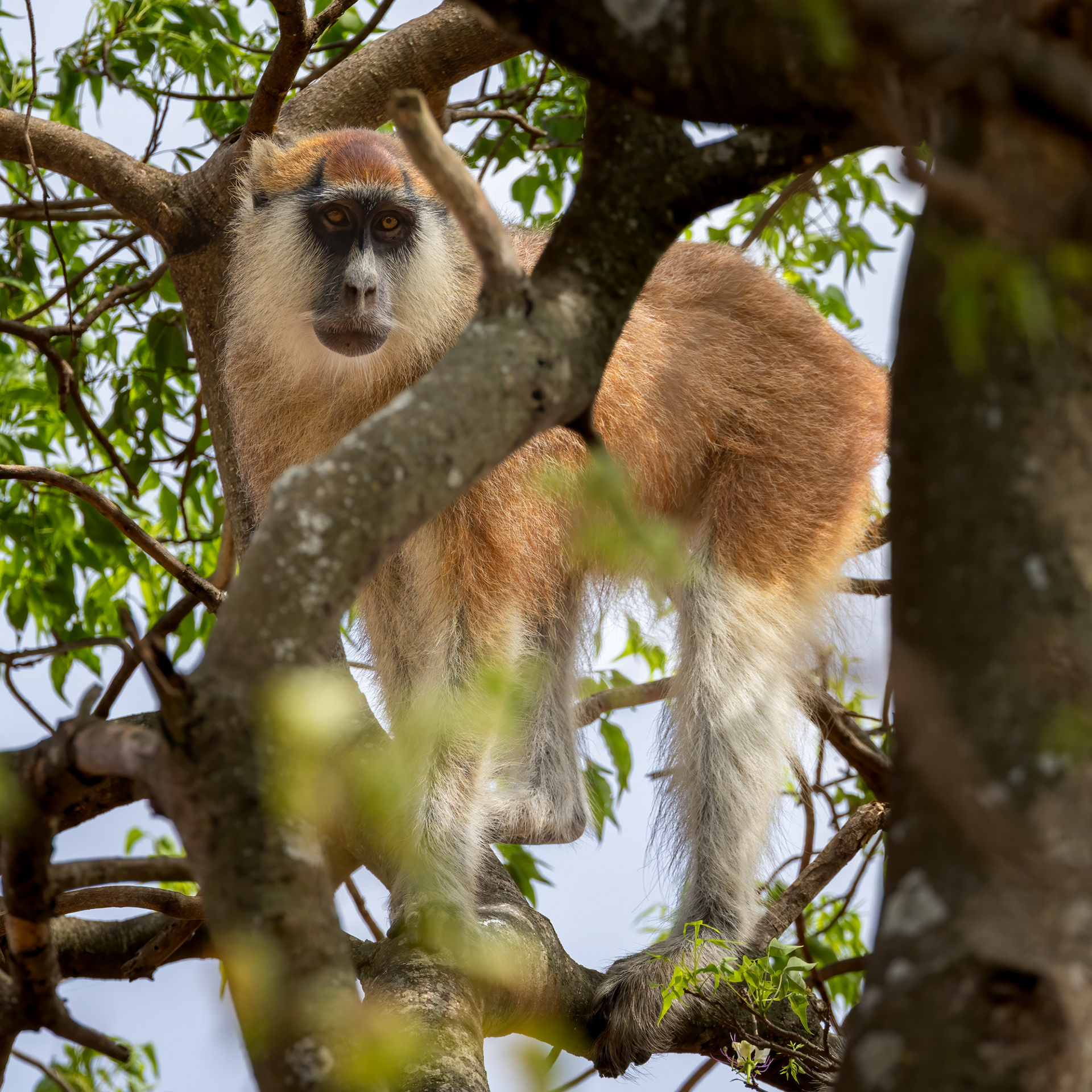
My favorite activity here was chimp trekking in Kyambura Gorge, the “Valley of the Apes.” It felt wilder than Kibale. While waiting for chimps, we watched a pod of hippos (supposedly rare and very cool), a croc, antelope, and baboons. Bonus, it’s cheaper, about $100 vs. $250 in Kibale. If I could do it again, I’d go two or three times.
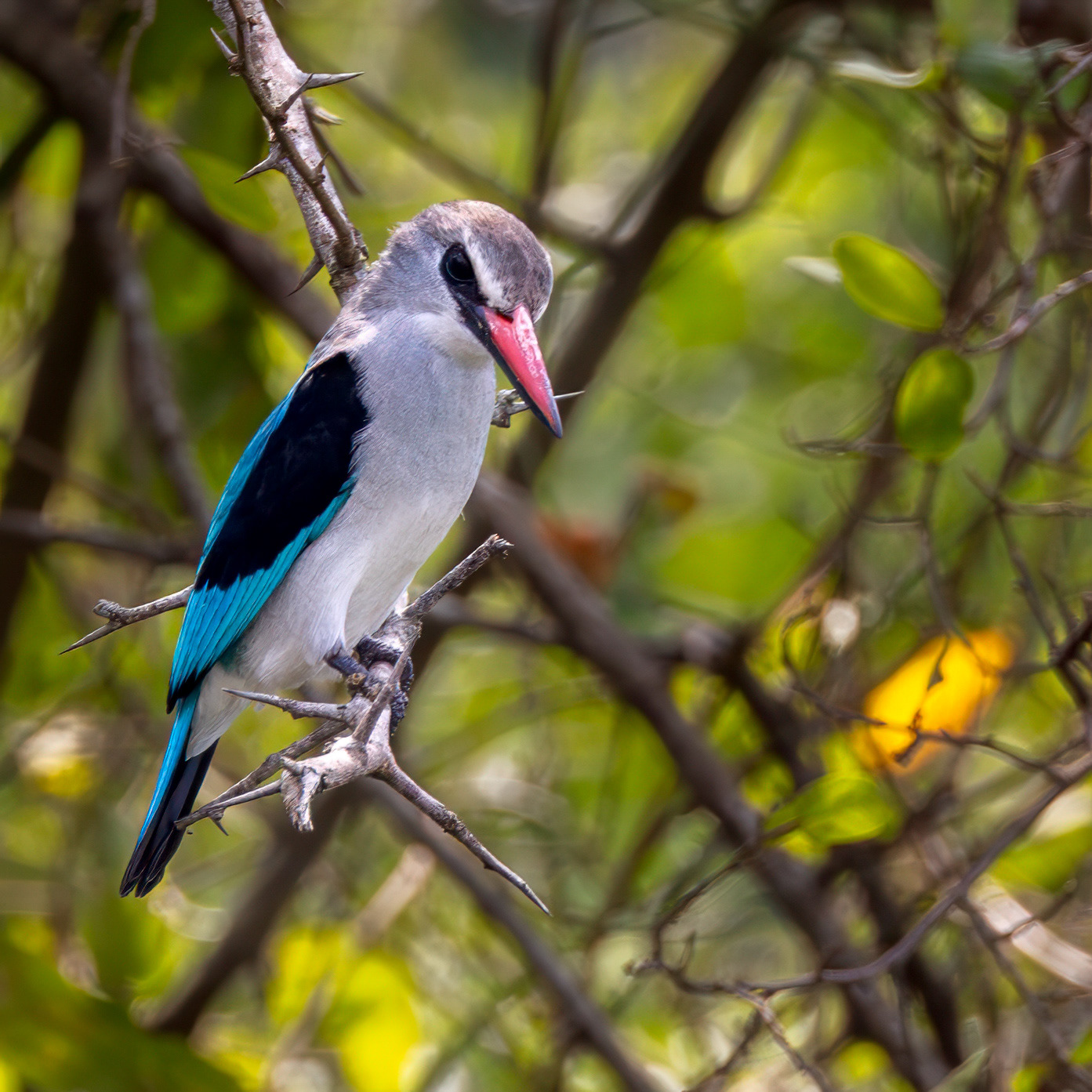
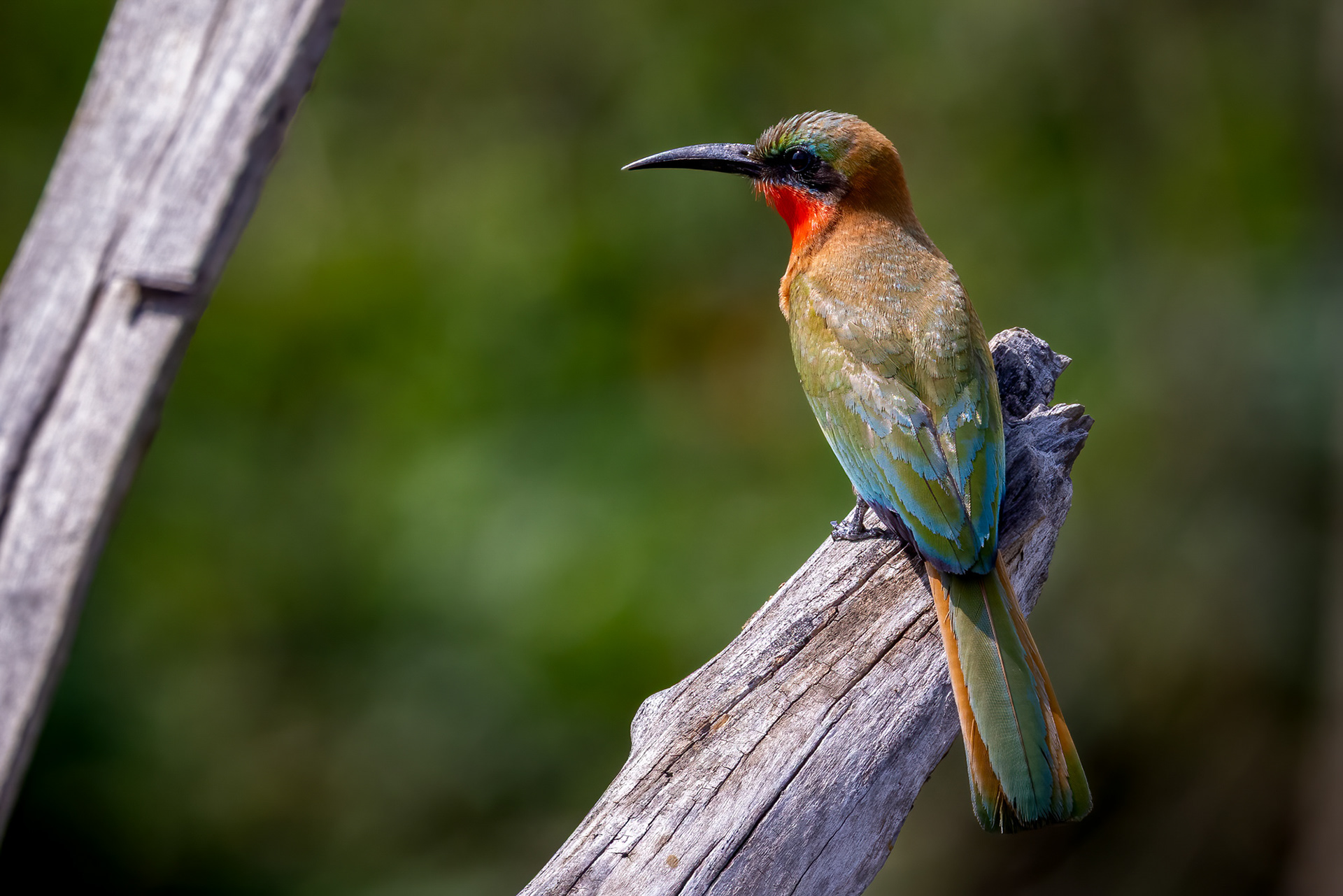
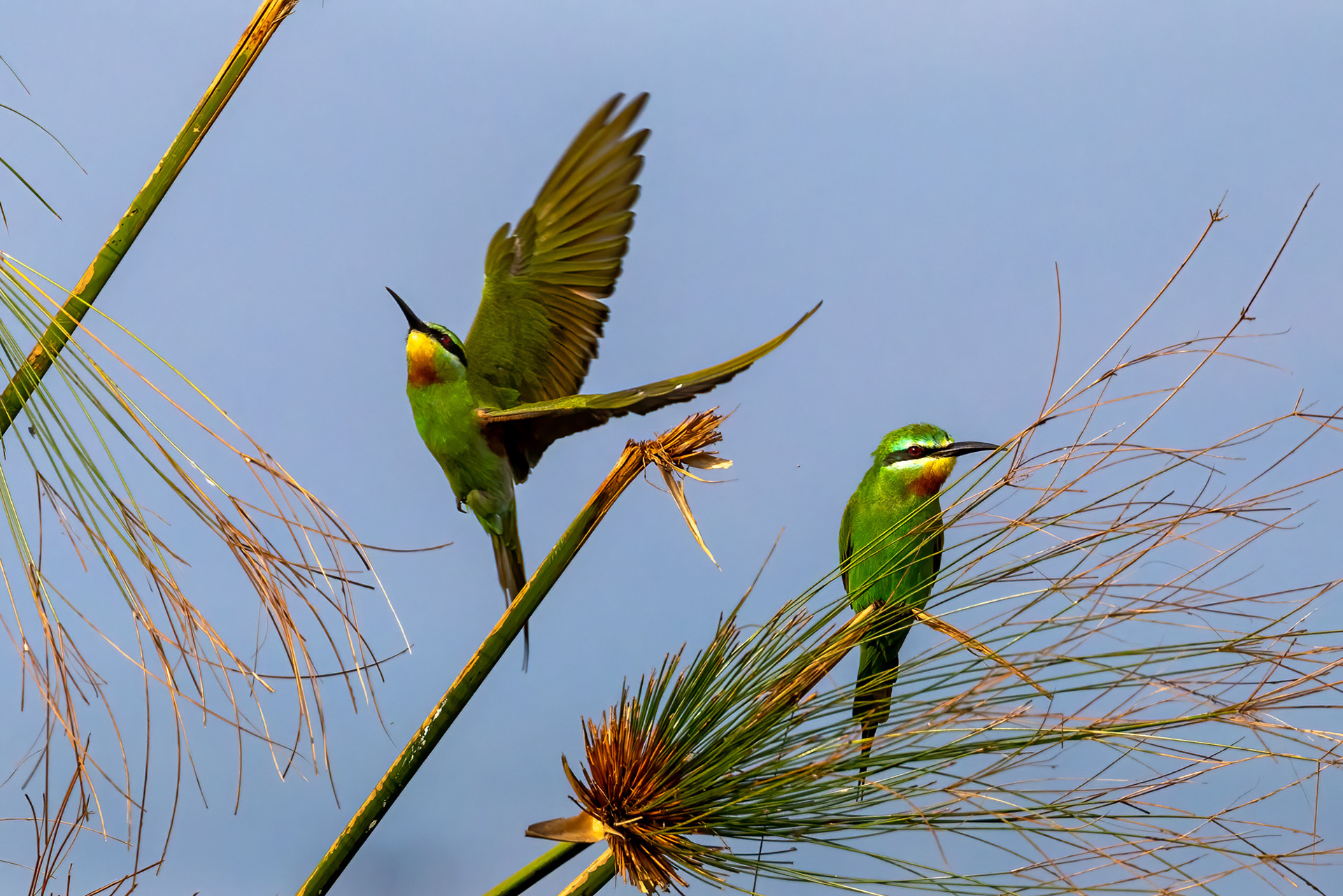
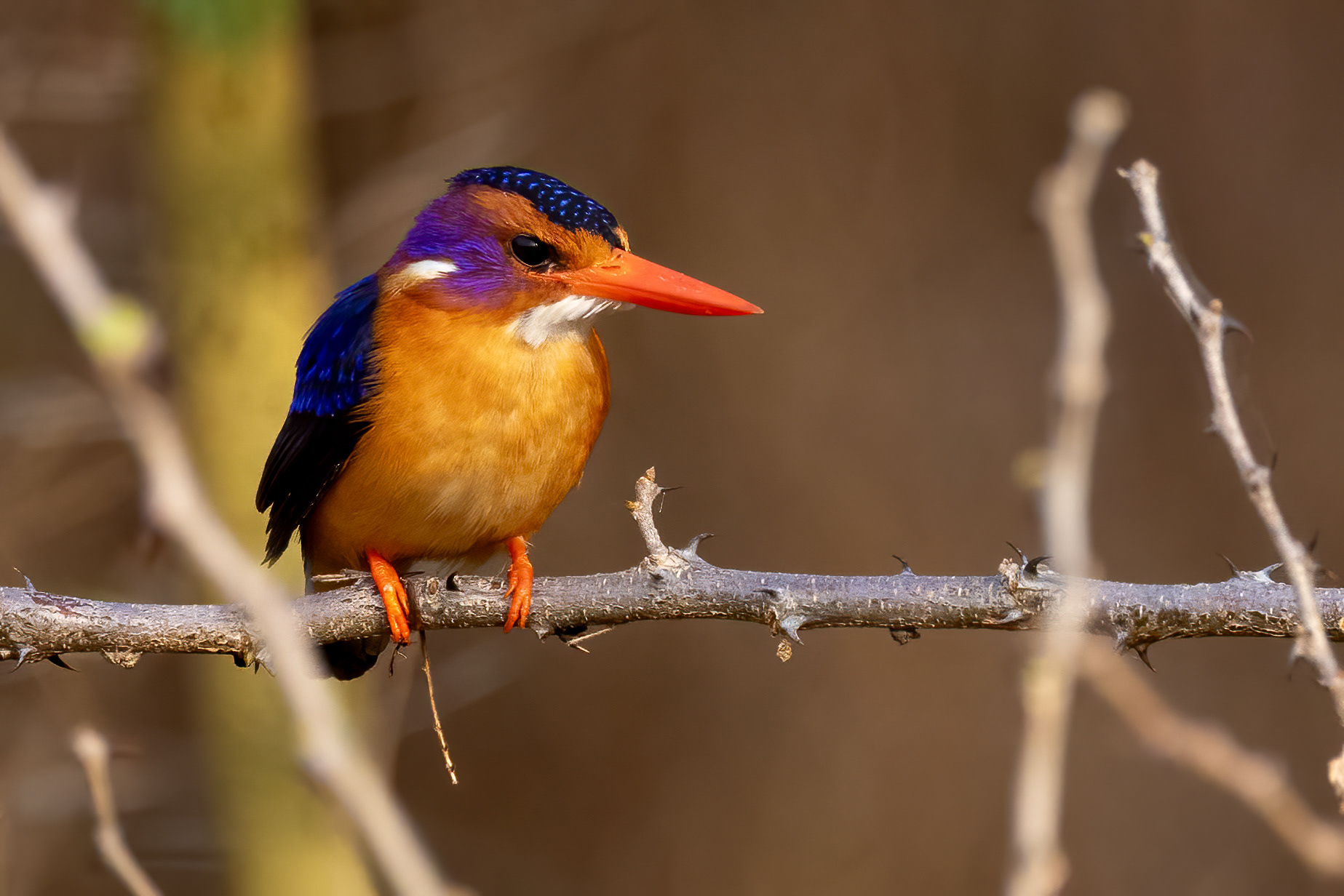
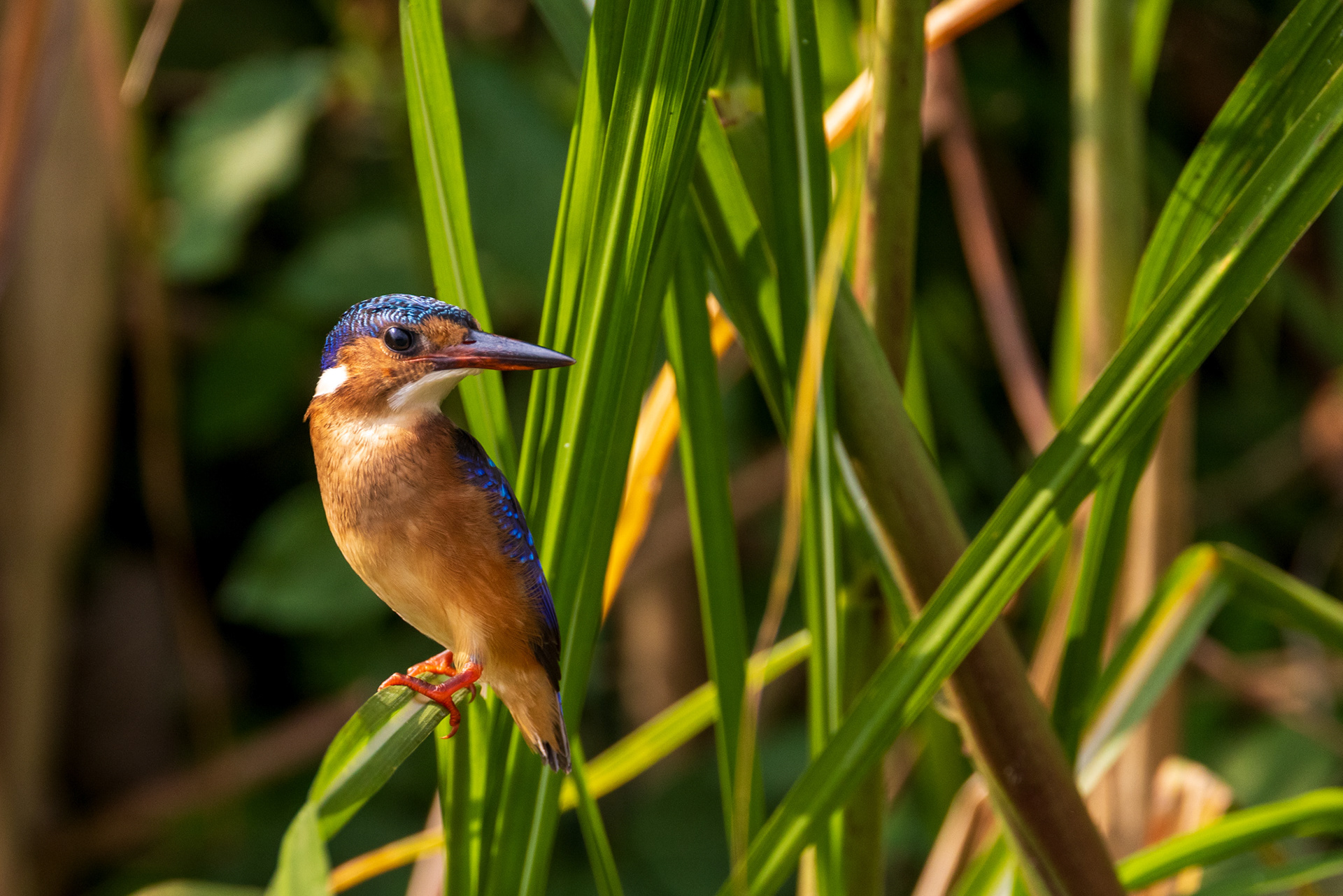
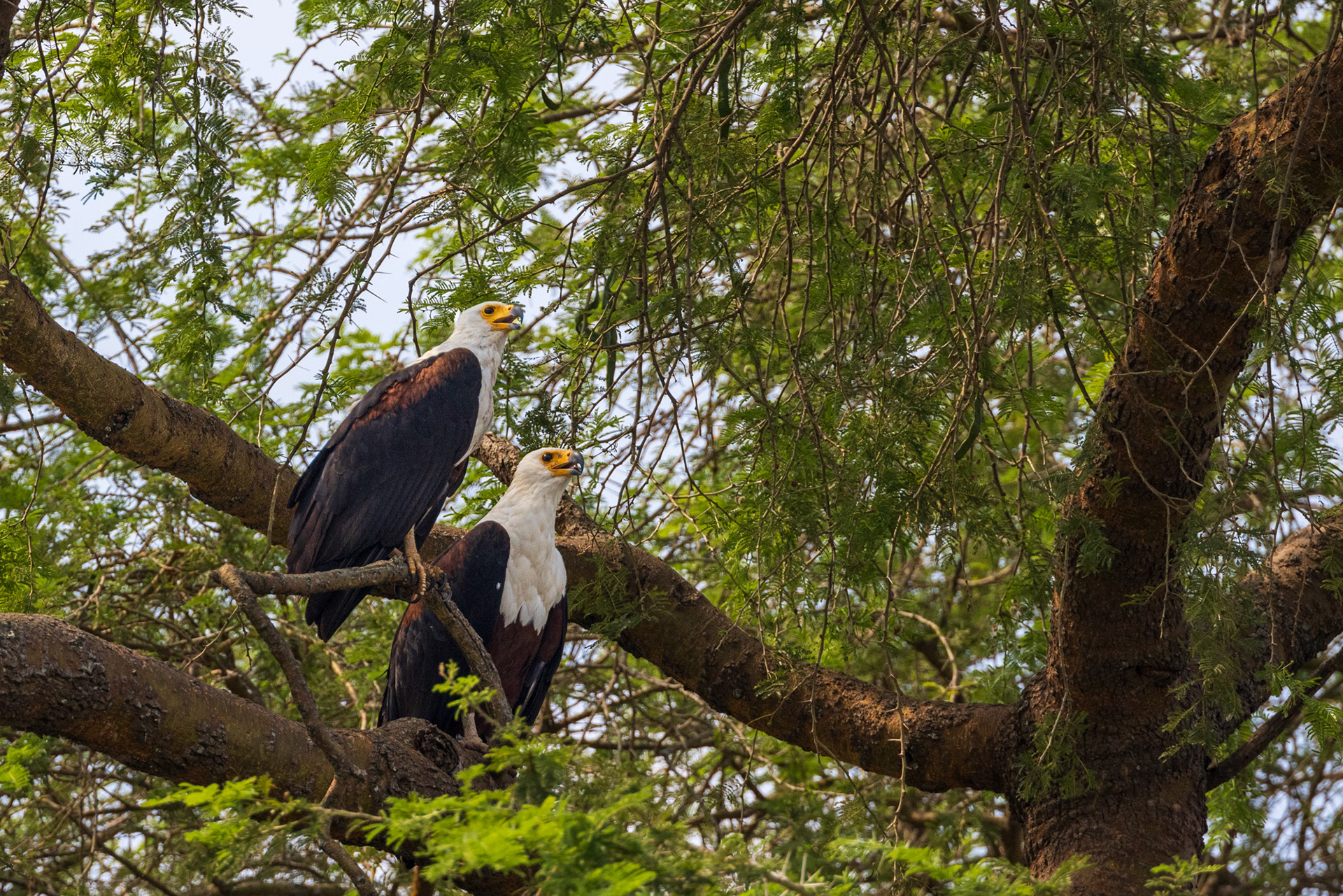
The other standout was the boat safari on the Kazinga Channel. Birds everywhere, and not your backyard variety. Bright kingfishers, bee-eaters, massive storks, fish eagles. Add hippos, elephants at the water, and large crocs, all without dust or bumpy roads. About $30 for ~3 hours. A private boat was an option (~$150), but we ran out of time.
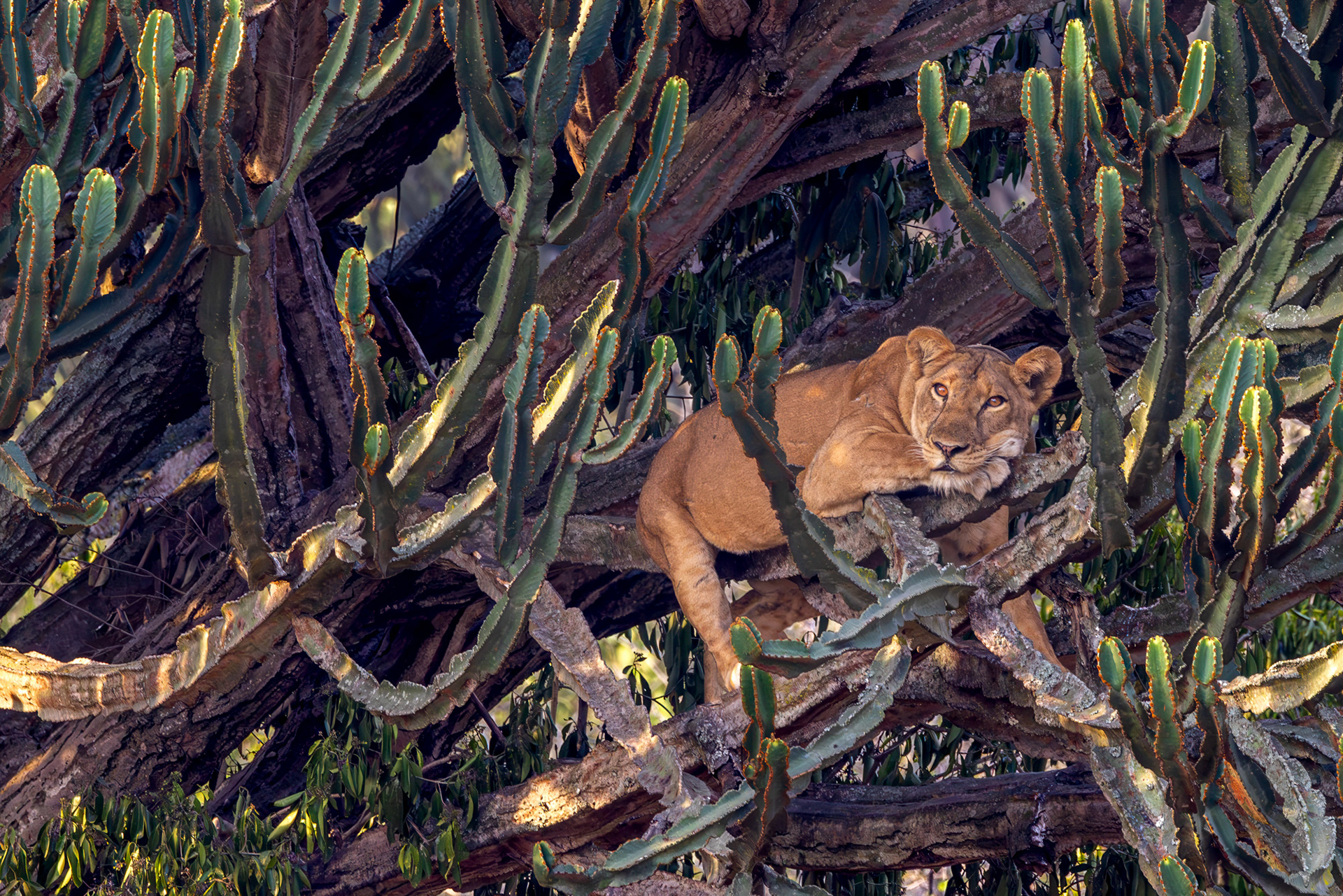
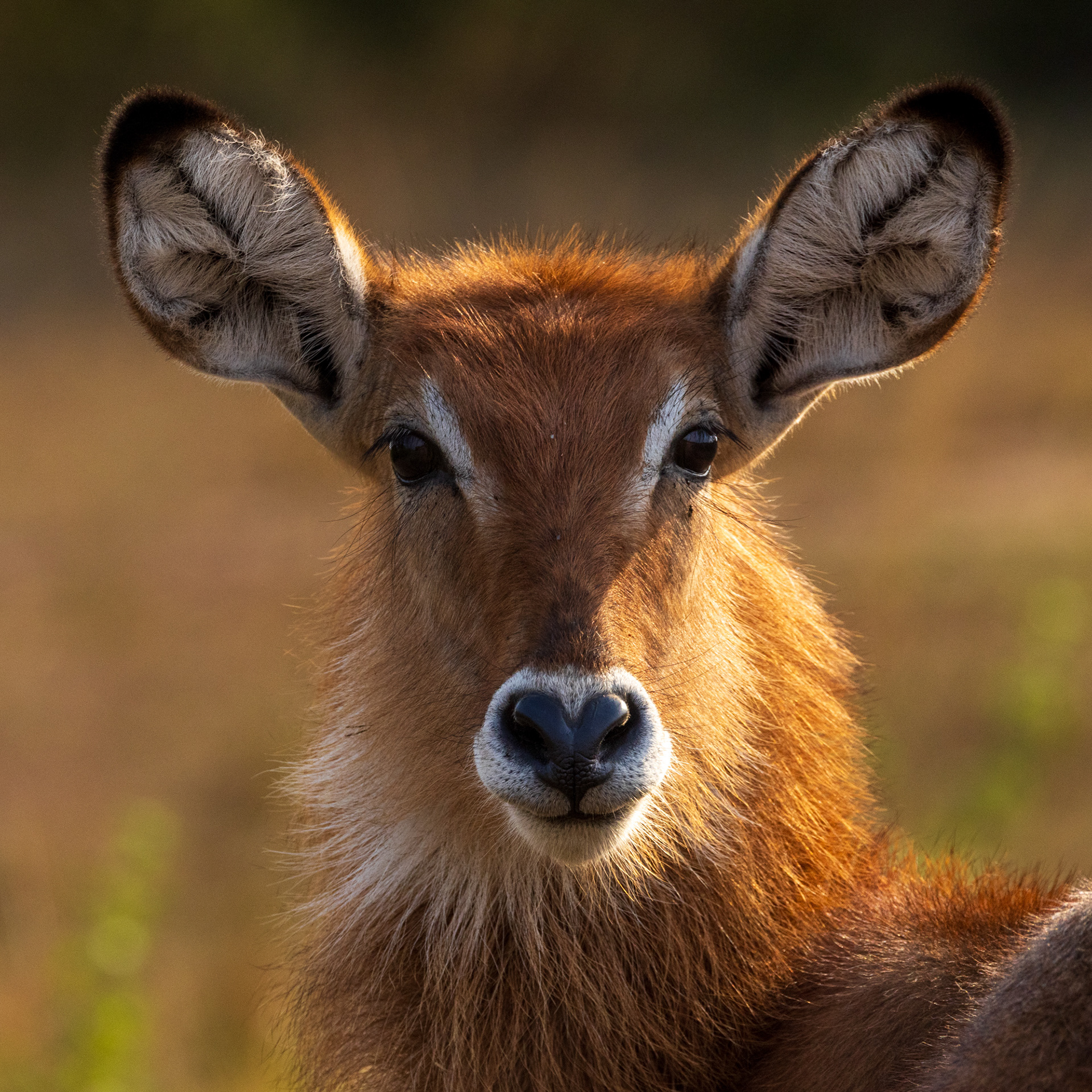
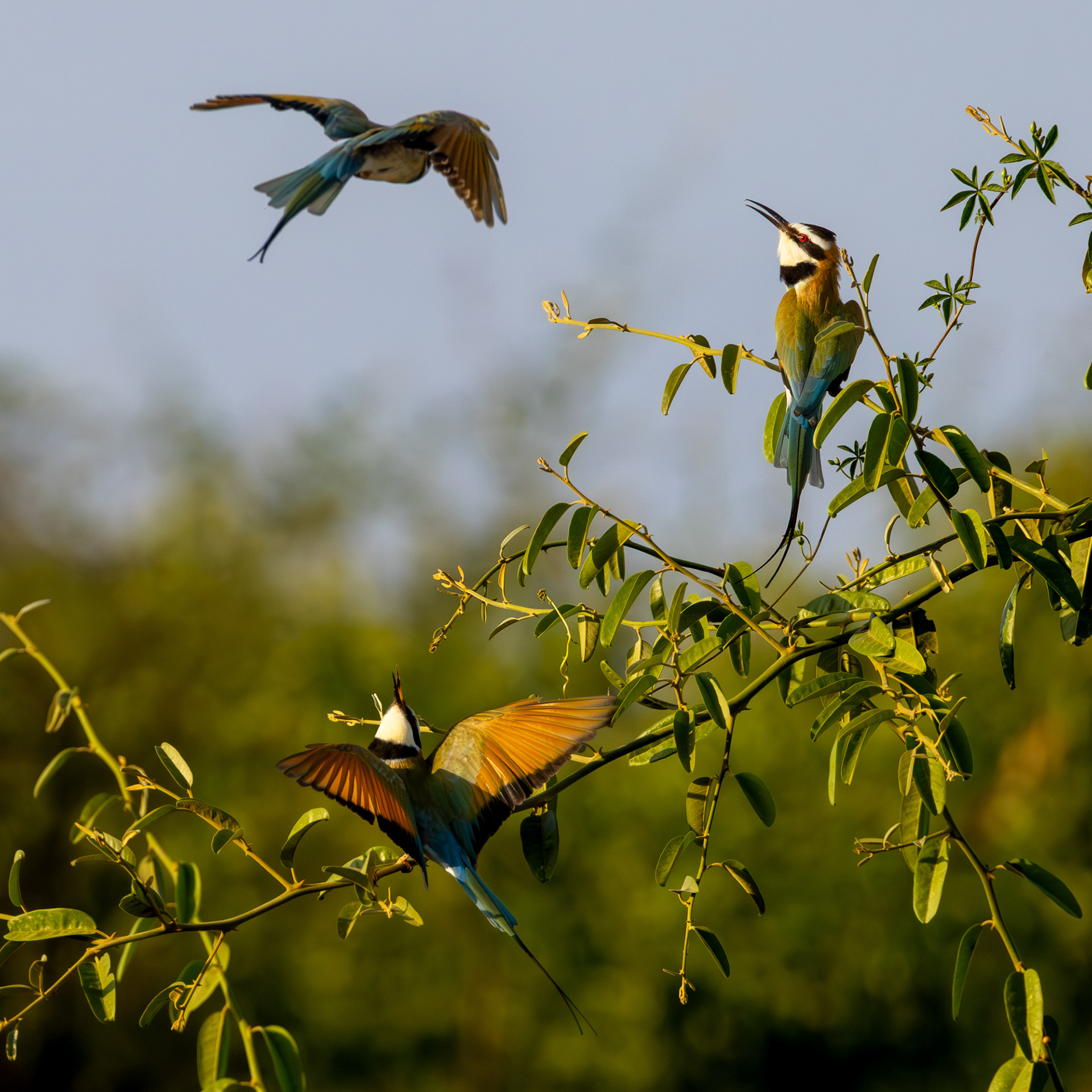
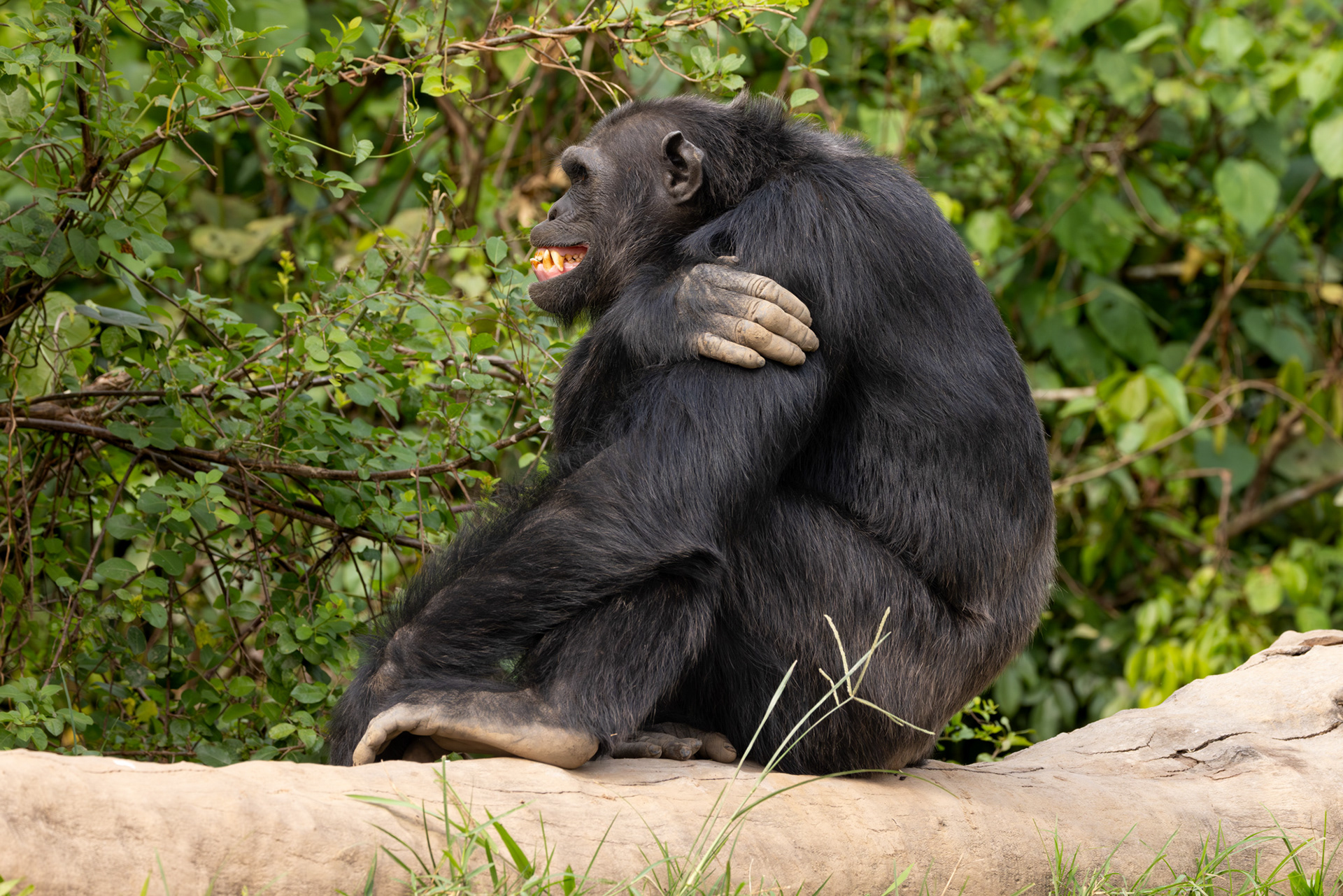
Kibale
Next stop, Kibale National Park (pronounced “chibale”), staying at Turaco Treehouse—the nicest (and priciest) place we stayed at. Comfortable beds, great food, quiet private rooms. Higher elevation plus forest canopy = genuinely pleasant temperatures. Fred even had a fire in his room at night. This place is wife-approved and a lock if we return here.
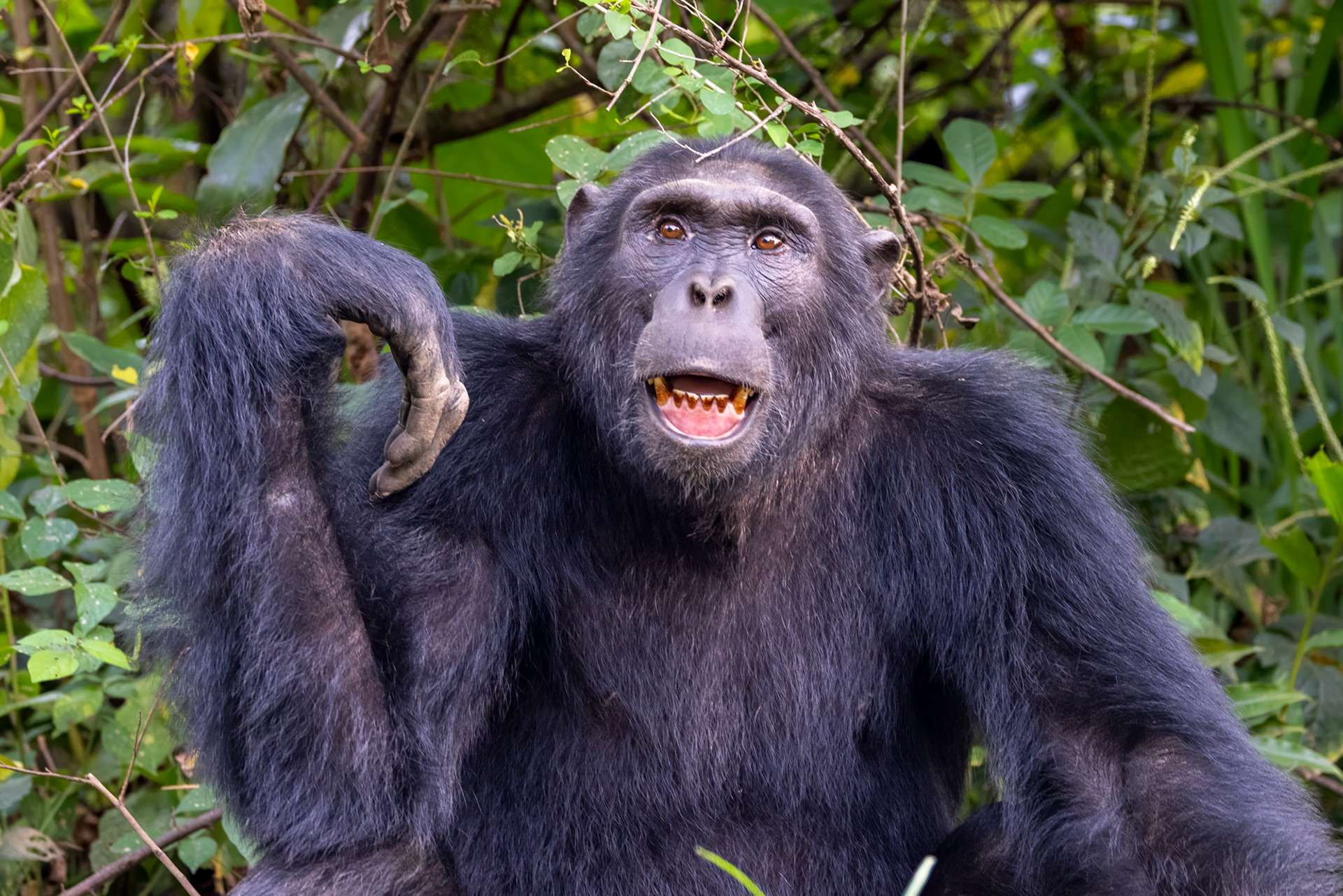
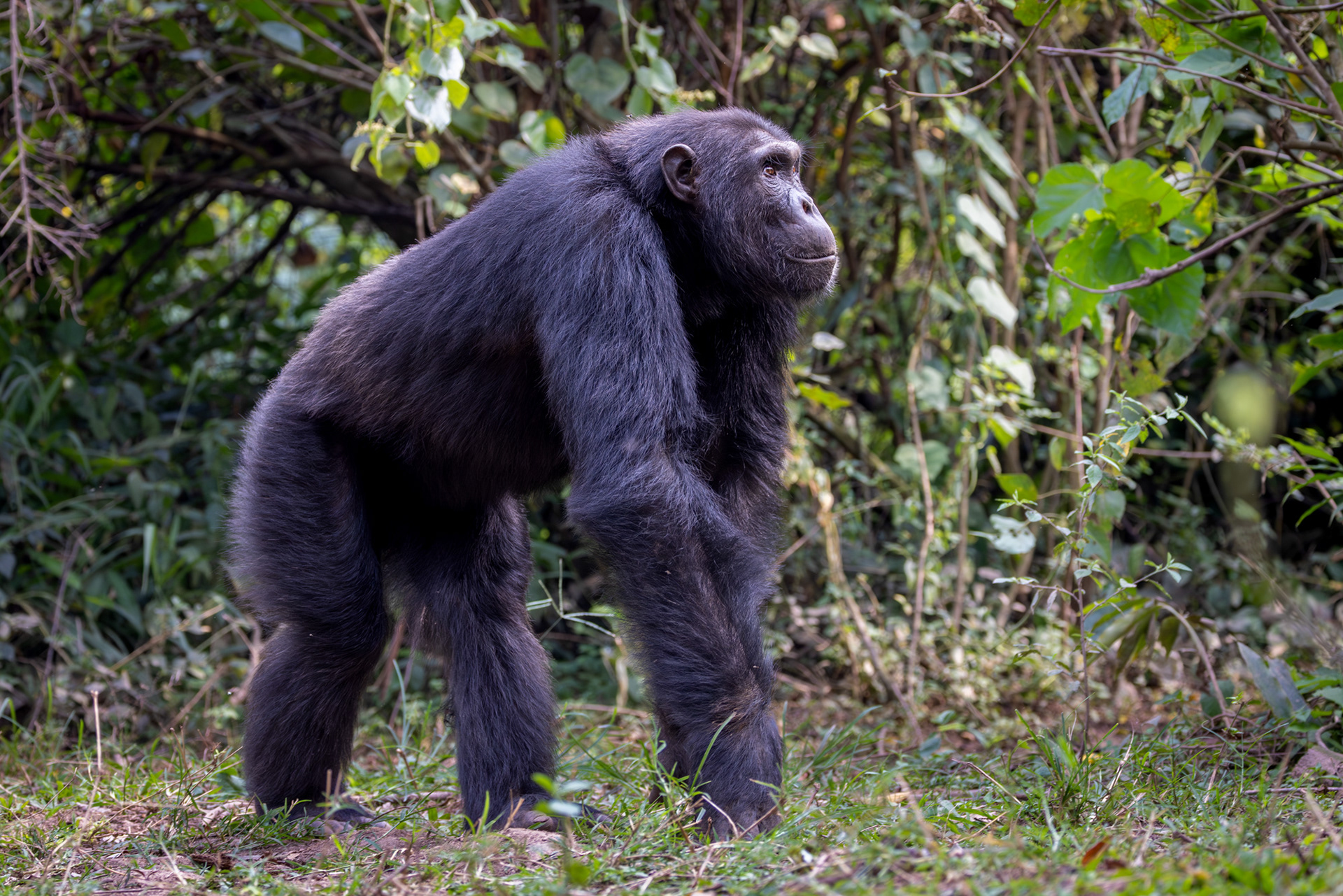
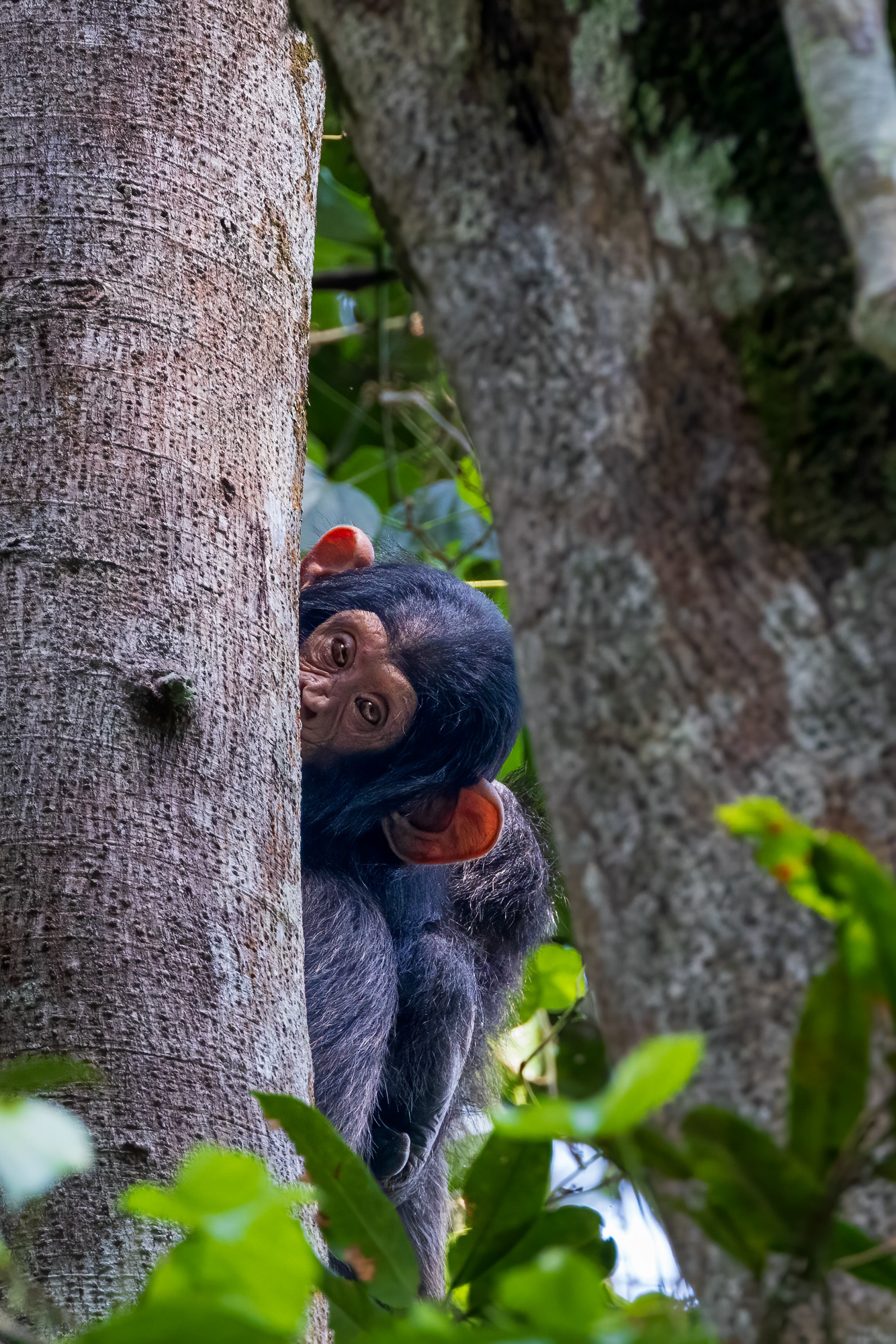
Kibale is basically a one-trick pony, but it’s a great trick, chimpanzees. It’s one of the best places in the world to see them.
On our first trek, we were in a group of eight with a guide and ranger. Our guide seemed new (lots of phone calls and checking in), and when we found chimps, we ended up sharing them with two other groups. Too many humans, not enough chimps—slightly disappointing. Sometimes you get lucky, sometimes you don’t.
The next morning was the habituation trek. These chimps have only been around humans for about three years (it takes about 8 to fully habituate), so they keep more distance, but you get four hours instead of one.
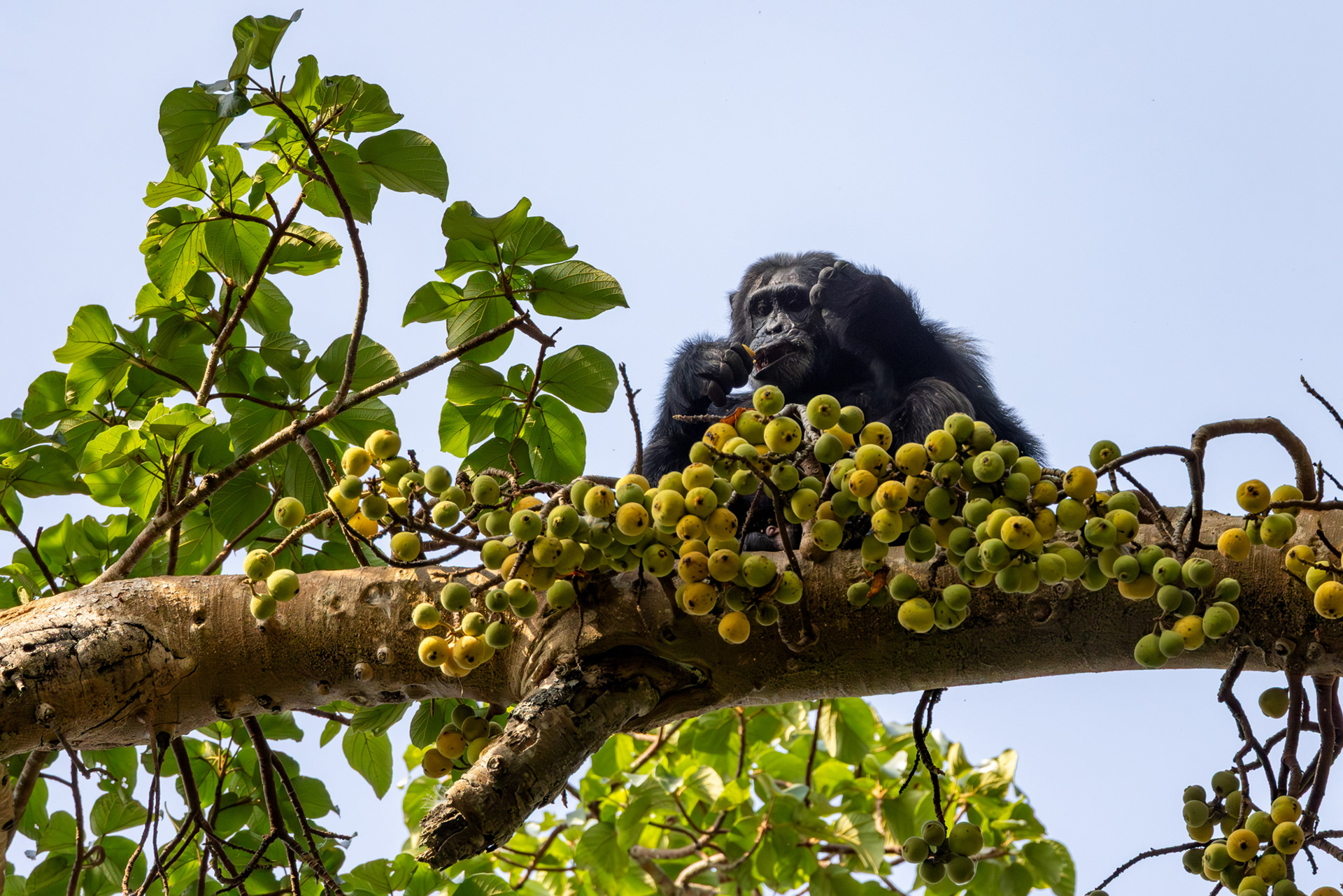
Our first encounter was incredible, chimps in a massive fig tree. I quickly learned an important lesson—do not walk under an agitated chimp. Part of the panic process can be pooping. I took a direct hit to the forearm. Could have been much worse. Soon they settled down and resumed eating.
After an hour of photographing figs (and chimps eating figs), we moved on. Two chimps were in heat, and the forest was alive—hooting, crashing, chaos. Ever tried chasing a chimp through dense jungle? We did. We lost. In open areas we could keep up; in thick brush, not even close.
We saw plenty at a distance but didn’t get great shots. Still, it was a fantastic experience.
On the way out, I ran out of gas. Fred (filling in for LeAnne) carried my pack, hero move. Our guide had radioed for pickup, small problem, our driver was hiking with us. While waiting for Fred to retrieve our car, I chatted with a ranger carrying a very large gun. The bullets were huge and he had 50 rounds. Why? Jungle elephants are more aggressive than savanna elephants. They encounter them a couple times a month, and a warning shot usually sends them off. That gun felt like it weighed 20+ pounds. Those guys are tough.
I did absolutely nothing the rest of the day. Next time I get a porter.
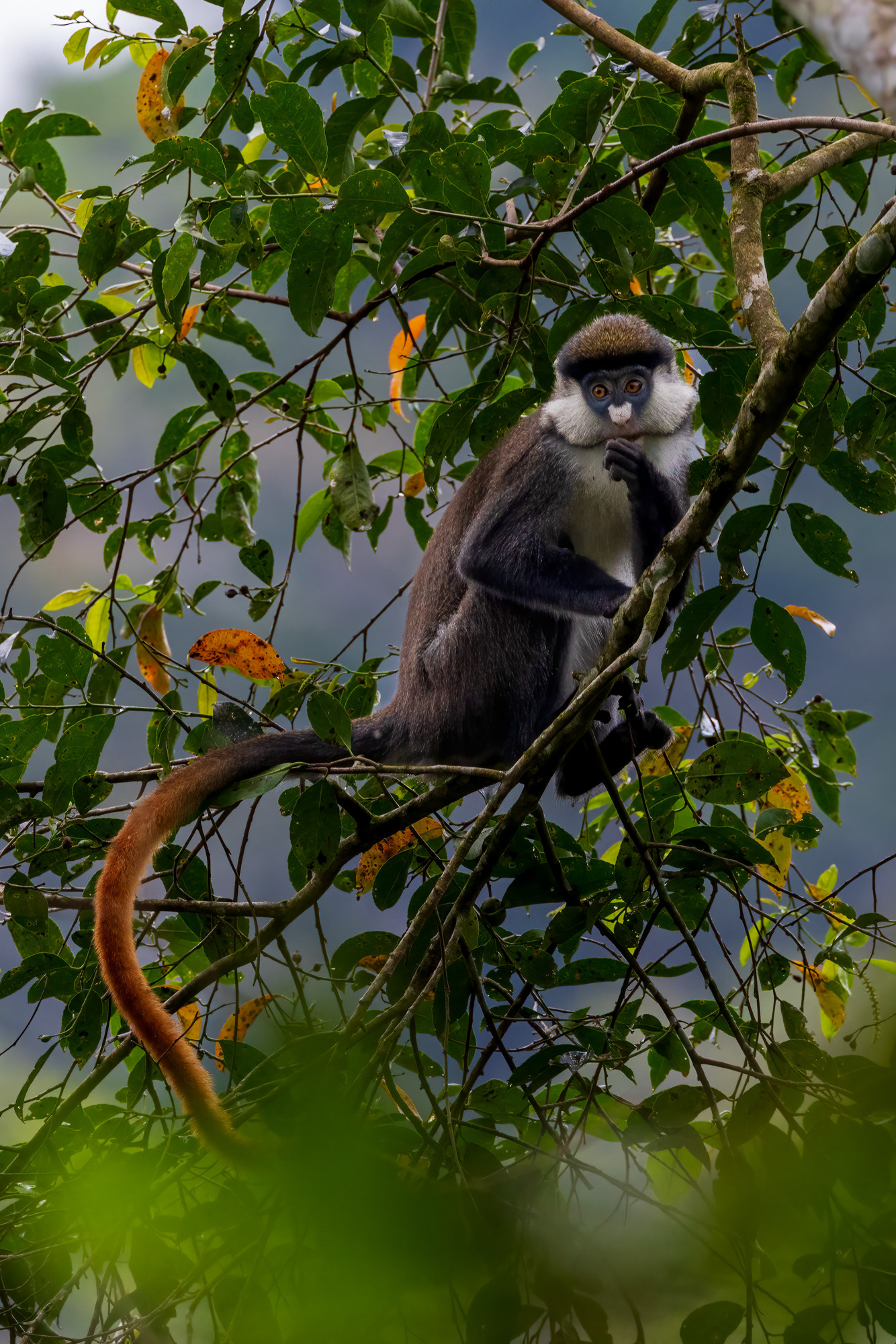
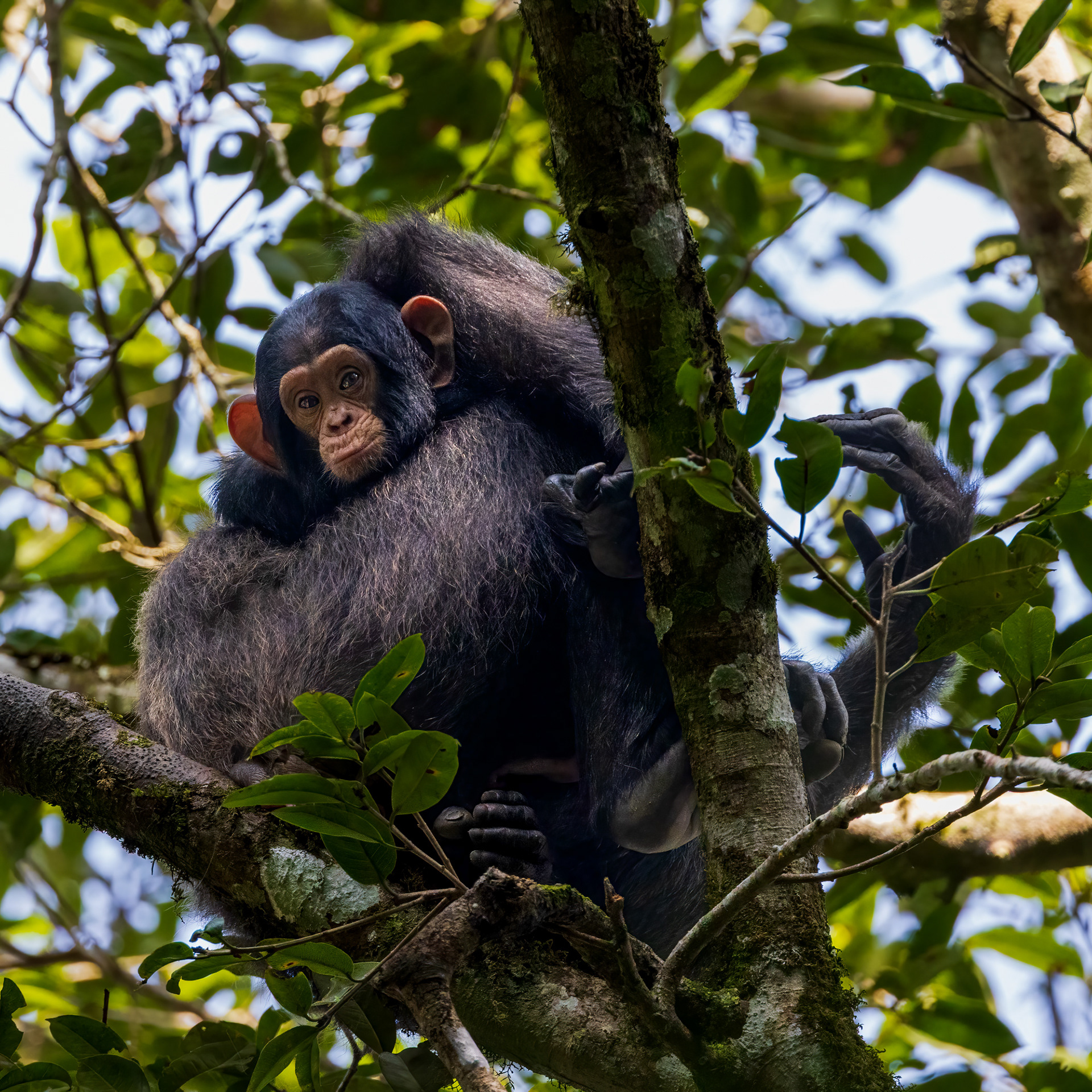
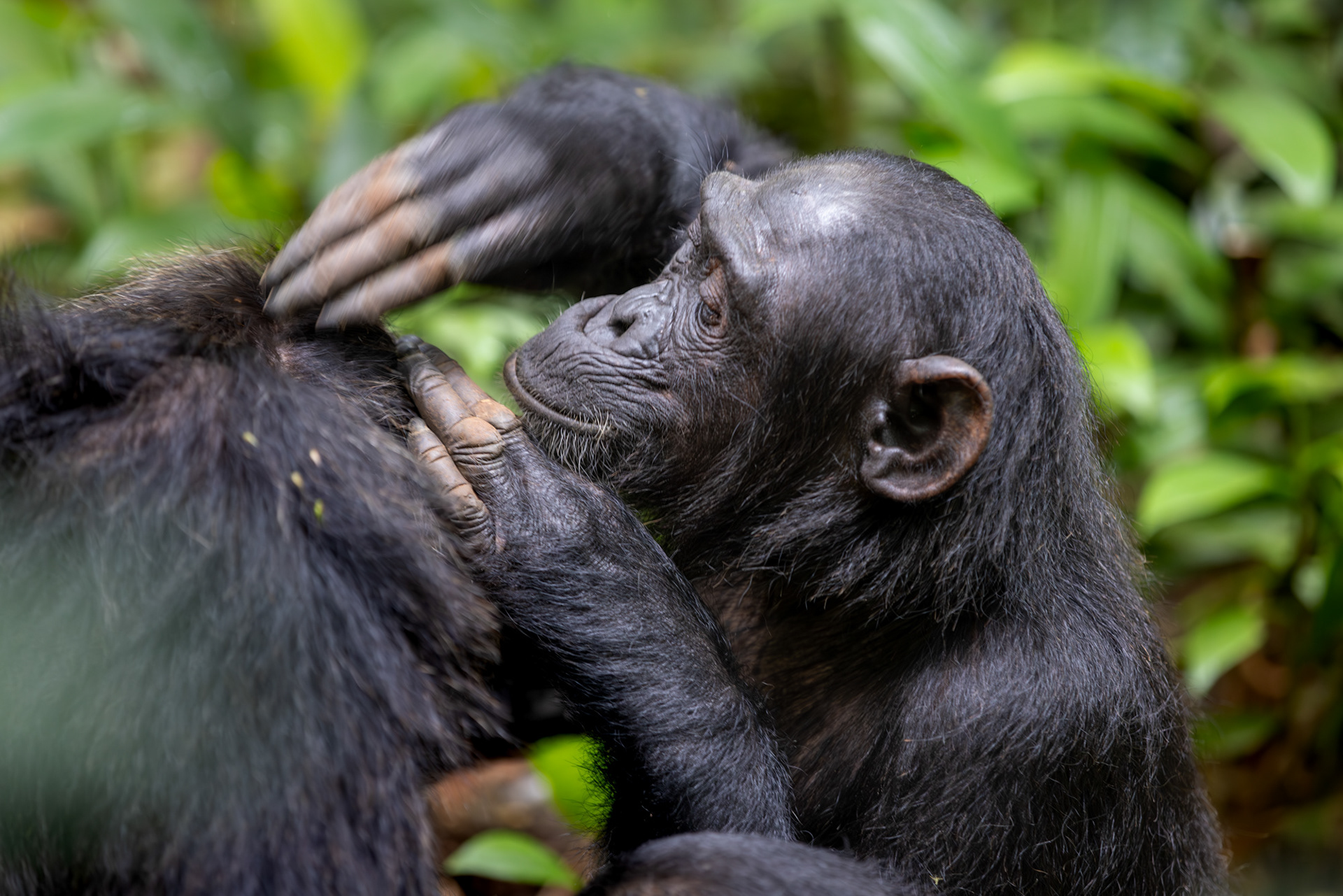
The next morning, we drove back to Kampala.
Mabamba Swamp
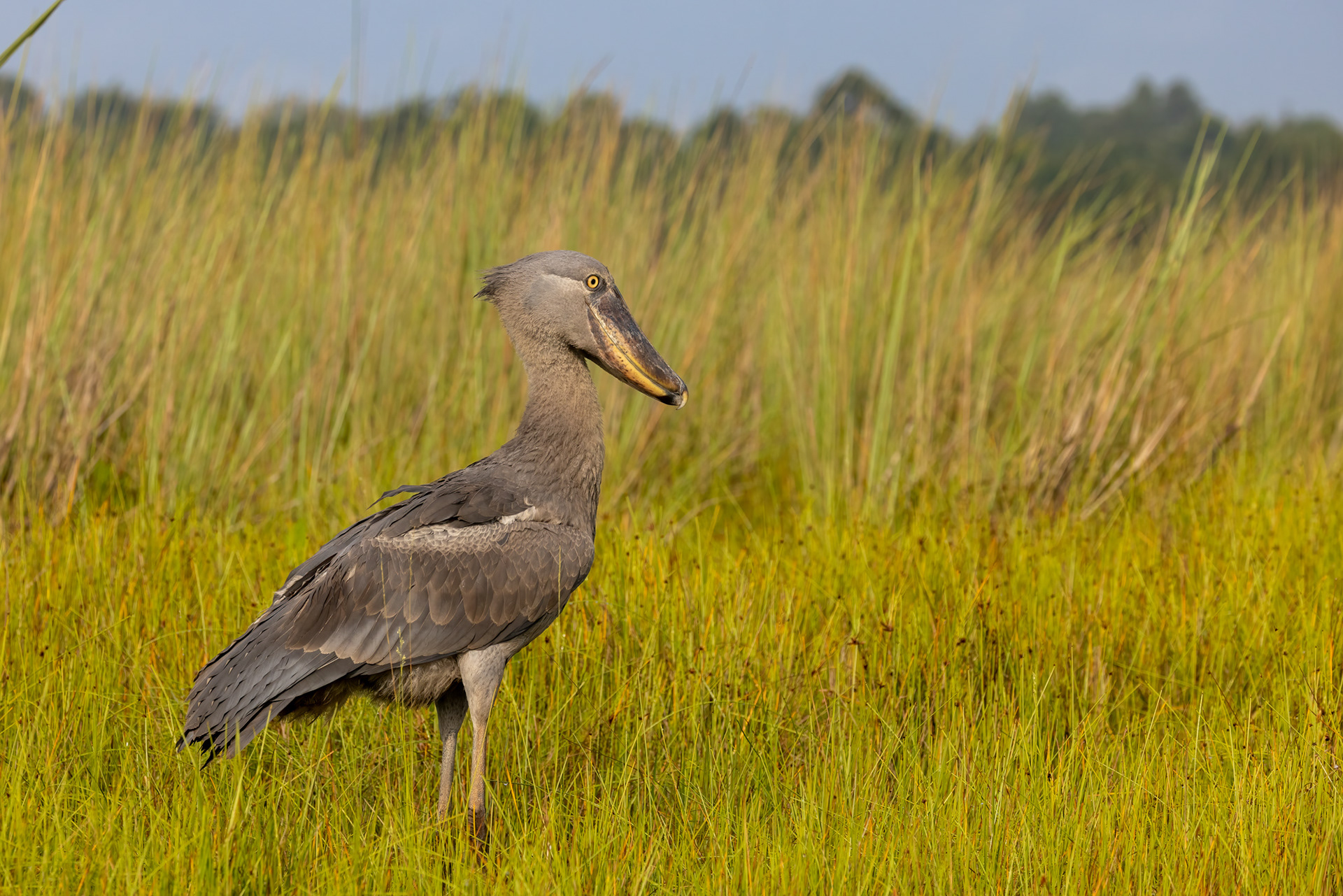
This is where you go if you want to see a Shoebill and a large number of other beautiful birds. It is also conveniently close to Kampala, about a 2 hour drive. This means you and half the city will have the same idea. Go early unless you enjoy birding in a traffic jam. First trip we left at 6:00 AM. Second trip we left at 5:00 AM. The birds agreed the second plan was smarter.
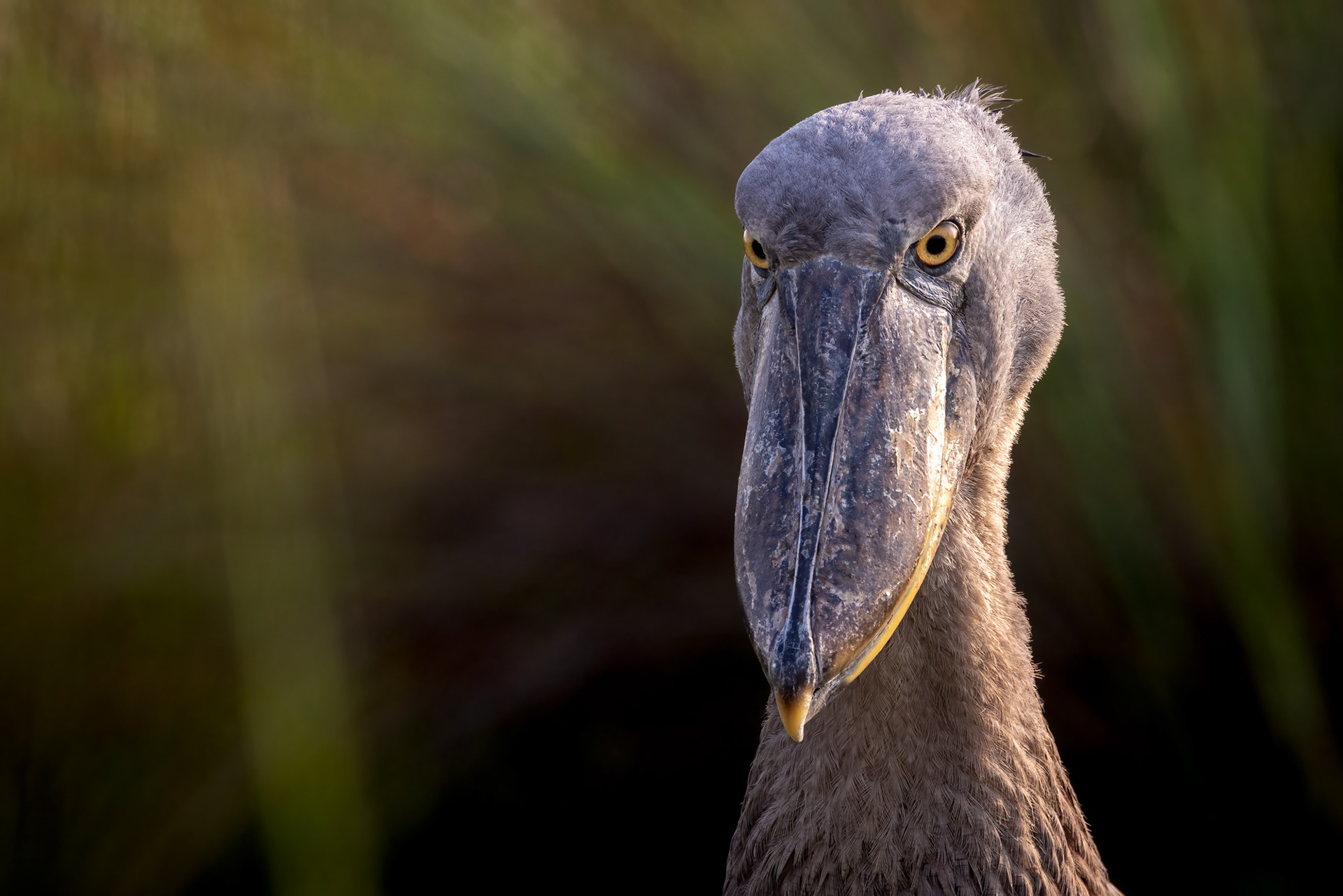
You head out in wooden motorboats and cruise through a maze of papyrus channels looking for what is essentially a feathered dinosaur. Early morning is prime time for feeding and socializing. This includes the famous beak clapping, which sounds like someone aggressively applauding with two wooden planks. They fire off about four to eight claps per second and it is shockingly loud. When you hear it the first time you will assume construction work has started nearby.
There are only about a dozen or so shoebills in this whole swamp, and they tend to stick to their favorite hangouts like grumpy regulars at a coffee shop. The guides know their routines, which helps, because otherwise you would just be boating around politely staring at reeds. The birds are somewhat used to humans and will let you get within about 15 to 30 meters, assuming the papyrus does not decide otherwise.
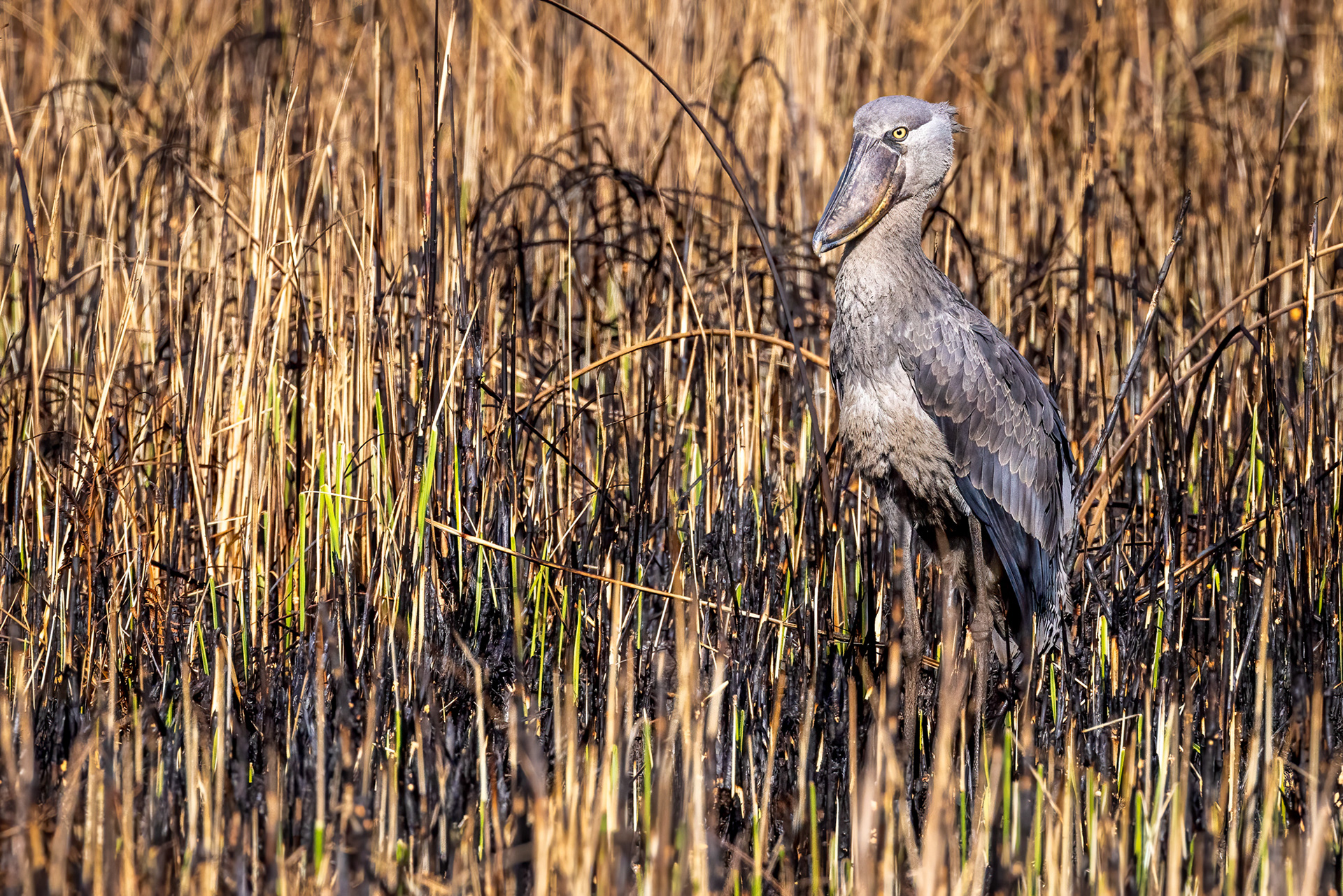
I went twice. The first time we found one in an area of burned papyrus. No channels, just a floating barrier. The guide and his assistant went into powerlifter mode, shoving the boat through the reeds. Every heroic push moved us maybe two or three feet. After about 100 meters of this, the guide looked at the bird, read its mood and said we were done. The shoebill had stopped moving and was staring at us in a way that clearly meant we were no longer welcome. We were still more than 50 meters away. The experience was great, the photos were not.
Round two was with LeAnne. I warned her she would not be close enough for iPhone photos. This was immediately proven wrong. Our guide found a shoebill tucked into a side channel surrounded by tall papyrus and quietly slid us to within about 10 to 15 meters. For the bird to allow us so close is unusual, but it did not seem to care. We watched it hunt. The bird stood perfectly still, leaning forward, eyes locked on the water like it had all the time in the world. I stood up to get a better angle and was promptly told to sit down. We wanted to be selfish with this find and others might get curious seeing a guy with a telephoto taking pictures. We had about 20 glorious minutes alone with it before the rest of the flotilla arrived.
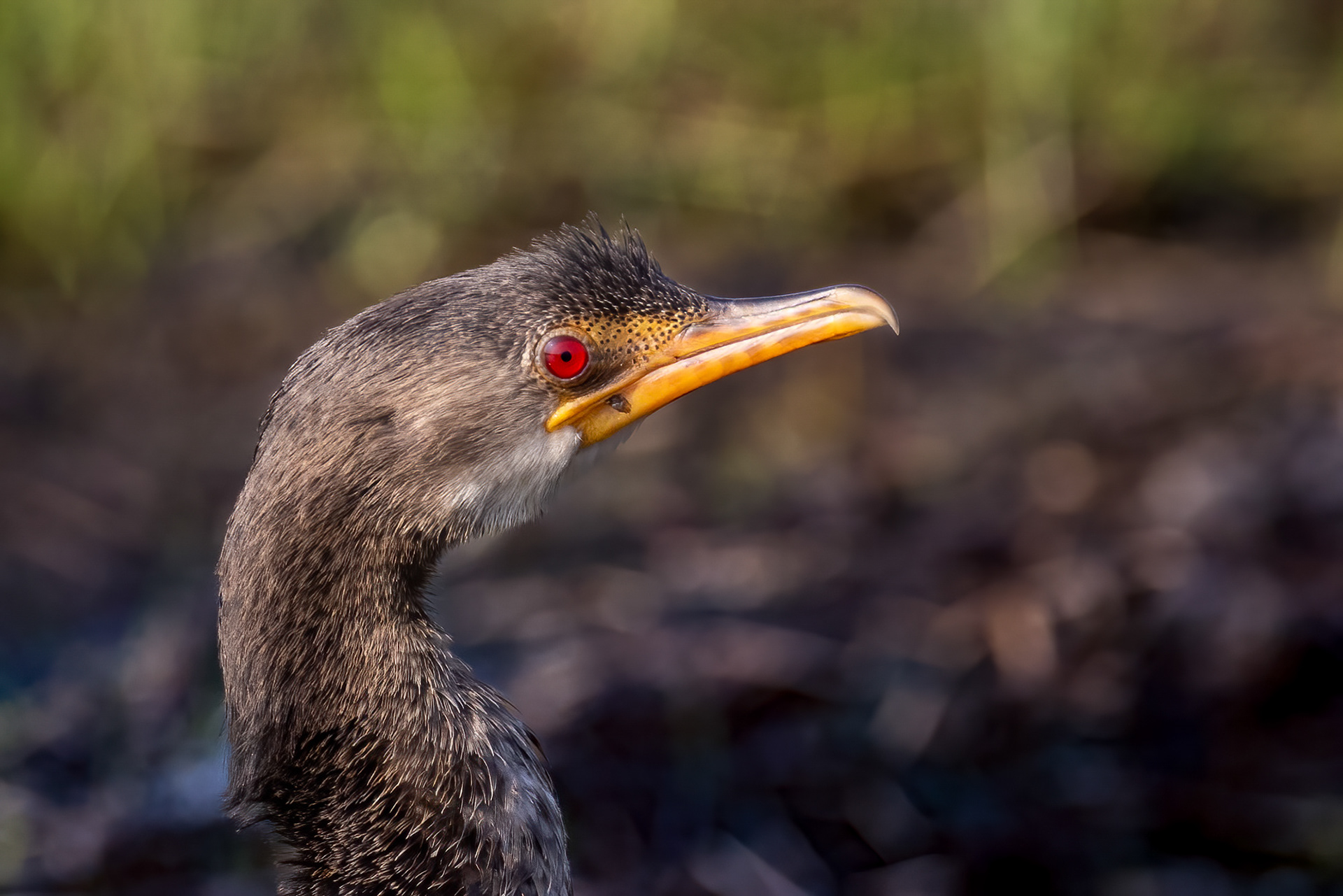
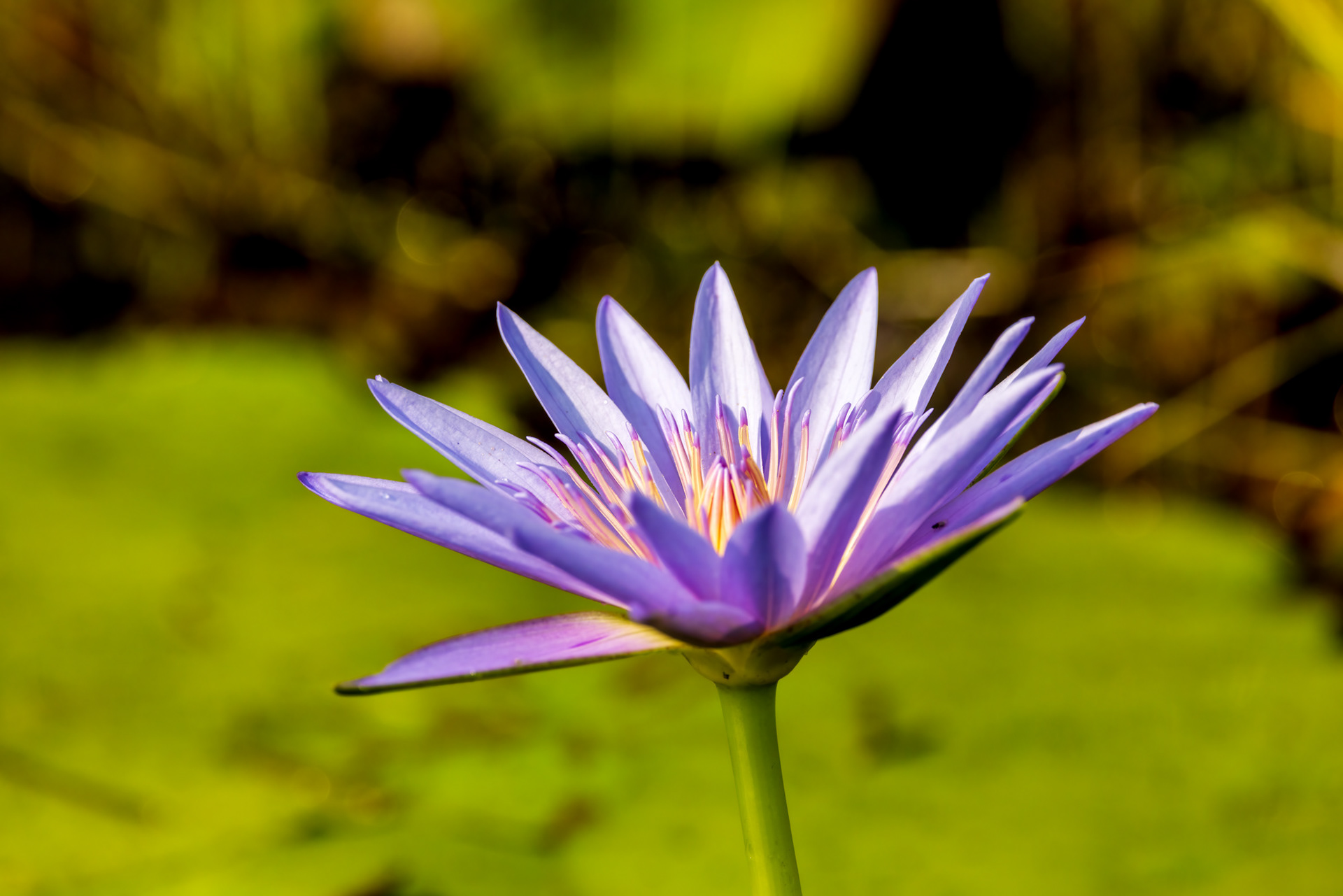
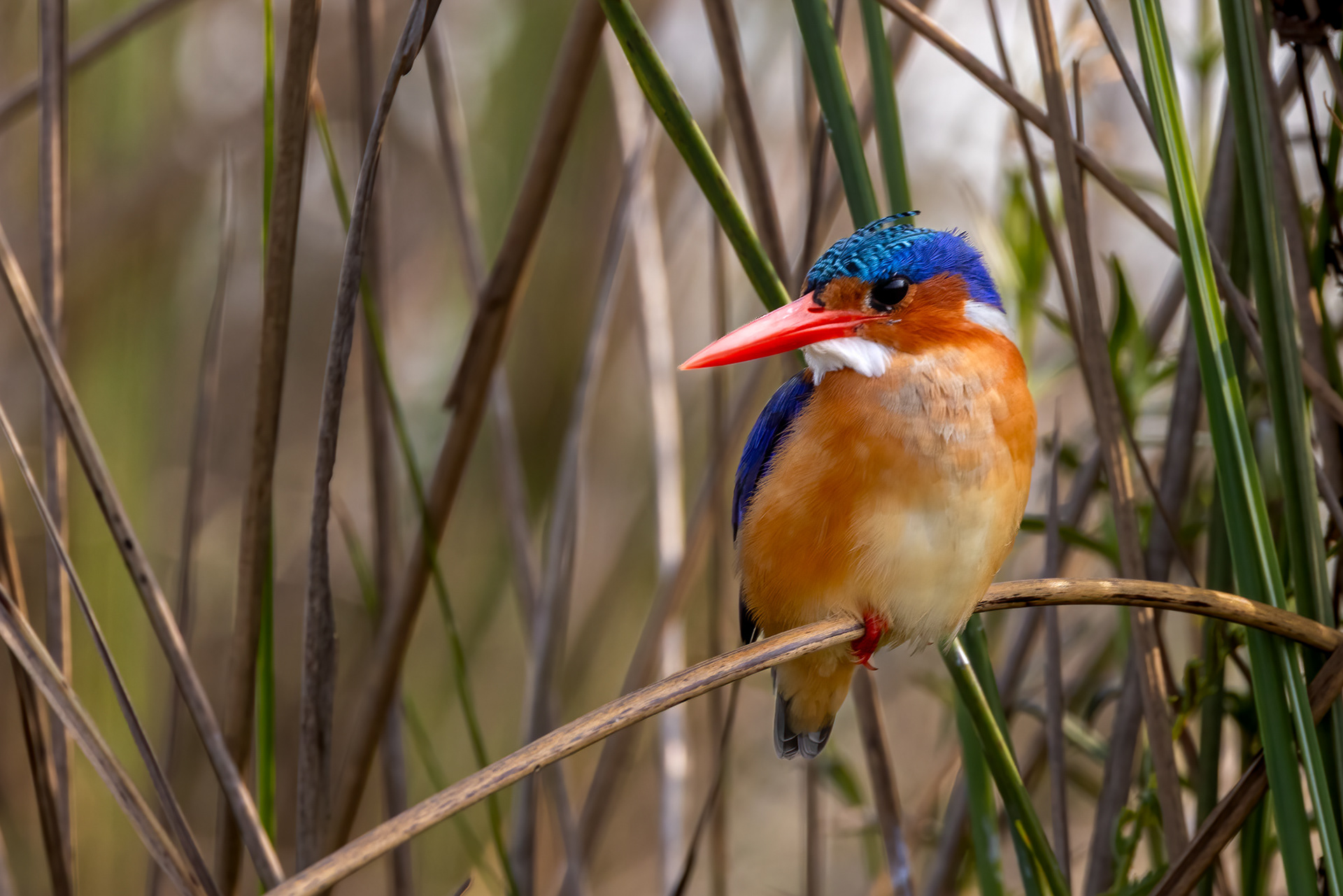
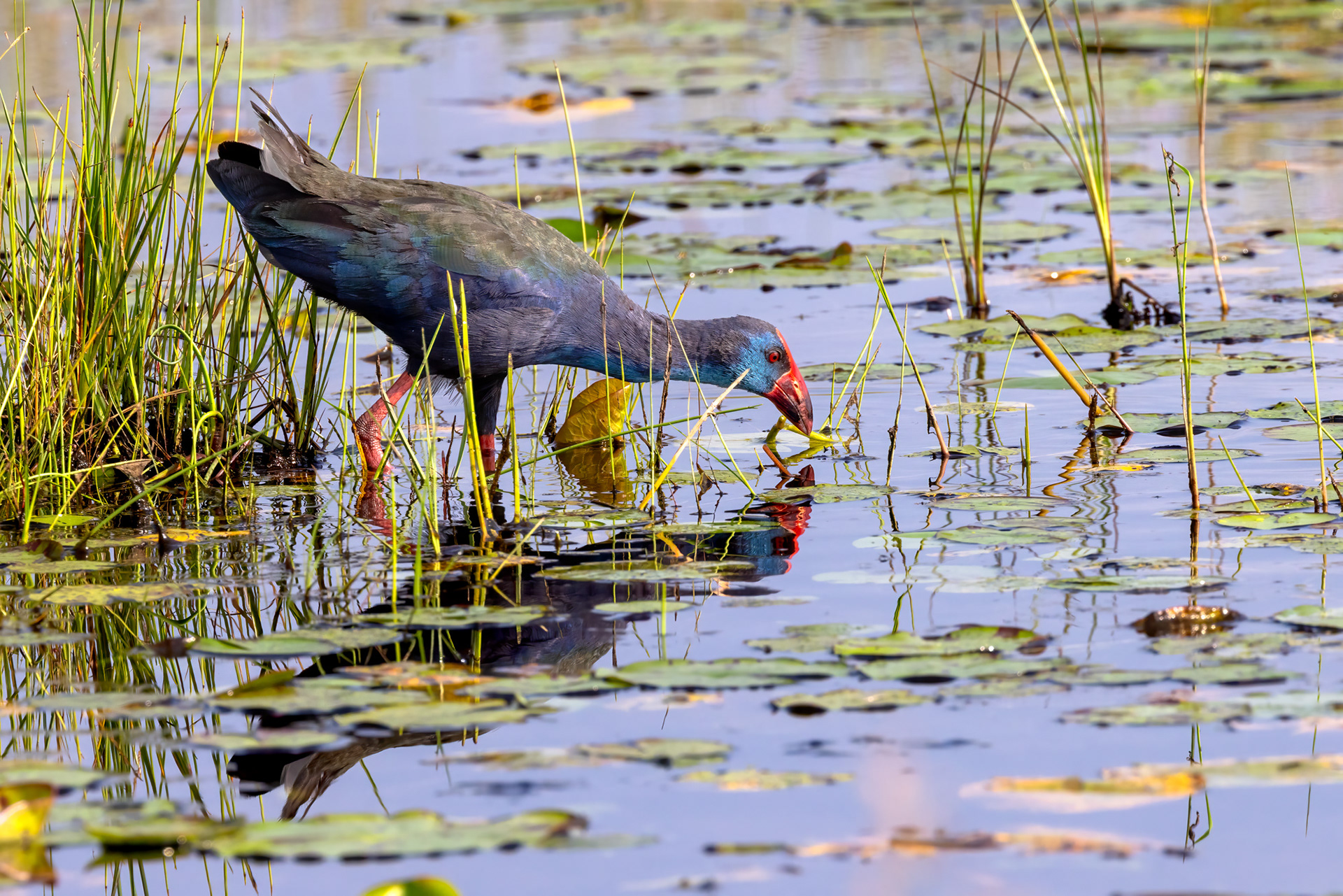
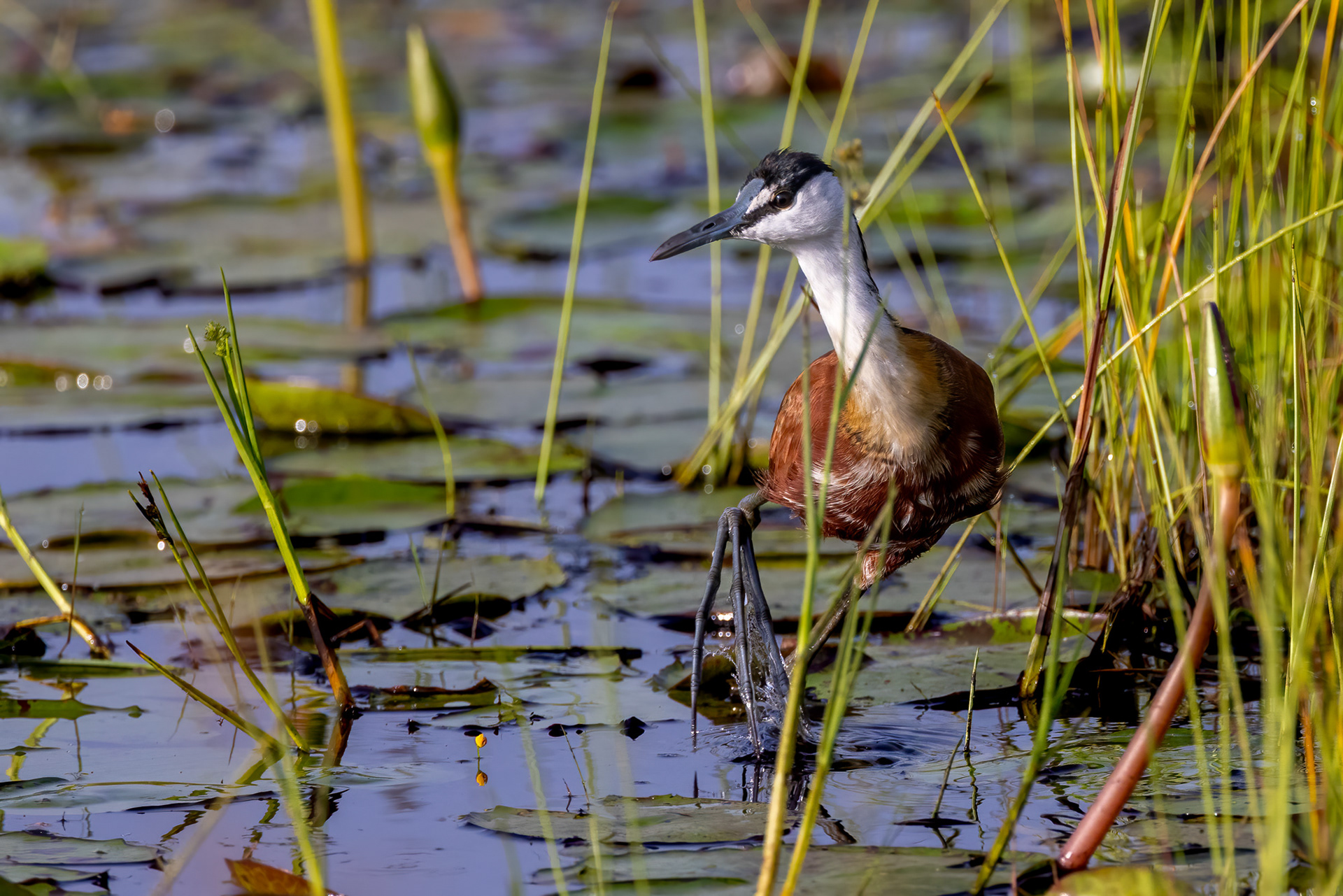
While we were there, four other shoebills flew past and ours started clapping its beak like it was greeting old friends across a parking lot. About an hour later we headed back. By then the water lilies had opened and the place looked like a painting. We saw storks, cranes, ducks and geese, swamp hens, kingfishers, and the wonderfully ridiculous African Jacana doing its walk on water routine.
We booked through the afore mentioned awesome sister, which likely helped us land a great guide. Brian, He is upbeat, funny, capable, and confident, exactly what you want when someone is pushing you through a swamp with a stick. The receipt said Mabamba Bird Guides, but it is really a community of independent guides and boatmen, all working together to help you find one very large, prehistoric bird.
Murchison Falls
Our final trip in Uganda was to Murchison Falls National Park (MFNP). This was a bigger family event that include 2 sisters, 3 nieces and nephews and LeAnne and I. We all crammed into one car and headed north. We left a little before 6 to avoid the worst of the traffic. Awsome sister was bravely driving. First stop was Ziwa Rhino Sanctuary.
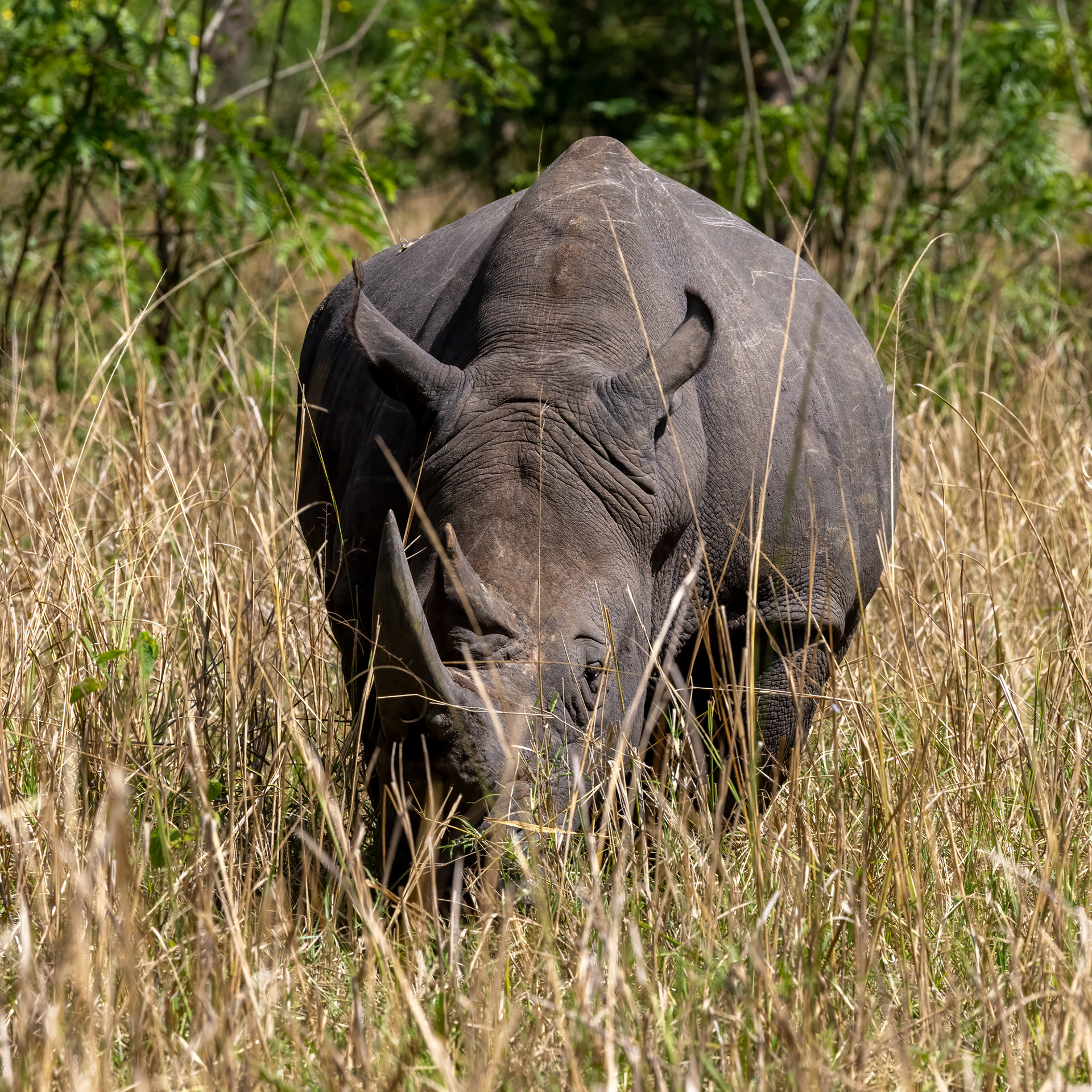
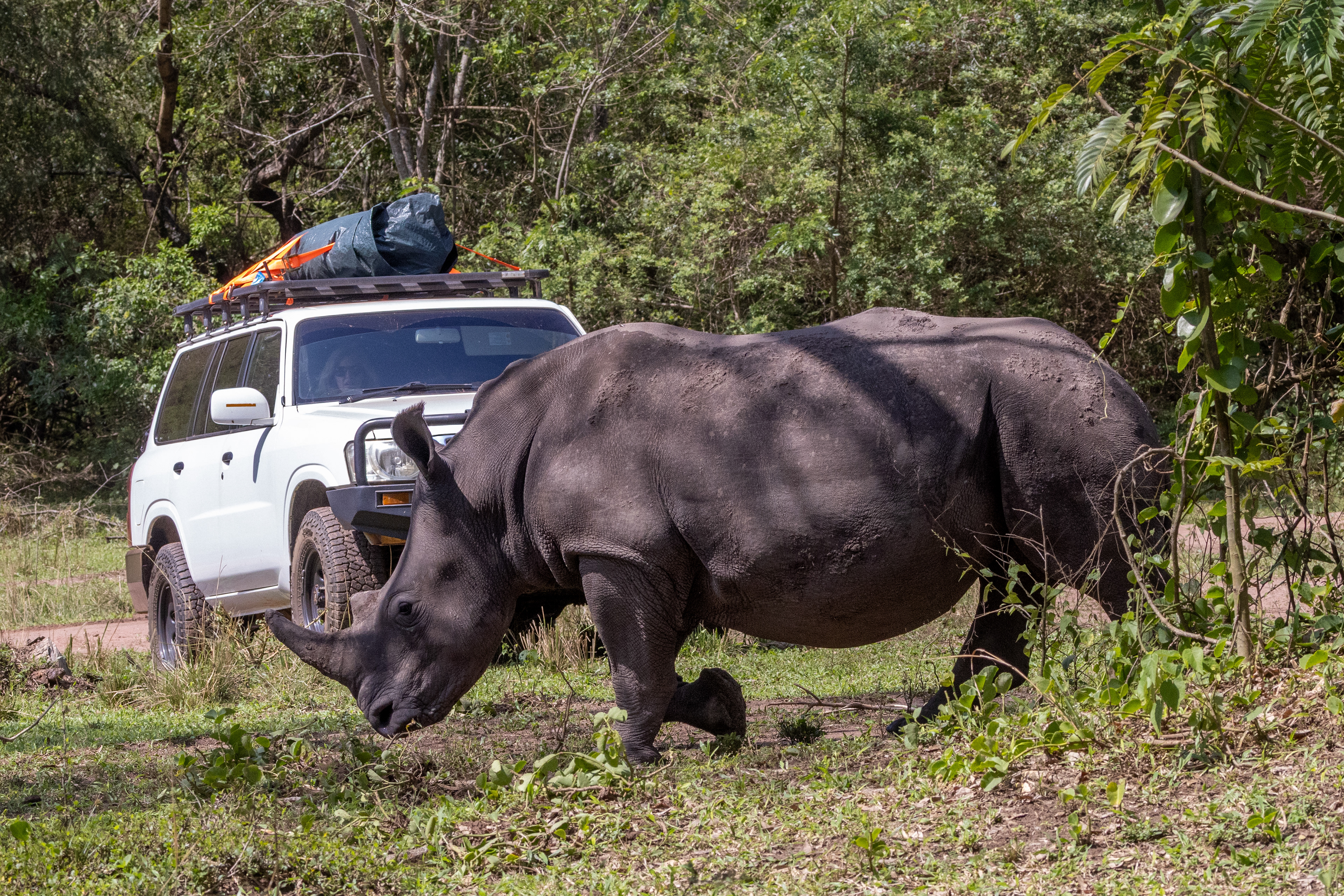
This place use to be a cattle farm, but in 2005 was converted into a rhino sanctuary. At the time of our visit, they had over 50 white rhinos. This is about their maximum capacity. Six were reintroduce into Kidepo Valley National Park in march of this year. We got teamed up with a ranger and start our walking safari. They allow you to approach remarkably close to the rhinos, maybe 30 feet away. Our first crash (herd) of rhinos included a male several females and one calf. They had already bedded down for the heat of the day. While the experience was amazing, its hard to get a good photo of a bunch of resting rhinos.
We moved on and found an alpha male that was disallowing a female and her calf from leaving his territory. This was a bit more exciting with rhinos running around and the ranger perpetually telling us to back up.
After that we looked for giraffe and zebra, found some and returned to the compound. We had a solid buffet lunch, and got back on the road to MFNP.
We stayed at Bamboo Village, which checked two safari boxes: a comfortable bed and working WiFi, in our room no less! Not guaranteed, so we appreciated both. By this point, LeAnne and I were about 30 safari days deep across Uganda and Tanzania and starting to feel like we’d seen it. Fortunately, my sister Sarah and her daughter Susan joined us for their very first safari, which meant constant excitement from the back seat. It was like having a live soundtrack of “LOOK, LOOK, LOOK” to keep things fresh. Up front with me was Fred, our driver and guide, who knows Murchison like it’s his backyard, because it is his backyard.
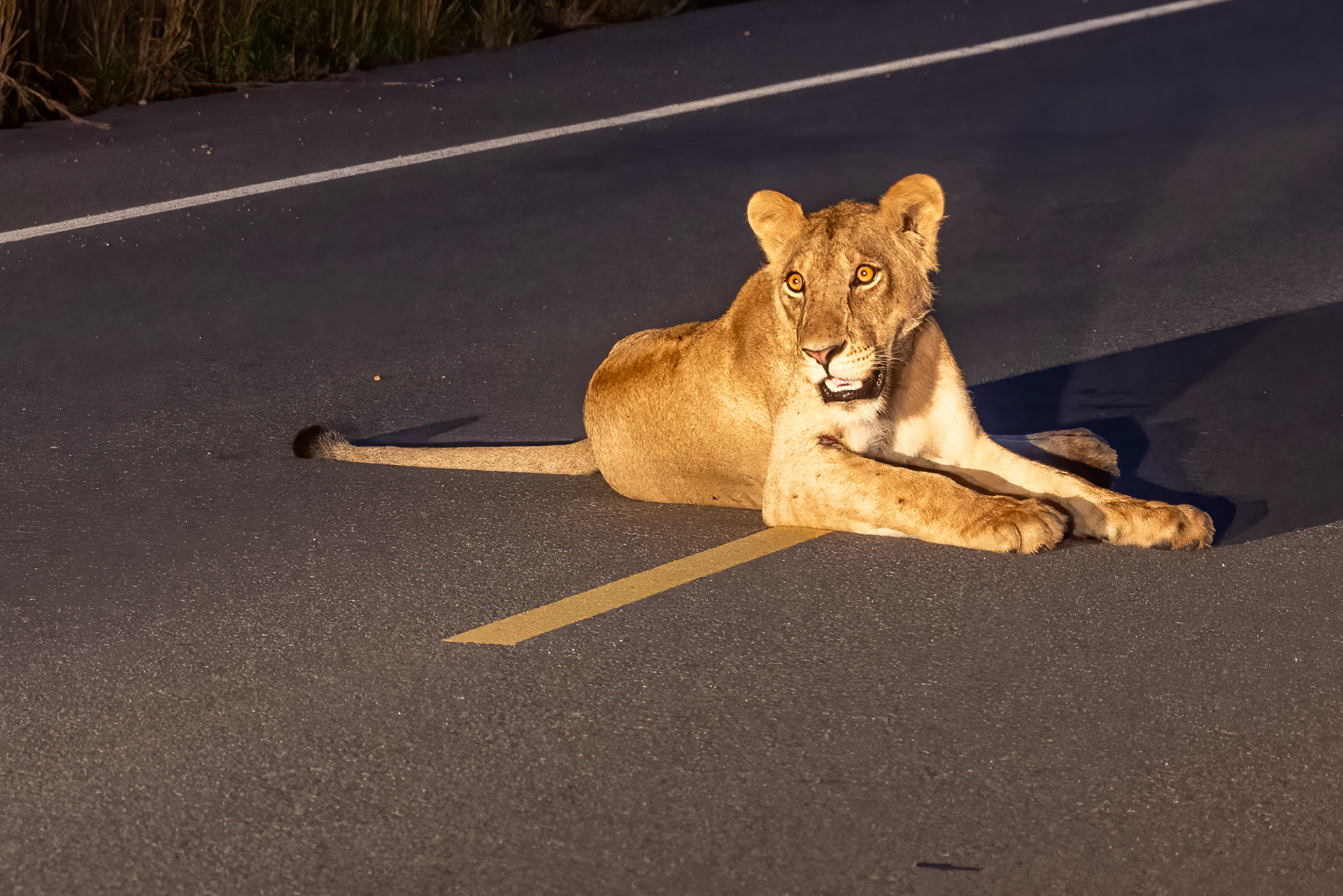
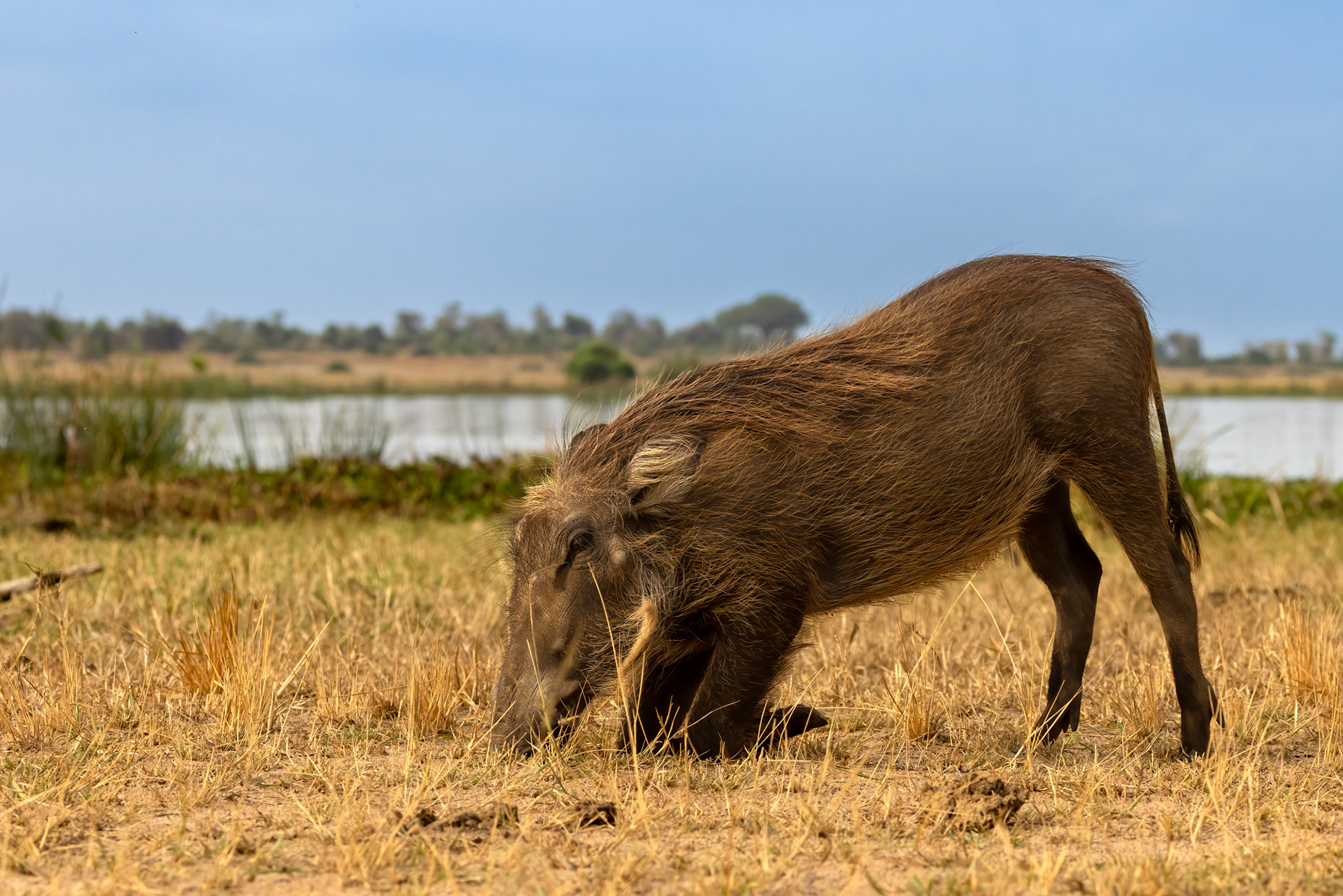
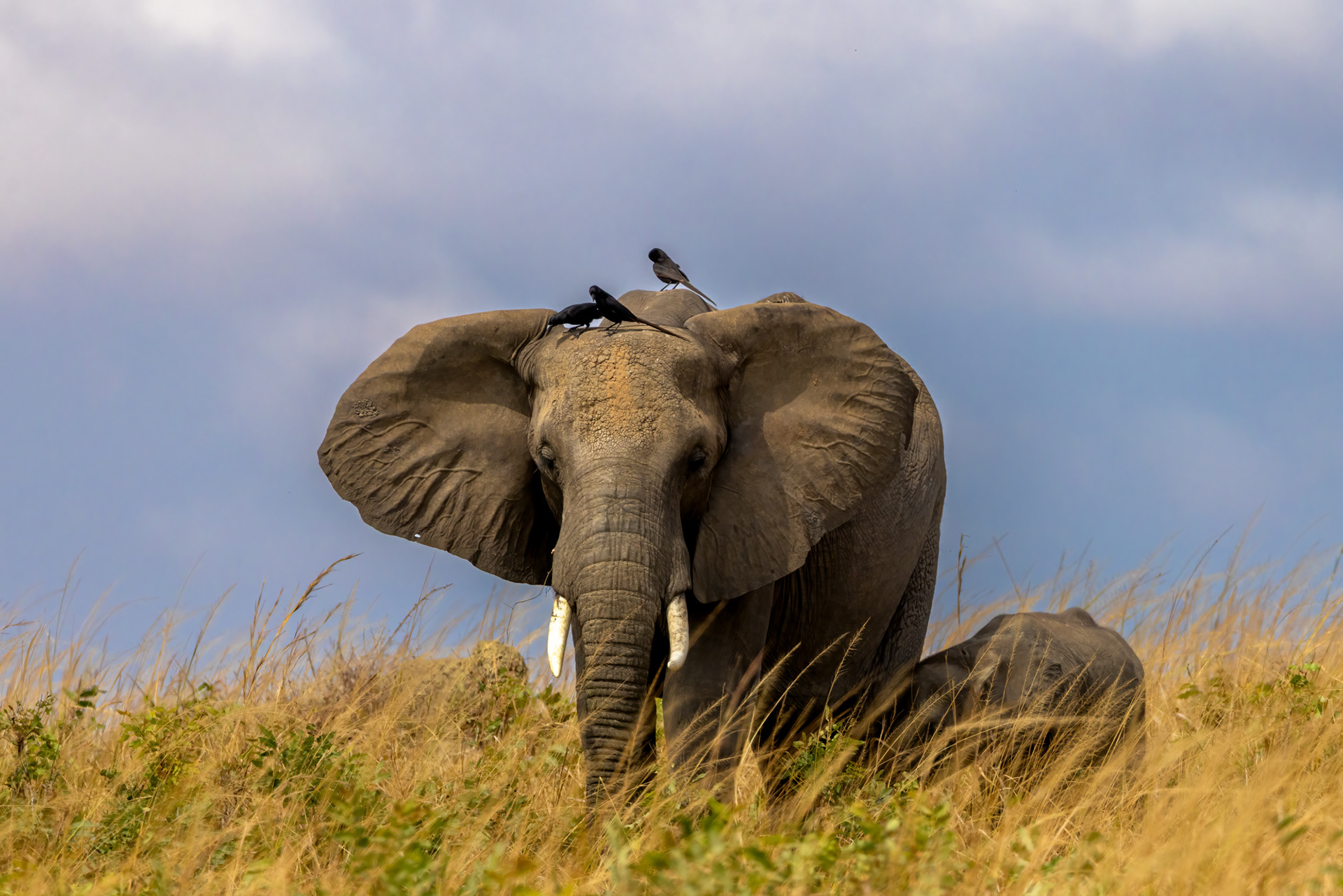
The park wasted no time reminding me not to be jaded. On our first drive in, we found a pride of lions napping directly on the road, as if they owned it, which they do. Beyond that, it was the usual overload of giraffes, elephants, antelope, monkeys, birds, and warthogs. Quick note on warthogs: thanks to Disney, they are now widely known as “Pumbaa,” which comes from the Swahili word for foolish, slow-witted or careless. So calling a warthog “Pumbaa” is basically calling it a lovable idiot. Which, to be fair, fits their general vibe pretty well.
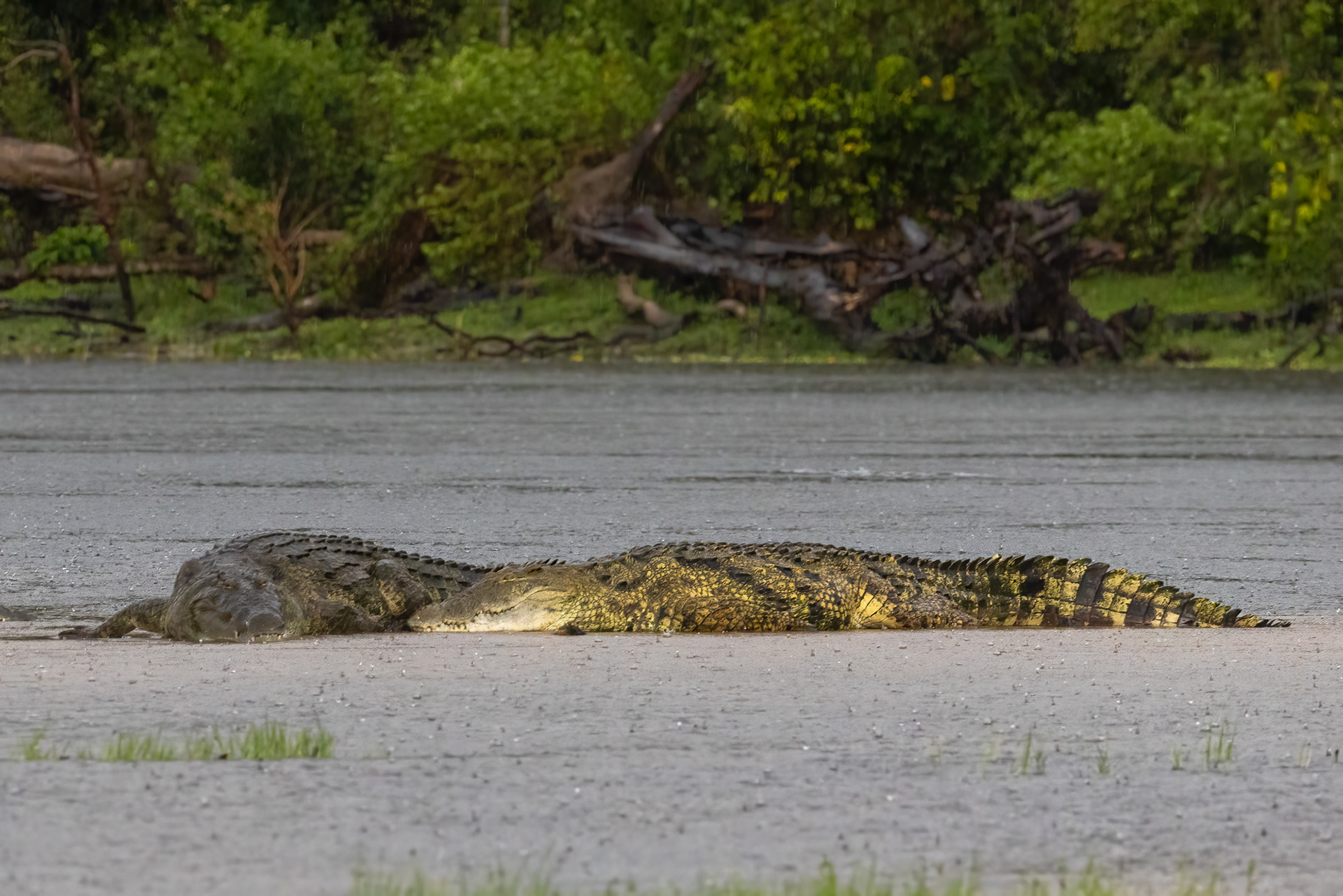
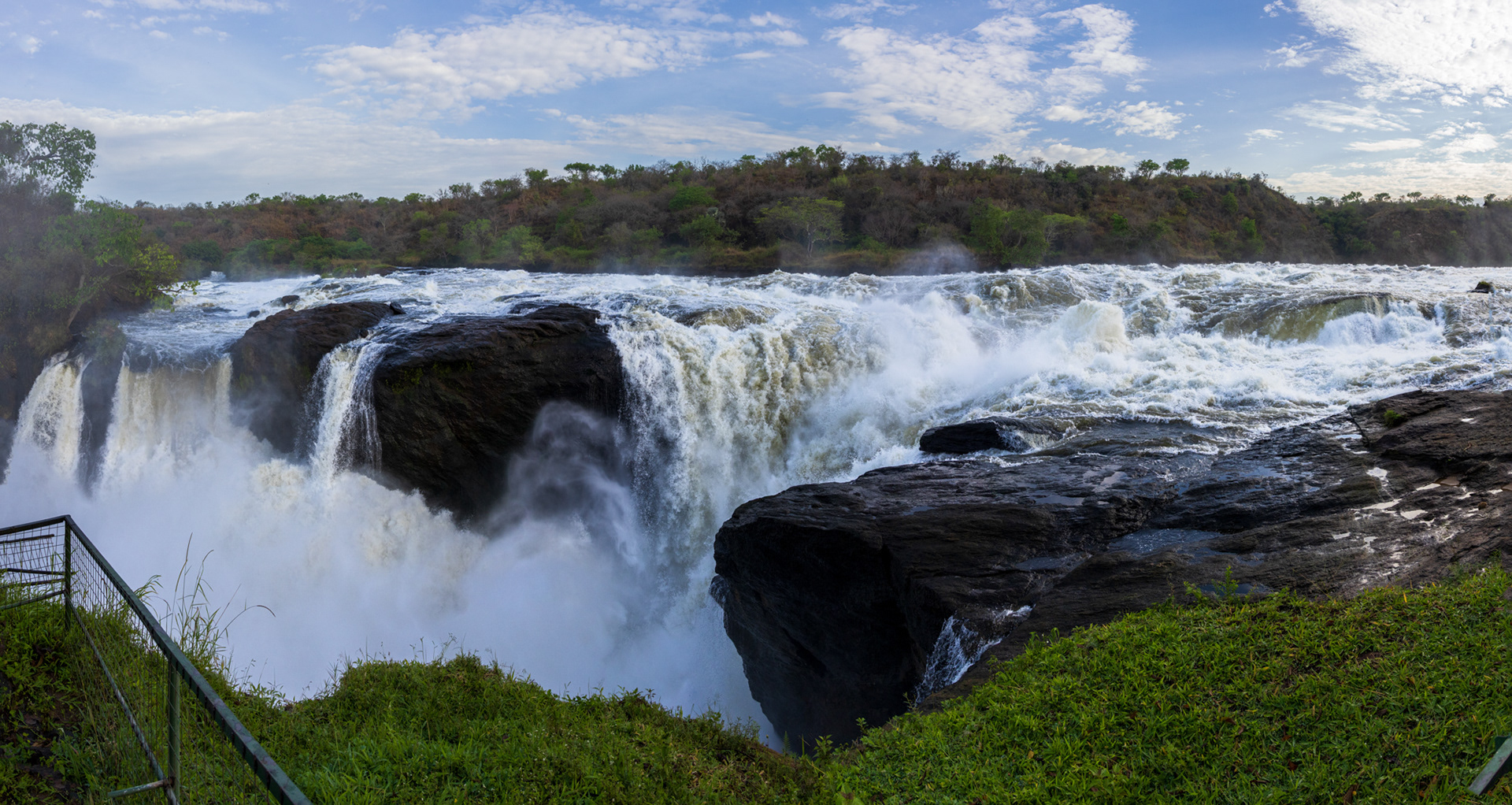
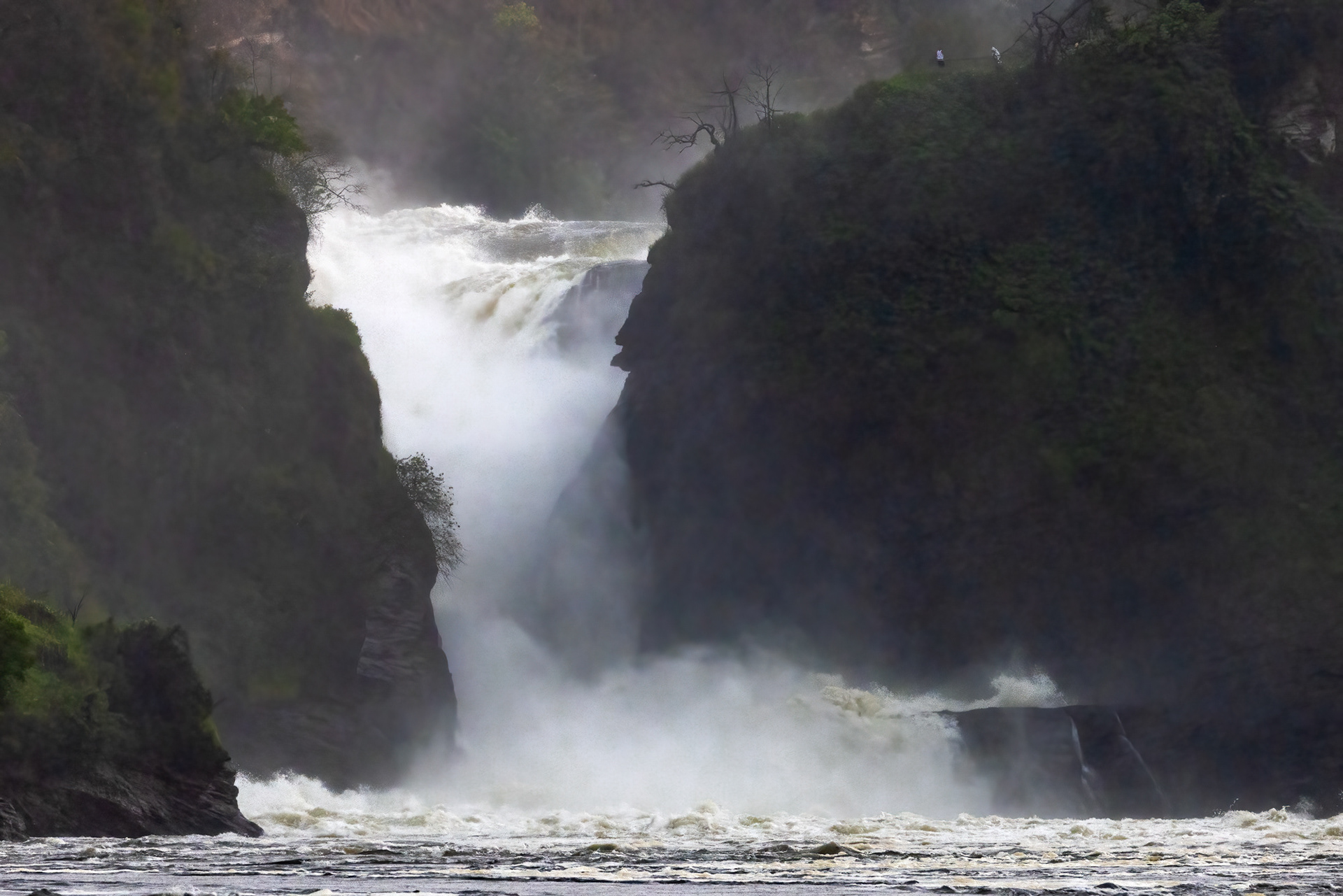
The Nile squeezes through a narrow gap and explodes into Murchison Falls, which is as dramatic. We took a boat to the base, or as near as they go. We made the excellent decision to book all 12 seats, turning it into a private cruise. We arranged for an afternoon boat trip as this is when the animals come to drink. Consensus was that this was the best “game drive” of the trip, even if it came with a bonus thunderstorm. Crocs, hippos, forest hogs, baboons, and so many birds.
After three days, we headed back to Kampala, where traffic once again tested our character. We made it before dark and had a few days to recover before heading home. Huge thanks to everyone who made the trip happen, especially my sister and her family for hosting us!